
🔍 Read the full analysis: 9 Must-Have Portable SSDs For AI In 2026 on ThorstenMeyerAI.com

Get hardware and tech essentials delivered free with Prime
- Fast, free delivery on millions of items
- Prime Video, Amazon Music and more included
- Member-only deals all year
TL;DR
In 2026, nine portable SSDs stand out for AI workloads, combining high transfer speeds, large capacities, and rugged designs. This guide compares top models to help users choose the best fit for their needs.
In 2026, the market for portable SSDs optimized for AI workloads features nine standout models, combining speed, capacity, and durability. For a detailed overview, see the original analysis. These drives are essential for professionals handling large datasets, machine learning models, and real-time data processing, making their selection critical for AI practitioners and data scientists. Learn more about the best portable SSDs for AI in 2026.
The top models include the Samsung T9 Portable SSD, renowned for its high transfer speeds and premium build quality, and the SanDisk 8TB Extreme Portable SSD, which offers extensive storage capacity for demanding AI applications. Smaller drives like the SSK Portable SSD 250GB cater to light users prioritizing portability. Performance varies across models, with maximum transfer speeds reaching up to 1050MB/s, largely depending on the USB interface used. Capacity options range from 250GB for casual use to 8TB for extensive datasets, with rugged designs favored for outdoor or mobile environments. Price points correlate with performance and capacity, but some budget options still deliver competitive speeds for lighter tasks. Connectivity options primarily include USB 3.2 Gen 2 and Gen 2×2, influencing transfer rates and compatibility. These models have been selected based on benchmarks, durability, user reviews, and brand reputation, aiming to serve a broad spectrum of users, from casual to professional.
The 9 picks
- 1
 SanDisk 8TB Extreme Portable SSDView on Amazon →
- 2SanDisk 2TB Extreme Portable SSDView on Amazon →
- 3
 SanDisk 1TB Extreme Portable SSDView on Amazon →
- 4
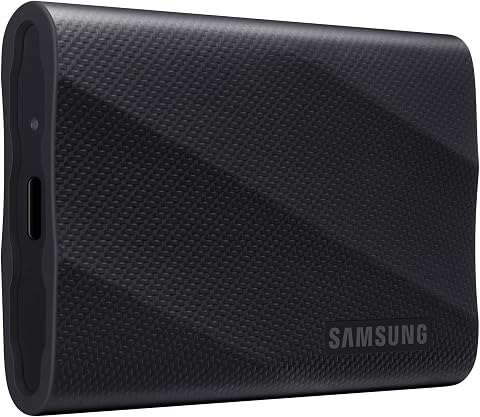 Samsung T9 Portable SSD 1TB, USB 3.2 Gen 2×2 External SSD, Up to 2,000 MB/sView on Amazon →
- 5
 Samsung T7 Portable SSD 1TB Titan Gray, USB 3.2 Gen 2, Up to 1,050MB/sView on Amazon →
- 6
 Lexar ES3 1TB Portable SSD Silver, USB 3.2 Gen 2, Up to 1050MB/sView on Amazon →
- 7
 SSK Portable SSD 500GB External Solid State Drive USB-C Up to 1050MB/sView on Amazon →
- 8
 SanDisk 500GB Portable SSD – Up to 1000MB/s Read Speeds, BlackView on Amazon →
- 9
 SSK Portable SSD 250GB External Solid State Drive USB-C Up to 1050MB/sView on Amazon →
Why High-Performance Portable SSDs Are Critical for AI in 2026
As AI applications grow more data-intensive, the need for fast, reliable, and portable storage becomes essential. These SSDs enable AI practitioners to handle large datasets efficiently, perform real-time processing, and ensure data security during transit. The availability of rugged, high-capacity drives also supports outdoor and fieldwork, expanding AI deployment scenarios. Choosing the right SSD can significantly impact workflow speed, data integrity, and overall productivity, making these models vital tools for AI professionals and enthusiasts alike.
Evolution of Portable SSDs for AI in Recent Years
Over the past few years, portable SSDs have evolved from basic storage devices to high-speed, durable tools tailored for demanding applications like AI. In 2024, models like the Samsung T7 and SanDisk Extreme gained popularity for their speed and reliability. The emergence of USB 3.2 Gen 2×2 interfaces has further boosted transfer rates, while rugged designs have become more common to meet outdoor and mobile needs. As AI workloads continue to increase, the demand for high-capacity, portable storage solutions has surged, prompting manufacturers to innovate with larger capacities and more durable builds. By 2026, the market features a diverse array of options, with the top models balancing speed, capacity, durability, and price to meet the evolving needs of AI professionals.
Outstanding Questions About Future AI-Optimized SSDs
While the current top models are well-established, it remains unclear how upcoming technological advancements, such as PCIe 5.0 or new interface standards, will influence future portable SSD designs. Additionally, the long-term durability of ruggedized models under continuous AI workloads is still being evaluated. Market trends suggest ongoing innovation, but specific details about upcoming models or features are not yet confirmed.
Next Steps for AI-Focused Portable SSD Development
Manufacturers are expected to introduce next-generation SSDs with even higher transfer speeds, larger capacities, and enhanced durability tailored for AI workloads. Future models may incorporate advanced interfaces like PCIe 5.0 or Thunderbolt 4, further reducing transfer times. AI professionals should monitor upcoming releases and firmware updates to optimize their workflows. Additionally, improvements in ruggedness and battery independence could expand mobile AI applications.
Key Questions
What features should I prioritize in an AI-optimized portable SSD?
Look for high transfer speeds (at least 1000MB/s), large capacity (1TB or more for extensive datasets), durability features like shock and water resistance, and compatibility with your devices’ interfaces, especially USB 3.2 Gen 2×2 or Thunderbolt.
Are rugged portable SSDs necessary for AI work?
Rugged SSDs are recommended if you work outdoors, travel frequently, or require extra protection against drops, water, or dust. They help safeguard valuable data in demanding environments.
Will future SSDs replace current models for AI applications?
While upcoming models with faster interfaces and larger capacities are likely, current high-end SSDs remain suitable for most AI workloads. Upgrading depends on your specific speed and capacity needs.
Is Thunderbolt worth the extra cost for AI tasks?
Thunderbolt offers significantly higher transfer speeds (up to 3000MB/s), which can benefit large data transfers and real-time AI processing, but it requires compatible hardware and is more expensive.
How do I choose between capacity and speed for my AI projects?
If working with very large datasets or training models locally, prioritize higher capacity and speed. For lighter tasks, a smaller, faster drive may suffice. Balance your budget with your workload demands.
Source: ThorstenMeyerAI.com
Halloween Picks
halloween
As an affiliate, we earn on qualifying purchases.