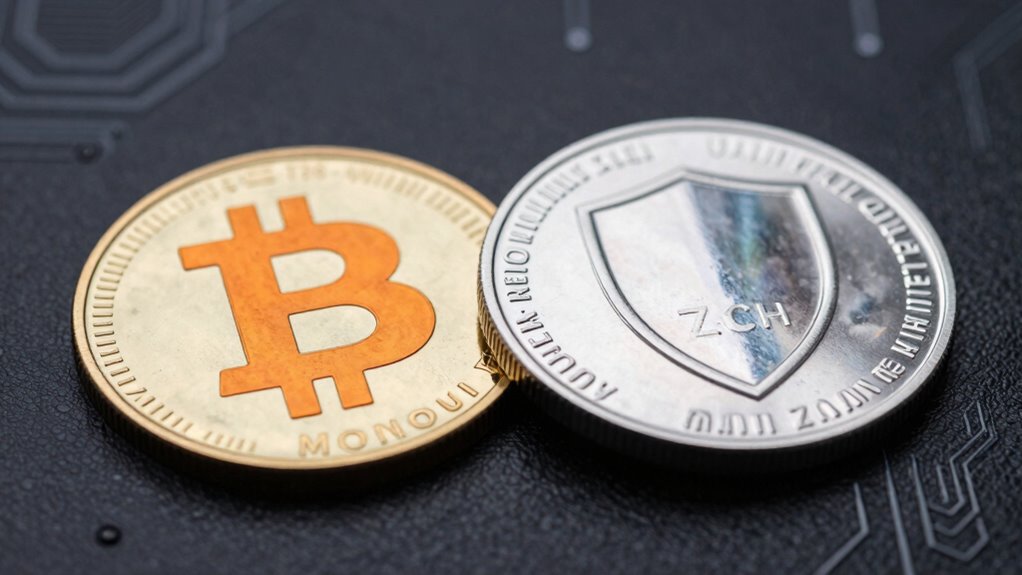

Monero and Zcash spark strong opinions because their privacy features challenge legal systems and raise ethical questions. They protect user data from external observation, which can be useful or suspicious. Authorities worry they hide illicit activities, while supporters see them as essential for financial privacy. These coins push the boundaries of technology and regulation, making debates about security and oversight inevitable. To understand what fuels these intense debates, explore how their innovations and implications intertwine.

Get hardware and tech essentials delivered free — and shop member deals
- Fast, free delivery on millions of items
- Access to Prime Big Deal Days deals on October 6–7
- Prime Video, Amazon Music and more included
Key Takeaways
- Monero and Zcash exemplify the privacy versus transparency debate, raising concerns about illegal activity facilitation.
- Their advanced privacy features challenge existing regulatory frameworks and legal oversight mechanisms.
- Technological innovations like zero-knowledge proofs heighten both privacy benefits and regulatory scrutiny.
- Ethical dilemmas arise from their potential to empower individuals or enable illicit use.
- Ongoing regulatory and societal debates reflect the tension between technological innovation and the need for oversight.

Monero and Zcash continue to evoke strong opinions because they embody the tension between privacy and transparency in the cryptocurrency world. On one hand, their focus on privacy offers users a way to protect their financial information from prying eyes. On the other, this same feature raises significant concerns about how they might be exploited for illegal activities. As a user, you might appreciate the enhanced privacy these coins provide, but you also have to recognize the regulatory challenges they pose. Governments and financial institutions worry that untraceable transactions could facilitate money laundering, tax evasion, or even criminal enterprises. This creates a complex privacy trade-off, where the benefits of confidentiality clash with the need for oversight and accountability.
Privacy coins like Monero and Zcash balance confidentiality with regulatory challenges and potential misuse.
Because of these regulatory challenges, many authorities have taken a cautious stance toward Monero and Zcash. Some countries have even banned or heavily restricted their use, arguing that the privacy features undermine anti-money laundering (AML) and counter-terrorism financing (CTF) efforts. You might find yourself caught between respecting your right to privacy and complying with the legal frameworks designed to keep financial systems secure. This ongoing tug-of-war influences how these coins are perceived and used worldwide. Some jurisdictions may view them as tools for privacy preservation, while others see them as threats to financial transparency and security.
The privacy trade-offs are central to the debate surrounding these cryptocurrencies. You get the freedom to shield your transactions from public view, which can be crucial in oppressive regimes or for individuals seeking financial privacy, but you also need to be aware of the potential consequences of unwarranted anonymity. Additionally, the technology behind these coins, such as the implementation of zero-knowledge proofs in Zcash, demonstrates how advanced cryptographic techniques are used to enhance privacy without entirely sacrificing transparency when necessary. You might appreciate the technological advancements that enable privacy, but you also need to be aware of the potential consequences of unwarranted anonymity. Moreover, the cryptographic techniques employed in these coins continue to evolve, reflecting the ongoing efforts to balance privacy with regulatory compliance. As these privacy-enhancing technologies become more sophisticated, so too do the challenges of regulating their use within existing legal frameworks. Understanding the underlying blockchain privacy mechanisms can help you better grasp how these coins operate and the implications for legal compliance. These evolving privacy features highlight the ongoing tension between technological innovation and regulatory oversight, making the landscape particularly dynamic.
In essence, the ongoing discussions about Monero and Zcash reflect larger societal questions about privacy versus security. You’re faced with the reality that advancing privacy features in cryptocurrencies often invites regulatory scrutiny, which could limit their accessibility or usability. Whether you see these coins as empowering tools for personal privacy or risky tools for illicit activities, it’s clear that the broader implications will keep fueling strong opinions. The challenge lies in finding a balanced approach that respects individual privacy without compromising the integrity of financial systems.
As an affiliate, we earn on qualifying purchases.
Frequently Asked Questions
How Do Monero and Zcash Compare to Bitcoin in Privacy?
You find Monero and Zcash more private than Bitcoin because they enable anonymous transactions, making it hard to trace funds. Monero uses stealth addresses and ring signatures, while Zcash offers optional privacy through zk-SNARKs. However, their enhanced privacy features pose regulatory challenges, with authorities wary of misuse for illegal activities. So, compared to Bitcoin’s transparent ledger, Monero and Zcash prioritize user privacy but face increased scrutiny.
Are Monero and Zcash Legally Risky to Use?
Imagine you’re walking a tightrope, balancing between freedom and risk. Monero and Zcash can be legally risky because their focus on User Anonymity may attract regulatory scrutiny. While they prioritize privacy and compliance varies by jurisdiction, using them could lead to legal issues if authorities view your transactions as suspicious. Stay informed on local laws, and consider the potential legal risks before diving into these privacy coins.
What Are the Main Technical Differences Between Monero and Zcash?
You’ll find Monero and Zcash differ primarily in their cryptography advancements and approach to blockchain transparency. Monero uses ring signatures and stealth addresses, ensuring full transaction privacy and obscuring sender, receiver, and amount. Zcash employs zk-SNARKs, enabling selective transparency, where users can choose to reveal transaction details. These technical differences impact their privacy features, with Monero prioritizing complete anonymity and Zcash offering more control over disclosed information.
Can Governments Easily Ban or Restrict Monero and Zcash?
Can governments easily ban or restrict Monero and Zcash? Probably not entirely, given their privacy features. Regulatory challenges make enforcement difficult because tracing transactions is nearly impossible, complicating bans. Adoption hurdles also exist, as users value privacy and might resist restrictions. While authorities can attempt to regulate or restrict access, completely banning these cryptocurrencies is tough, especially with their decentralized nature and strong community support.
How Do Privacy Coins Impact Law Enforcement Efforts?
Privacy coins impact law enforcement efforts by complicating regulatory challenges and raising ethical concerns. Their strong privacy features make it harder to trace transactions, hindering investigations into illegal activities like money laundering or terrorism financing. You might see authorities pushing for tighter regulations or bans, but balancing privacy rights with security remains a complex issue. Ultimately, these coins challenge law enforcement’s ability to monitor and enforce financial crimes effectively.
Zcash zero-knowledge proof wallet
As an affiliate, we earn on qualifying purchases.
As an affiliate, we earn on qualifying purchases.
Conclusion
In the end, Monero and Zcash are like two sides of the same coin—polarizing yet undeniably powerful. Their privacy features challenge the status quo and spark fierce debates about security and anonymity. Whether you see them as champions of privacy or tools for illicit activity, one thing’s clear: they’re here to stay, stirring the pot and pushing the boundaries of what digital currencies can do. The conversation around them is far from over.
As an affiliate, we earn on qualifying purchases.
As an affiliate, we earn on qualifying purchases.
Fall Picks
fall essentials
As an affiliate, we earn on qualifying purchases.