Bitcoin self-custody can still scare you because it shifts the security from trusted institutions to you, making you responsible for protecting your funds. Many newcomers worry about making mistakes, losing private keys, or falling for scams, which can lead to irreversible losses. The process feels overwhelming at first, especially since it involves understanding cryptography and managing digital security. If you keep exploring, you’ll discover ways to build confidence and take control safely.
Key Takeaways
- Managing private keys and securing funds without institutional support can feel risky and overwhelming for beginners.
- Fear of irreversible mistakes or losing access heightens anxiety around self-custody.
- Lack of familiarity with cryptography and security best practices increases apprehension.
- The responsibility of safeguarding assets without relying on third parties can seem intimidating.
- The initial learning curve and potential for costly errors make newcomers hesitant to fully trust self-custody.
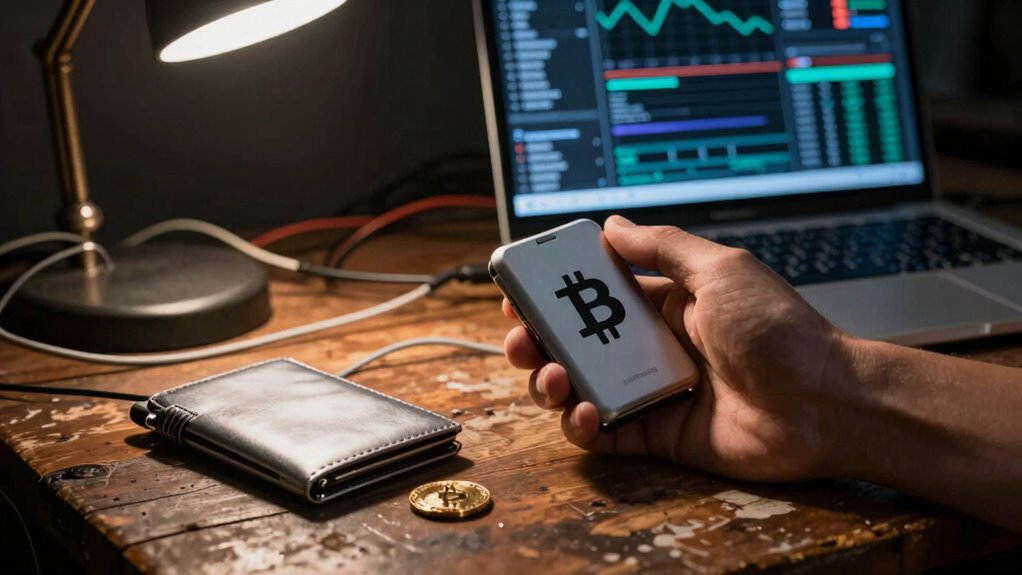
For newcomers, the idea of managing their own Bitcoin can feel overwhelming and intimidating. You might worry about losing your funds, making mistakes, or falling victim to scams. This apprehension is understandable because, unlike traditional banking, self-custody puts the full weight of digital security and user responsibility on your shoulders. You’re not relying on a bank’s protections or insurance policies; instead, you’re the one in charge of safeguarding your digital assets. This shift in control can seem daunting, especially if you’re unfamiliar with how cryptocurrencies work or the best practices to keep your Bitcoin safe.
One of the biggest hurdles is understanding digital security. Unlike traditional passwords or PINs, securing Bitcoin involves managing private keys—these are cryptographic keys that give you access to your funds. If you lose your private key or it gets stolen, there’s no way to recover your Bitcoin. That creates a lot of pressure, especially for newcomers who might not yet be comfortable with the technical aspects. You need to be diligent about protecting your keys, whether that’s through hardware wallets, secure backups, or strong, unique passwords. Any lapse in digital security can lead to irreversible loss, which adds to the anxiety. This responsibility can feel overwhelming because it’s different from just trusting a bank to handle security for you. Additionally, understanding projected security risks and how to mitigate them is essential for building confidence in self-custody. Developing a solid understanding of cryptography principles can help alleviate some of these concerns and make the process more approachable. Recognizing the importance of proper security measures can also empower you to take proactive steps in safeguarding your assets.
Managing private keys is crucial; losing or stolen keys mean irreversible Bitcoin loss. Stay diligent and secure.
Another reason why Bitcoin self-custody still frightens many newcomers is the sheer amount of user responsibility involved. You’re the one who must educate yourself on best practices, stay updated on potential threats, and manage your storage solutions carefully. Unlike traditional accounts that offer customer support or insurance, if you make a mistake—like sending Bitcoin to the wrong address or exposing your private key—you’re on your own. This level of independence is empowering but also intimidating. It requires a proactive attitude towards security, continuous learning, and vigilance. If you’re not prepared or unsure, you might hesitate to take full control of your funds.
Despite these fears, many find that once they understand the importance of digital security and embrace their user responsibility, self-custody becomes less frightening. It offers true ownership, privacy, and control over your Bitcoin, which is a powerful benefit. Still, the initial learning curve and the stakes involved can make self-custody seem risky for newcomers. It’s normal to feel apprehensive, but with proper education, careful planning, and cautious steps, you can gradually build confidence in managing your own digital assets securely.

Bitkey Bitcoin Hardware Wallet – The Most Secure Way to Buy, Store and Manage Bitcoin
- Bitcoin Exclusive Design: Dedicated hardware wallet for Bitcoin
- All-in-One Management: Compare prices, send, receive, and track
- Enhanced Security: Three-key system simplifies self-custody
As an affiliate, we earn on qualifying purchases.
As an affiliate, we earn on qualifying purchases.
Frequently Asked Questions
How Do I Securely Store My Private Keys?
To securely store your private keys, you should use a hardware wallet, which keeps keys offline and safe from online threats. Make sure to write down your seed phrase and store it in a secure, offline location, like a safe or safety deposit box. Never share your seed phrase, and avoid digital backups to prevent hacking. This way, you maintain control while minimizing risks.
What Are the Common Mistakes in Self-Custody?
Many newcomers mishandle self-custody by overlooking vital security protocols, risking their assets. Common mistakes include neglecting to back up private keys, falling for phishing scams, or using insecure devices. These errors amplify custodial risks, making your assets vulnerable to theft or loss. To avoid this, prioritize rigorous security measures, double-check your security protocols, and stay vigilant against scams, ensuring your Bitcoin stays safe and sound.
Can I Recover Funds if I Lose My Wallet?
If you lose your wallet, recovery is possible through your seed phrase or backup, but custody challenges can complicate this. Without your seed phrase, recovery procedures become difficult, and funds could be lost permanently. It’s essential to securely store your backup and understand the importance of proper custody practices. Always prepare for potential loss by keeping your recovery information safe and accessible to avoid costly mistakes.
Is Self-Custody Safer Than Using Exchanges?
Self-custody is like steering your own ship through stormy seas—more control, but also more risk. It’s generally safer than exchanges because you’re not vulnerable to custody regulations or exchange hacks. While market volatility can shake your holdings, managing your private keys means you hold the keys to your wealth, reducing reliance on third parties. Just stay vigilant, and your assets will stay secure on your journey.
What Tools Are Best for Beginners in Self-Custody?
For beginners, hardware wallets are your best tools for self-custody because they store your private keys offline, reducing hacking risks. You should also create paper backups of your wallet’s seed phrase, ensuring you can recover your funds if your device fails. These tools are user-friendly and provide enhanced security, giving you peace of mind as you take control of your Bitcoin without relying on exchanges.
Bitcoin private key backup device
As an affiliate, we earn on qualifying purchases.
As an affiliate, we earn on qualifying purchases.
Conclusion
So, don’t let the intimidating details dampen your desire to plunge into decentralization. Embrace education, empower your understanding, and equip yourself with essential security skills. While self-custody might seem scary at first, persistence and patience turn fear into familiarity. Remember, mastering your money means more than managing coins; it’s about molding your mindset. Step forward securely, shed your shyness, and seize the sovereignty that self-custody promises—because your financial future is truly in your hands.
As an affiliate, we earn on qualifying purchases.
As an affiliate, we earn on qualifying purchases.