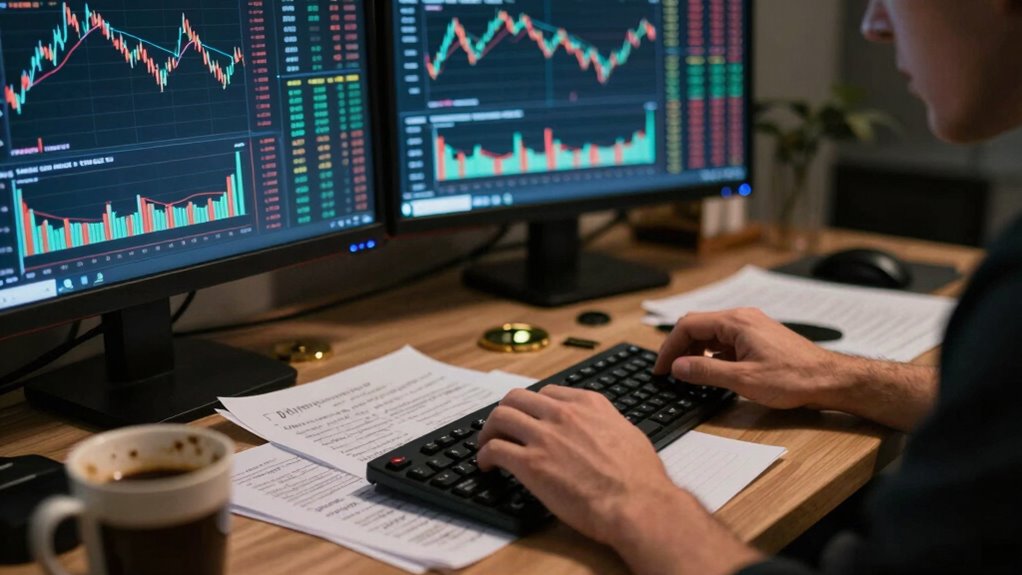

The biggest risk you create for your Bitcoin holdings is neglecting security and emotional discipline. If you ignore best practices like strong passwords, secure wallets, and two-factor authentication, you’re vulnerable to hacks and theft. At the same time, emotional reactions like panic selling or impulsive buying can lead to significant losses. Staying informed and managing emotions can protect your assets. Keep going to discover how to minimize these self-inflicted dangers and secure your investments effectively.
Get ready for Prime Big Deal Days — try Prime free
Exclusive member deals on October 6–7, plus fast free delivery. Cancel anytime.
As an affiliate, we earn on qualifying purchases.
Key Takeaways
- Emotional reactions to market volatility often lead to impulsive decisions, increasing personal risk.
- Poor security practices, like weak passwords and insecure storage, make individuals vulnerable to theft.
- Reacting without proper analysis amplifies risks from unpredictable Bitcoin price swings.
- Relying on untrustworthy platforms exposes investors to scams and loss of assets.
- Neglecting security measures, such as backups and updates, can result in total asset loss.

Many of the risks associated with Bitcoin aren’t actually imposed by the market or external factors—they’re created by your own choices. When you’re steering the world of cryptocurrency, it’s easy to focus on the unpredictable nature of market volatility. Prices can swing wildly in a matter of hours, and if you’re not careful, you could find yourself losing significant amounts of money. But what often amplifies this risk is how you handle your investments. If you don’t stay informed or react impulsively to market swings, you’re increasing your chances of making costly mistakes. Instead of riding out the volatility, many people panic sell or buy at the worst possible moments, turning what could be manageable fluctuations into devastating losses. Your emotional responses and timing decisions play a direct role in how much risk you face.
Beyond market volatility, security vulnerabilities are another major risk you create for yourself. Bitcoin’s decentralized nature is one of its greatest strengths, but it also means that security is your responsibility. If you don’t take proper precautions—such as using strong, unique passwords, enabling two-factor authentication, and choosing reputable wallets—you leave yourself open to hacking and theft. Many people underestimate how vulnerable they are to cyberattacks, especially when they store their Bitcoin on exchanges or less secure wallets. A single security breach can wipe out your holdings in an instant, and recovery options are often limited. Understanding the importance of digital security awareness can help you better protect your investments from malicious threats. Additionally, considering the reputation of the service provider when choosing a platform can significantly reduce your exposure to potential scams or security breaches. Your choices also influence the long-term stability of your Bitcoin holdings. For example, neglecting regular backups of your wallet or not updating your security software can create vulnerabilities that hackers exploit. Implementing security best practices and staying informed about evolving threats can further safeguard your assets. These decisions can make your investments more exposed to theft or loss. Moreover, investing in hardware wallets can provide an extra layer of security against online threats. Using weak passwords or reusing them across multiple sites exponentially increases your risk. The responsibility largely falls on your shoulders to educate yourself about best security practices and stay vigilant. Implementing strong security measures is essential to prevent preventable scams or thefts that could result in your losing your assets entirely. By doing so, you reduce the likelihood of falling victim to scams or thefts that are entirely preventable.
As an affiliate, we earn on qualifying purchases.
Frequently Asked Questions
How Can I Protect My Bitcoin From Theft?
You can protect your Bitcoin from theft by prioritizing Bitcoin privacy and avoiding sharing sensitive info. Store your Bitcoin in a secure hardware wallet, keeping your private keys offline. Use decentralized exchanges for more control over your assets and reduce reliance on centralized platforms. Regularly update your security practices, enable two-factor authentication, and be cautious with phishing attempts. These steps help safeguard your Bitcoin and reduce the risk of theft.
What Are the Best Practices for Secure Bitcoin Storage?
Don’t put all your eggs in one basket when it comes to Bitcoin storage. Use cold storage options like hardware wallets for long-term holdings, and consider multi-signature wallets for added security. Keeping your private keys offline minimizes hacking risks. Regularly update your software and keep backups in secure, separate locations. These best practices help you stay one step ahead and protect your Bitcoin from potential threats.
How Do I Recover Lost Bitcoin Wallets?
To recover a lost bitcoin wallet, start with your seed phrase, which is your master key. Use it to restore your wallet in the original or compatible wallet app. Wallet recovery is straightforward if you have your seed phrase securely stored. Always keep your seed phrase offline and private. If you can’t locate it, consider professional recovery services, but beware of scams. Protect your recovery information diligently to avoid future losses.
Are There Legal Risks Associated With Holding Bitcoin?
Yes, holding Bitcoin can involve legal risks. You need to guarantee legal compliance with your country’s regulations, as laws around cryptocurrencies vary widely. Regulatory challenges might include reporting requirements, tax obligations, or restrictions on transactions. Failing to adhere to these rules could lead to fines or legal action. Stay informed about current laws and consult legal experts if you’re unsure, so you can responsibly hold and use Bitcoin without unnecessary risks.
What Are Common Scams to Watch Out for in Bitcoin Trading?
Watch out for common scams in Bitcoin trading, like Bitcoin phishing, scam exchanges, and fake investment schemes. Stay alert to phishing emails that steal your login info, avoid untrustworthy exchanges promising guaranteed returns, and be cautious of schemes urging you to send Bitcoin for quick profits. Always verify sources, use secure platforms, and double-check URLs to protect yourself from these scams. Your vigilance keeps your investments safe.
two-factor authentication device
As an affiliate, we earn on qualifying purchases.
As an affiliate, we earn on qualifying purchases.
Conclusion
Ultimately, the greatest risk you face isn’t from Bitcoin itself, but from your own actions—or inactions. Like a modern-day Icarus, you might soar too close to the sun, driven by greed or fear, only to fall. Remember, even in this digital age, patience and education are your best shields. Don’t let reckless decisions or emotional swings be your undoing. Stay wise, stay grounded, and let history teach you that caution often beats haste.
As an affiliate, we earn on qualifying purchases.
As an affiliate, we earn on qualifying purchases.
Fall yard work Picks
leaf blowers
As an affiliate, we earn on qualifying purchases.