
Bitcoin’s adoption in developing countries can markedly boost your community’s financial inclusion by providing access to banking services for unbanked populations. It challenges traditional financial systems and prompts governments to create smarter regulations, fostering trust. You may see faster remittances and improved transparency, empowering small entrepreneurs and boosting local economies. This digital shift also sparks innovative solutions to address socioeconomic needs. Keep exploring how these changes can create lasting benefits for communities like yours.

Get hardware and tech essentials delivered free — and shop member deals
- Fast, free delivery on millions of items
- Access to Prime Big Deal Days deals on October 6–7
- Prime Video, Amazon Music and more included
Key Takeaways
- Bitcoin promotes financial inclusion by providing unbanked populations with access to digital financial services.
- Adoption of Bitcoin reduces remittance costs and enhances the speed of cross-border money transfers.
- It challenges traditional financial systems, prompting governments to develop balanced regulatory frameworks.
- Bitcoin-driven innovations, like mobile payments, foster local economic growth and social development.
- Successful integration depends on inclusive policies that maximize socioeconomic benefits while managing risks.
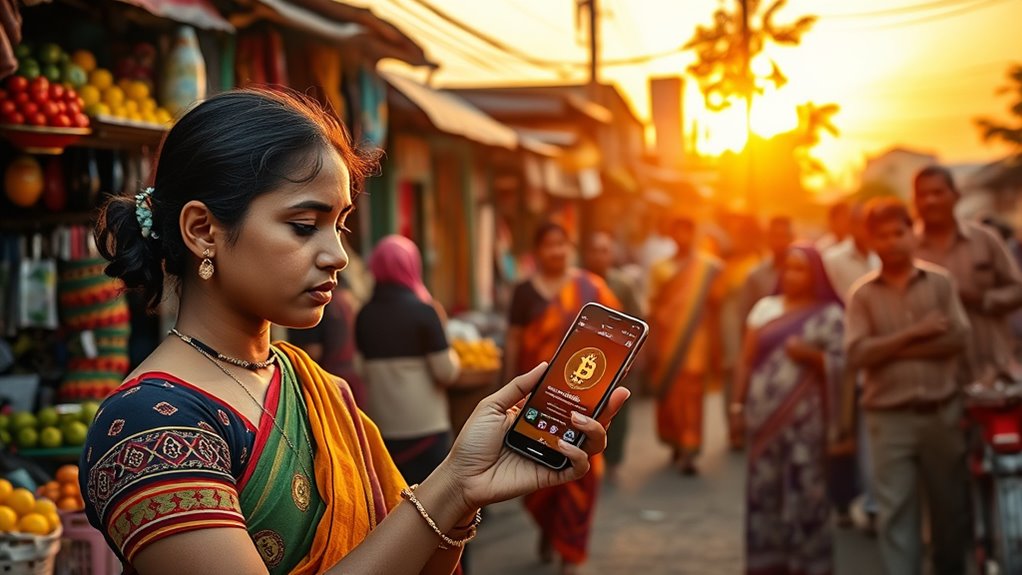
Bitcoin has increasingly become a catalyst for socioeconomic change in developing countries, offering new opportunities for financial inclusion and economic growth. As more people gain access to this digital currency, it challenges traditional financial systems and pushes governments to rethink cryptocurrency regulation. You might notice that in many regions, banks are scarce or unreliable, leaving large portions of the population unbanked. Bitcoin provides an alternative, allowing individuals to send, receive, and store value without relying on traditional financial institutions. This shift can empower those who’ve been excluded from the formal economy, giving them a chance to participate in broader economic activities.
Bitcoin promotes financial inclusion by empowering the unbanked to participate in economic activities without relying on traditional banks.
However, the rapid rise of Bitcoin also prompts governments to develop cryptocurrency regulation policies. These rules are essential for protecting users from fraud, money laundering, and other illicit activities, but they can also impact how easily people can access and use Bitcoin. If regulations are too restrictive, they might stifle innovation and limit the currency’s potential to promote financial inclusion. On the other hand, lax regulations could lead to increased risks and instability. You’ll find that striking the right balance is vital for maximizing benefits while minimizing risks. Clear, consistent regulation can foster trust, making more people comfortable with adopting Bitcoin as a reliable store of value or medium of exchange.
In developing countries, Bitcoin’s ability to bridge gaps in financial services can lead to tangible socioeconomic benefits. For example, remittances sent home by expatriates often face high fees and delays through traditional channels. Bitcoin can substantially reduce these costs and speed up transfers. This means families receive more money, supporting education, healthcare, and local businesses. Additionally, Bitcoin’s transparency and security features can help combat corruption and ensure that funds reach intended recipients. For small entrepreneurs, accepting Bitcoin can open new markets and facilitate cross-border trade, fostering local economic growth.
You’ll also notice that Bitcoin’s influence extends beyond individual users. It can inspire local innovation, such as mobile payment solutions and blockchain-based social programs, which further promote financial inclusion. As governments and communities adapt to this digital shift, the socioeconomic landscape in developing countries could transform dramatically. Bitcoin’s potential to democratize access to financial tools and encourage economic activity makes it a powerful force for positive change. Still, the success depends heavily on thoughtful regulation and the collective effort to embrace inclusive policies that allow everyone to benefit from this digital revolution. Moreover, understanding the role of technology in enhancing financial systems is crucial to fully leverage Bitcoin’s socioeconomic impact.
Bitcoin hardware wallet for secure storage
As an affiliate, we earn on qualifying purchases.
As an affiliate, we earn on qualifying purchases.
Frequently Asked Questions
How Does Bitcoin Affect Local Traditional Banking Systems?
Bitcoin affects local traditional banking systems by introducing a digital currency that can bypass banks, leading to banking disruption. You might find it easier to send or receive money without relying on banks, especially in areas with limited banking services. This shift challenges traditional financial institutions, forcing them to adapt or innovate. Ultimately, Bitcoin empowers individuals, but it also reshapes how local banking operates in developing countries.
What Are the Environmental Impacts of Increased Bitcoin Mining?
You should know that increased Bitcoin mining raises significant environmental concerns due to its high energy consumption. The process requires massive amounts of electricity, often from non-renewable sources, which contributes to carbon emissions and climate change. This heavy energy use strains local power grids and can harm ecosystems. As Bitcoin mining grows, it’s vital to take into account sustainable practices to reduce its environmental footprint and mitigate long-term impacts on our planet.
How Accessible Is Bitcoin for Rural Populations?
Bitcoin’s accessibility for rural populations is often underestimated, but it’s expanding rapidly. You can participate if you have basic digital literacy and access to reliable network infrastructure. While challenges remain, such as limited internet connectivity, innovative solutions like mobile wallets and community centers are bridging gaps. With persistent efforts, even remote areas can tap into Bitcoin’s potential, transforming lives and opening new economic opportunities.
Are There Legal Risks Associated With Bitcoin Adoption?
Yes, you face legal risks with Bitcoin adoption due to regulatory challenges that vary by country. You must guarantee legal compliance to avoid penalties or asset freezes. Governments are developing regulations to monitor and control cryptocurrency use, which can impact your ability to use Bitcoin freely. Staying informed about local laws and working with compliant platforms can help mitigate these risks and ensure your Bitcoin activities remain lawful.
How Does Bitcoin Influence Income Inequality?
Sure, Bitcoin’s here to save the day—or so it claims. It aims to disrupt wealth inequality by promoting financial inclusion, giving everyone a shot at wealth redistribution. But in reality, it often benefits those already tech-savvy or wealthy, leaving the poor behind. So, instead of narrowing income gaps, Bitcoin might just widen them, making the rich richer and the poor more excluded. Classic inequality in action, with a digital twist.
As an affiliate, we earn on qualifying purchases.
Conclusion
As you consider the evolving role of Bitcoin in developing nations, one thing becomes clear: its true impact is just beginning to unfold. Will it bridge the gap to financial inclusion or deepen existing divides? The future holds unexpected twists, and your awareness could shape how these economies transform. Stay tuned—what happens next could redefine prosperity and poverty in ways you never imagined. The next chapter is waiting to be written, and you won’t want to miss it.
cryptocurrency regulation guide book
As an affiliate, we earn on qualifying purchases.
As an affiliate, we earn on qualifying purchases.
Bitcoin remittance transfer service
As an affiliate, we earn on qualifying purchases.
As an affiliate, we earn on qualifying purchases.
Fall Picks
fall essentials
As an affiliate, we earn on qualifying purchases.