
📊 Full opportunity report: Forezai · Polybot: When the AI Disagrees With the Odds on ThorstenMeyerAI.com — validation score, market gap, and execution plan.
TL;DR
Polybot is an open-source AI trading bot designed to compare its probability estimates with prediction market prices. It only trades when significant discrepancies occur, aiming to assess whether AI can outperform market consensus. Its development highlights both potential and risks in AI-driven prediction markets.
Polybot, an open-source AI trading tool developed by Forezai, is now testing whether an AI can reliably identify when its probability estimates diverge significantly from prediction market prices and act on those discrepancies. This experiment aims to explore the potential and limitations of AI in prediction markets, emphasizing risk management and transparency.
Polybot is designed to research the conditions under which an AI’s independent probability estimate differs meaningfully from the market-implied probability. It compares its own research based on public information with the market price, and only executes trades when the gap exceeds a predefined threshold, accounting for costs like fees and slippage. The system emphasizes auditability, recording its reasoning for each estimate, which allows for post-trade analysis and calibration over time.
Developed by Forezai and licensed under MIT, Polybot is not intended as a profit-making tool but as a research artifact to understand the dynamics of AI versus market consensus. Its cautious approach—trading rarely and only on strong signals—reflects best practices in risk management, recognizing that markets are complex, adversarial, and often efficient.
While the system’s design aims to test whether an AI can outperform or at least identify mispricings reliably, experts caution that the experiment is preliminary. Past backtests have been overly optimistic, and real-world market conditions—such as slippage, liquidity issues, and strategic responses—pose significant challenges. The project underscores that AI’s estimates are hypotheses, not certainties, and that even confident models can be wrong.
Polybot — when the AI disagrees with the odds
A prediction market puts a price on the future. Polybot asks: can an AI’s own estimate diverge from that price for real — and should it ever act on the gap?
Not financial, investment, legal or tax advice; not a recommendation or solicitation to trade, invest or use any software. Forezai · Polybot is experimental open-source software (MIT), provided “as is” without warranty of accuracy or profitability. Trading and automated trading carry a substantial risk of loss including total loss of capital; past or backtested performance does not indicate future results. Prediction-market participation is restricted or prohibited in some jurisdictions (including for US persons) — you are solely responsible for compliance with applicable law. Consult a licensed professional before any financial decision. Produced with AI assistance under human editorial oversight; independent commentary, the author’s own views. Product and company names are trademarks of their respective owners; mention does not imply endorsement.
Implications for AI and Prediction Markets
This experiment highlights the potential for AI to contribute to prediction markets by providing independent assessments of probabilities. If successful, it could lead to more sophisticated, transparent trading tools that help traders and researchers understand market dynamics better. However, it also underscores the risks involved, including overconfidence in AI estimates and the difficulty of consistently beating markets, which are shaped by collective intelligence and strategic behavior.
More broadly, Polybot illustrates the importance of transparency, calibration, and risk discipline in AI-driven financial tools. Its cautious, audit-friendly approach sets a standard for future experiments aiming to combine AI with financial decision-making, especially in unregulated or experimental environments.

Use Claude to Build 7 AI Trading Bots: Stocks, Options, Crypto. The Multi-Strategy Playbook used for Backtesting and Live Trading (AI Trading Bot Series)
As an affiliate, we earn on qualifying purchases.
As an affiliate, we earn on qualifying purchases.
Background on Prediction Markets and AI Experiments
Prediction markets like Polymarket allow participants to buy and sell contracts based on the likelihood of future events, effectively putting a price on the future. These markets aggregate diverse information and opinions, often making their prices highly informative. However, beating these markets consistently is notoriously difficult because the prices reflect collective knowledge, liquidity, and strategic behavior.
Polybot is part of a broader trend of experimenting with AI in financial prediction and trading. Previous efforts have shown that AI models can sometimes identify mispricings but often fail to outperform markets after accounting for costs and market adaptations. The open-source nature of Polybot allows the community to scrutinize, improve, and learn from its approach, emphasizing transparency and scientific rigor.
Developed by Forezai, this project also serves as a cautionary tale about overconfidence in AI predictions, highlighting the importance of calibration, risk discipline, and understanding market complexity. The experiment is ongoing, and results are still emerging regarding its effectiveness and reliability.
“Polybot is designed to test whether an AI can reliably identify when it disagrees with market prices and act on those signals, but it’s fundamentally an experiment, not a profit engine.”
— Thorsten Meyer, Forezai
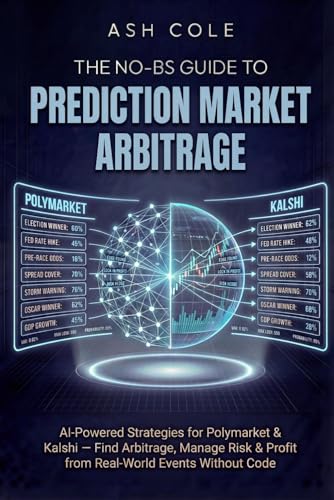
The No-BS Guide to Prediction Market Arbitrage: AI-Powered Strategies for Polymarket & Kalshi — Find Arbitrage, Manage Risk & Profit from Real-World Events Without Code (The No-BS AI Playbooks)
As an affiliate, we earn on qualifying purchases.
As an affiliate, we earn on qualifying purchases.
Uncertainties Around AI Performance and Market Dynamics
It remains unclear how often Polybot’s estimates will significantly diverge from market prices in live conditions and whether these divergences will translate into profitable trades. The system’s effectiveness depends on many factors, including market liquidity, slippage, and the AI’s calibration over time. Additionally, the experiment is still in early phases, and long-term results are not yet available.
Experts warn that past backtests may not reflect real-world performance, and the adversarial nature of markets could diminish any edge the AI might have. The true reliability of Polybot’s approach remains to be seen as more data accumulates.
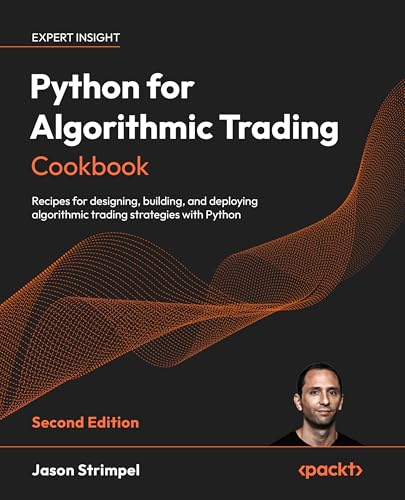
Python for Algorithmic Trading Cookbook: Recipes for designing, building, and deploying algorithmic trading strategies with Python
As an affiliate, we earn on qualifying purchases.
As an affiliate, we earn on qualifying purchases.
Next Steps for Testing and Validation
Forezai plans to continue testing Polybot in live prediction markets, monitoring its trade frequency, accuracy, and calibration over extended periods. The focus will be on gathering data to assess whether the AI can maintain reliable estimates and avoid overconfidence. Researchers will analyze the recorded reasoning behind each estimate to refine the model and thresholds for action.
Further development may include integrating additional data sources, adjusting thresholds, and exploring different market questions. The project aims to publish ongoing findings, contributing to broader understanding of AI’s role in prediction markets and financial decision-making.

Project Management Tools (AI for Risks)
As an affiliate, we earn on qualifying purchases.
As an affiliate, we earn on qualifying purchases.
Key Questions
Can Polybot reliably beat prediction markets?
Currently, Polybot is an experimental system designed to test whether AI can identify mispricings. Its reliability and profitability in live markets are still under evaluation, and experts caution that beating markets consistently is very difficult.
Is this system intended for actual trading or investment?
No. Polybot is an open-source research project meant to explore AI’s capabilities and limitations in prediction markets. It is not a financial advice tool and carries significant risks if used for real trading.
What are the main risks associated with Polybot?
The system may generate false signals, incur losses due to slippage and fees, and overestimate its predictive power. Market dynamics and adversarial responses can also diminish any edge.
How does Polybot ensure transparency?
Each probability estimate and reasoning process is recorded, allowing post-trade analysis and calibration. This auditability aims to improve understanding and trust in the system’s decisions.
Will Polybot be used for real trading in the future?
There are no plans to deploy Polybot for live trading as a profit tool. Its purpose remains research-focused, to understand AI’s potential and limits in prediction markets.
Source: ThorstenMeyerAI.com