
Before buying a Kaspa miner, your top focus should be verifying that it will generate enough profit with your current power supply and hardware setup. Check its hash rate, power consumption, and compare these with online profitability calculators, factoring in your local electricity rates. Make sure the expected revenue justifies your investment and that the miner’s specs match your system. If you want to avoid costly mistakes and optimize your mining efforts, there’s more you need to take into account.

Get hardware and tech essentials delivered free — and shop member deals
- Fast, free delivery on millions of items
- Access to Prime Big Deal Days deals on October 6–7
- Prime Video, Amazon Music and more included
Key Takeaways
- Verify the miner’s hash rate and power consumption to ensure it aligns with your profitability goals.
- Confirm compatibility with your existing hardware, software, and electrical capacity.
- Use online profitability calculators with local electricity rates to assess potential revenue.
- Ensure the miner’s build quality and reliability to minimize downtime and maintenance costs.
- Check warranty coverage and after-sales support for ongoing hardware assistance.
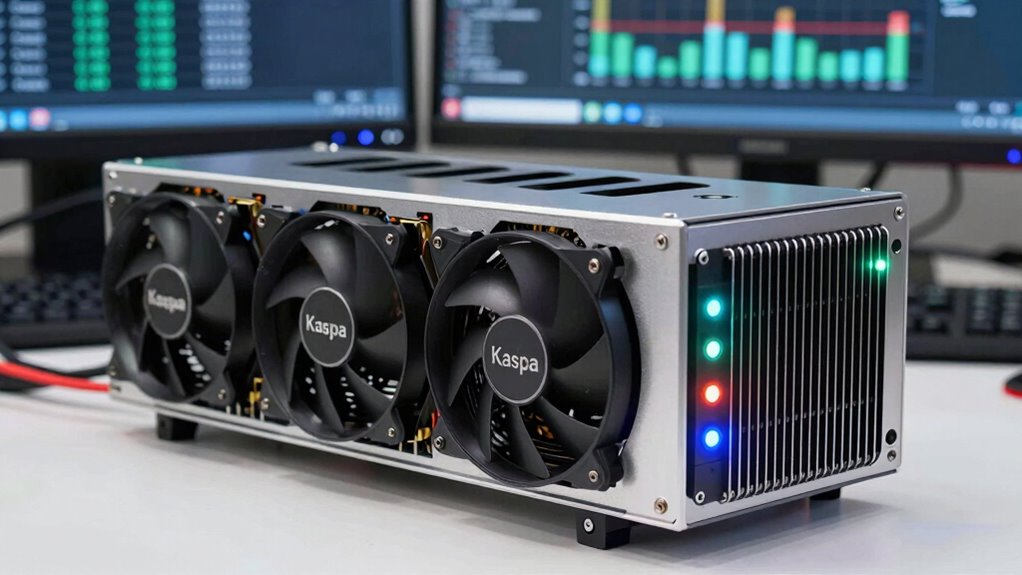
When you’re ready to buy a Kaspa miner, having a clear checklist to guide your decision-making process is vital. The first thing you should check is whether the miner aligns with your goals, especially focusing on mining profitability. You want to confirm that the investment you’re making will generate a reasonable return, so look closely at the hash rate and power consumption. Higher hash rates often mean more mining power, but they also come with increased energy costs. To determine your potential earnings, use online profitability calculators tailored for Kaspa mining, inputting the miner’s specs and your local electricity rates. This will give you a realistic idea of whether the miner can deliver the revenue you expect. Don’t forget to factor in potential fluctuations in Kaspa’s market value, as profitability isn’t static.
Next, it’s essential to verify hardware compatibility. Not every mining rig suits every setup, so you need to check if the miner connects seamlessly with your existing hardware and software. Confirm that it supports your power supply and that your electrical system can handle its requirements without risking overloads. Also, see if the miner is compatible with your operating system and mining software — some miners are optimized for specific platforms, which can save you time and frustration later. Compatibility also extends to physical considerations: ensure the miner’s size fits your available space and that it can be adequately cooled. Overheating can reduce performance and lifespan, so check that your setup has proper ventilation or plan for additional cooling solutions. Additionally, understanding hardware durability can help you select a miner that will last longer and withstand the rigors of continuous operation. Considering hardware maintenance needs is also crucial, as some models require more frequent upkeep, which could influence your overall operational costs. It’s also beneficial to research thermal management solutions to ensure your setup can handle heat dissipation efficiently, which is vital for maintaining consistent performance.
While hardware compatibility and profitability are primary concerns, don’t overlook other factors like build quality, warranty, and after-sales support. A well-built miner might cost more initially but can save you money in repairs and downtime over time. Look for reviews or user feedback on reliability. Also, consider the miner’s energy efficiency — a more efficient model consumes less power for the same hashing power, directly impacting your profitability. In addition, paying attention to cooling requirements can prevent overheating and ensure stable operation, especially during extended mining sessions.
Prioritize build quality, warranty, and energy efficiency to maximize reliability and profitability in your Kaspa mining setup.
In essence, the most vital initial check for any Kaspa miner buyer is ensuring the equipment can deliver solid mining profitability while being fully compatible with your existing hardware setup. Doing this upfront prevents costly mistakes and sets the foundation for a successful mining operation. Once you’re confident on these points, you can move forward with purchasing, knowing your investment has the best chance of paying off.
As an affiliate, we earn on qualifying purchases.
Frequently Asked Questions
What Is the Average Energy Consumption of Kaspa Miners?
Kaspa miners typically have an average energy consumption of around 2,000 to 3,000 watts, depending on the model. You should focus on energy efficiency to optimize power consumption and reduce operational costs. Look for miners with higher energy efficiency ratings, as they use less power for the same hashing performance. Comparing power consumption across models helps you choose a device that balances performance with lower energy costs.
How Does Kaspa’s Mining Difficulty Fluctuate Over Time?
Kaspa’s mining difficulty fluctuates based on blockchain scalability and network activity, adjusting regularly to maintain consistent block times. When more miners join, difficulty increases, making mining less profitable; when they leave, it decreases, boosting profitability. You should monitor these changes, as they directly impact your mining efficiency and profitability. Staying aware of difficulty trends helps you optimize your equipment and maximize earnings in the dynamic Kaspa network.
Are There Specific Hardware Brands Recommended for Kaspa Mining?
Think of Kaspa mining hardware as a trusty vehicle—you want reliability and compatibility. While specific brands vary, look for those known for hardware compatibility and brand reliability, like Bitmain or MicroBT. These brands consistently produce durable, efficient miners that can handle Kaspa’s mining algorithms. Always check user reviews and manufacturer specs to guarantee your chosen hardware aligns with Kaspa’s requirements, maximizing your mining success.
What Is the Resale Value of Kaspa Mining Equipment?
The resale value of Kaspa mining equipment varies based on mining profitability and market demand. As Kaspa’s popularity grows, equipment tends to hold better resale value, especially if it’s high-quality and efficient. Keep an eye on the resale market trends and the equipment’s age and condition. If mining profitability remains steady, your gear will likely retain or even increase its value, making it a worthwhile investment long-term.
How Often Should I Update My Mining Software?
You should update your mining software regularly, ideally whenever new versions are released. Frequent updates help improve mining profitability by optimizing performance and fixing bugs. Always check software compatibility before updating to guarantee your hardware works smoothly with the latest features. Staying current with updates also enhances security, protecting your mining setup from vulnerabilities. Aim for at least once a month, or immediately if critical updates are announced.
Kaspa miner profitability calculator
As an affiliate, we earn on qualifying purchases.
As an affiliate, we earn on qualifying purchases.
Conclusion
Before investing in a Kaspa miner, remember you’re planting a seed in a complex forest. Check the roots—your miner’s specs—and make sure it’s sturdy enough to weather the storms of market volatility. Like tending a garden, patience and knowledge will nurture your growth. By doing your homework first, you’re not just buying hardware—you’re planting the first branch of a future tree, whose shade and fruit depend on the care you give it from the very start.
As an affiliate, we earn on qualifying purchases.
As an affiliate, we earn on qualifying purchases.
Evergreen bestsellers Picks
bestsellers
As an affiliate, we earn on qualifying purchases.