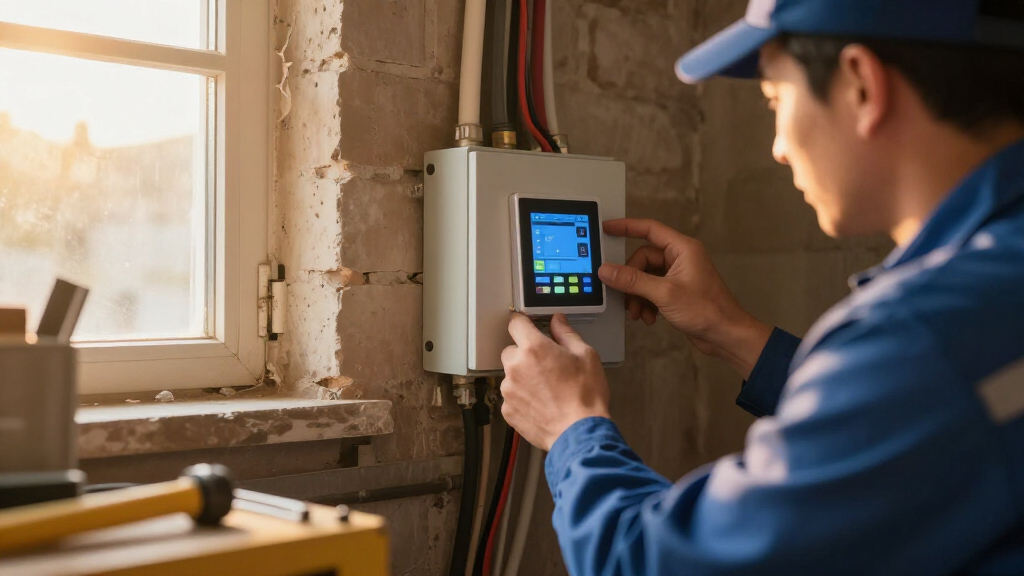

🔍 Read the full analysis: AI In Plumbing & HVAC: Eliminating Surprises And Improving Collaboration on ThorstenMeyerAI.com

Get hardware and tech essentials delivered free — and shop member deals
- Fast, free delivery on millions of items
- Access to Prime Big Deal Days deals on October 6–7
- Prime Video, Amazon Music and more included
TL;DR
AI technology is now enabling real-time coordination and documentation in plumbing and HVAC construction, reducing errors and speeding up project completion. Gewerkton platform exemplifies these advances, with confirmed benefits in project efficiency and accuracy.
AI-driven platforms are now enabling real-time coordination and documentation in plumbing and HVAC projects, according to recent case studies. These innovations are helping companies eliminate unplanned breakthroughs, reduce errors, and improve collaboration among trades, making projects more predictable and efficient.
Gewerkton, a voice-first platform developed for construction documentation and defect management, has been adopted by a building services company specializing in residential and nursing home projects. The platform integrates AI to ensure precise alignment of shafts, pipes, and walls before concrete pours, addressing longstanding issues of uncoordinated breakthroughs that previously caused delays and damage.
In practical terms, the platform provides a digital status for each element — requested, approved, cut, or completed — and flags discrepancies such as misaligned riser shafts before they become costly problems. This approach has reduced uncoordinated breakthroughs per project from over 40 to fewer than 5, according to internal reports. Additionally, the platform’s photographic documentation allows leak locations to be identified in minutes instead of days, significantly enhancing maintenance and repair workflows.
Thorsten Meyer, representing the company behind Gewerkton, states that these tools are not just about digitization but about creating a shared, reliable knowledge base that persists beyond project completion. The equipment register generated during handover includes maintenance schedules and warranty data, enabling operators to track and manage assets efficiently post-project. These developments are confirmed to improve margins and reduce costly rework, with specific case studies illustrating tangible benefits.
Impact of AI on Construction Coordination and Efficiency
The integration of AI in plumbing and HVAC projects marks a significant shift toward more predictable, error-free construction workflows. By eliminating surprises such as unplanned breakthroughs and misaligned shafts, companies can reduce project delays, avoid costly rework, and improve overall margins. Enhanced collaboration and real-time documentation foster better communication among trades, leading to more efficient project execution. These advances are especially relevant as the construction industry seeks to digitize and modernize in response to labor shortages and increasing complexity.
AI-powered plumbing and HVAC project management tools
As an affiliate, we earn on qualifying purchases.
As an affiliate, we earn on qualifying purchases.
Historical Challenges in Plumbing & HVAC Project Management
Traditionally, plumbing and HVAC projects have suffered from coordination issues, with unplanned breakthroughs often causing delays and damage. These problems stemmed from a lack of real-time information, poor communication, and manual documentation processes. Projects frequently experienced rework due to misaligned shafts, incorrect routing, and incomplete documentation, which increased costs and extended timelines.
Recent technological developments, including Building Information Modeling (BIM) and digital platforms, began addressing these issues, but integration of AI-powered tools like Gewerkton represents a further step forward. These tools leverage AI to automate coordination checks, track progress, and provide comprehensive documentation, significantly reducing errors and enhancing collaboration.
“Our platform ensures that every breakthrough is planned and documented, which directly impacts project margins and quality.”
— Thorsten Meyer
digital documentation platform for construction
As an affiliate, we earn on qualifying purchases.
As an affiliate, we earn on qualifying purchases.
Remaining Questions About AI Adoption in Construction
While early results are promising, it is still unclear how widely AI platforms like Gewerkton will be adopted across different regions and project types. The long-term impact on industry standards and the potential for integration with other digital tools remain to be seen. Additionally, the extent to which AI can fully replace manual oversight and adapt to complex, unforeseen issues is still under evaluation.
leak detection camera for plumbing repairs
As an affiliate, we earn on qualifying purchases.
As an affiliate, we earn on qualifying purchases.
Future Developments in AI-Driven Construction Coordination
Next steps include broader adoption of AI platforms across diverse construction projects, further integration with existing BIM systems, and development of more advanced predictive analytics. Industry stakeholders are expected to conduct longitudinal studies to measure long-term benefits, and regulatory bodies may begin to incorporate AI standards into building codes. Monitoring these trends will reveal how AI continues to reshape construction workflows.
asset management system for building maintenance
As an affiliate, we earn on qualifying purchases.
As an affiliate, we earn on qualifying purchases.
Key Questions
How does AI improve collaboration in plumbing and HVAC projects?
AI platforms facilitate real-time updates, automated coordination checks, and shared digital documentation, which help trades communicate more effectively and avoid conflicts or errors during construction.
What are the main benefits of using AI in construction documentation?
Benefits include reduced rework, faster leak detection, improved project timelines, better asset management, and higher margins due to fewer errors and delays.
Are these AI tools suitable for all types of construction projects?
While promising, AI tools like Gewerkton are currently more effective in projects with complex coordination needs and structured workflows. Broader application depends on industry adoption and integration with existing systems.
What challenges remain in implementing AI for construction coordination?
Challenges include high initial setup costs, resistance to change among traditional trades, data security concerns, and ensuring AI systems can handle unforeseen issues in complex environments.
How soon can we expect widespread adoption of AI in construction?
Adoption is already underway in some regions and companies, but widespread industry-wide use may take several years as technology matures and standards evolve.
Source: ThorstenMeyerAI.com
Fall Picks
fall essentials
As an affiliate, we earn on qualifying purchases.