

Citigroup is testing private blockchain solutions to securely tokenize securities within capital markets. These private networks aim to streamline issuance and trading processes while complying with regulatory frameworks, such as securities laws and AML/KYC rules. This innovation enhances transparency, reduces settlement times, and builds market trust. Exploring these developments helps you understand how digital assets and regulation are shaping the future of finance, opening new opportunities for efficiency and growth in the industry.
Key Takeaways
- Citigroup is testing tokenized securities on private blockchain networks to streamline issuance and trading processes.
- These private blockchains operate within regulatory frameworks to ensure compliance and security.
- Tokenization enhances market efficiency, transparency, and liquidity, reducing settlement times.
- Regulatory frameworks are crucial for building trust, protecting investors, and enabling market adoption.
- Such tests aim to integrate digital assets seamlessly into traditional financial systems, fostering innovation.
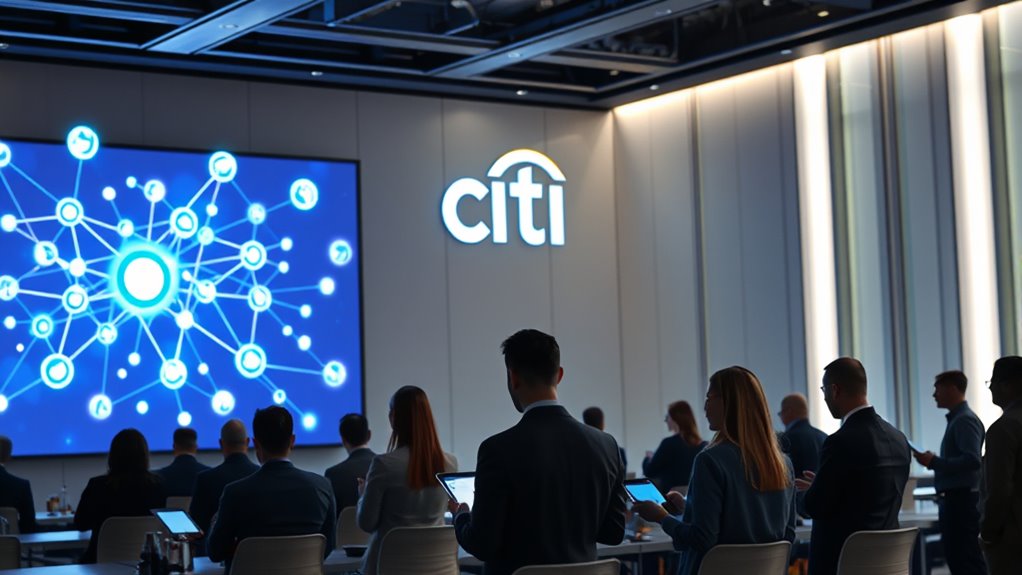
Have you ever wondered how digital technology is transforming traditional financial markets? One of the most significant shifts is the rise of digital assets and the innovative ways they’re reshaping asset ownership and trading. In this evolving landscape, tokenization stands out as a game-changer, especially within capital markets. When you hear about digital assets, think of them as digital representations of real-world assets, like equity, debt, or property, stored securely on blockchain networks. These tokens can be traded more efficiently, with increased transparency and reduced settlement times. As a result, traditional processes, which often involve multiple intermediaries and lengthy procedures, are being replaced by seamless, automated transactions. This shift is making markets more accessible and liquid, opening new opportunities for investors and issuers alike.
However, embracing digital assets in capital markets doesn’t happen without challenges. Central to their successful integration is establishing a solid regulatory framework. Governments and regulators are actively working to develop rules that define how digital assets can be issued, traded, and held. This regulatory framework provides clarity, helping to protect investors while fostering innovation. It’s essential because, without clear guidelines, market participants might hesitate to adopt new technologies due to fears of legal uncertainties or compliance risks. For example, regulations around securities laws, anti-money laundering, and know-your-customer requirements are being adapted to accommodate tokenized assets. You need to understand that a well-designed regulatory environment encourages trust and legitimacy in digital asset markets, making it easier for firms like Citigroup to experiment with private blockchains and tokenization projects.
Citigroup’s private blockchain tests exemplify how financial institutions are exploring these new frontiers. By experimenting with tokenized securities on private networks, banks aim to streamline issuance and trading processes while maintaining control over sensitive data. These private blockchains operate within a defined regulatory framework that guarantees compliance and security, giving confidence to both investors and regulators. The goal isn’t just innovation for its own sake but creating a reliable infrastructure that integrates digital assets into existing financial systems. Additionally, the adoption of regulatory frameworks plays a crucial role in fostering market trust and stability. As you follow these developments, it’s clear that the successful blending of digital assets and a robust regulatory framework will be key to accessing the full potential of tokenization in capital markets. This approach guarantees that technological advancements benefit everyone—making markets more efficient, transparent, and inclusive—and sets the stage for a future where digital assets are a standard part of financial transactions.

Bubble or Revolution? The Future of Bitcoin, Blockchains, and Cryptocurrencies
As an affiliate, we earn on qualifying purchases.
As an affiliate, we earn on qualifying purchases.
Frequently Asked Questions
How Does Tokenization Impact Investor Rights and Voting?
Tokenization enhances your shareholder empowerment by making ownership more accessible and divisible. It improves voting transparency because digital tokens can be tracked and verified on a blockchain, ensuring your votes are accurately counted and tamper-proof. This process streamlines shareholder rights, giving you more control and confidence in the voting process. Overall, tokenization fosters a more democratic and transparent environment for exercising your investor rights.
What Regulatory Hurdles Exist for Tokenized Assets?
You face regulatory hurdles like ensuring compliance with legal frameworks and regulatory compliance standards. Authorities may scrutinize tokenized assets to prevent money laundering, fraud, and market manipulation, which requires clear guidelines and adaptable rules. Steering through these complexities means working closely with regulators to develop standards that protect investors while fostering innovation. Without proper legal frameworks, tokenized assets could encounter delays, legal challenges, or restrictions that hinder their widespread adoption.
How Are Security and Privacy Maintained in Blockchain Tokenization?
You maintain security and privacy in blockchain tokenization through data privacy measures and encryption methods. You implement strong encryption to protect transaction data and sensitive information, ensuring unauthorized access is prevented. You also adopt privacy-preserving techniques, like zero-knowledge proofs, to verify transactions without revealing details. By combining these strategies, you create a secure environment that safeguards assets, maintains confidentiality, and builds trust among participants in the market.
Can Tokenized Assets Replace Traditional Securities Entirely?
Tokenized assets could replace traditional securities for certain transactions, enhancing digital ownership and increasing asset liquidity. You might see faster settlement times, reduced costs, and easier cross-border trading. However, full replacement isn’t likely soon, as regulatory hurdles and market acceptance still need to develop. While tokenization offers promising benefits, it’s more about complementing traditional securities initially, gradually transforming how you buy, sell, and manage assets digitally.
What Are the Cost Implications of Adopting Tokenization Technology?
Think of adopting tokenization technology as planting a seed for future growth. You’ll likely see cost savings by reducing paperwork and manual processes, and operational efficiencies will bloom as transactions become faster and more transparent. While initial setup costs might feel like a storm, in the long run, the streamlined systems and reduced expenses can transform your operations into a well-tuned machine, saving you money and boosting productivity.
Tokenized Real World Assets (RWA) – From Bricks to Pixels: The Definitive Guide to Real Asset Tokenization: How to Buy Shares of Skyscrapers, Art, and Luxury Goods in the New Digital Economy.
As an affiliate, we earn on qualifying purchases.
As an affiliate, we earn on qualifying purchases.
Conclusion
As you witness Citigroup’s private blockchain testing tokenization, it’s clear this innovation is transforming capital markets faster than you can blink. This technology promises to revolutionize how assets are traded, making transactions almost instantaneous and infinitely more efficient. If this pilot succeeds, it could unleash a tidal wave of change so powerful, it’ll reshape the financial landscape forever. Embrace the future now—because the era of tokenized assets is coming faster than you ever imagined.

Credit Market Innovations: How Institutions, Technology, And Regulation Are Reshaping Global Lending
As an affiliate, we earn on qualifying purchases.
As an affiliate, we earn on qualifying purchases.
Understanding Financial Sanctions as a Tool of U.S. Power in 75 Questions
As an affiliate, we earn on qualifying purchases.
As an affiliate, we earn on qualifying purchases.