
📊 Full opportunity report: Briefro: A Document That Tells The Truth on ThorstenMeyerAI.com — validation score, market gap, and execution plan.
TL;DR
Briefro has launched a new AI document tool that emphasizes data accuracy, privacy, and brand consistency by operating entirely on local hardware. It aims to replace multiple tools with a unified, trustworthy solution.
Briefro has announced the release of a new AI-powered document platform designed to ensure data accuracy, privacy, and brand consistency. The platform operates entirely on users’ hardware, eliminating the need for cloud-based data transfer, which is a significant concern for regulated industries. This development marks a notable shift in AI document tools, focusing on trustworthiness and security.
The platform, named Briefro, is built around three core commitments: it runs exclusively on the user’s hardware, keeps all data within the local network, and ensures that figures and content are directly linked to live data sources. This approach aims to address common issues with traditional document tools, such as stale data, transcription errors, and version drift.
Briefro’s features include automatic application of brand styles, real-time data binding for charts and KPIs, and deterministic exports that are reproducible for audits. The tool also incorporates a source-citing mechanism, making drafts verifiable and claims traceable. While the product is shipping as a functional version 1, some advanced features like the what-if scenario engine are still in development, with known bugs and ongoing improvements.
A Document That Tells the Truth
A prompt becomes a polished, branded deck, document, or proposal — where every figure is bound to your actual data, the regulated language is locked, the export is reproducible, and the whole thing is generated on hardware you own.
re-upload the data and this figure updates itself. A pasted number drifts; a bound one can’t.
The v1 contract deliberately killed the marketing site — spec written, then archived with “do not build any of it now.” The app shipped; briefro.com served nothing; four legal pages 404’d to an empty /. Subtraction taken to its end — refused until the product was real. This is the work of finally building it.
main, staged as one clean concern, committed once, and merged by PR — the dirty branch never touched.stdin, never on the command line, so the password never hit the process list.- Rotate the FTP password. It was pasted into a setup transcript, so it’s flagged for rotation as a precaution — noted, not buried.
- One-command redeploy pending. A deploy script that bakes in the control-only-TLS font trick is still to be written.
- What-if is unmerged and broken. The scenario engine reaches the KPIs but not yet the chart’s value labels; it lives on a local branch until the bug is fixed.
- Frontier vs. core. The trust architecture — local generation, data-binding, locked clauses, deterministic export — is load-bearing; some features around it are still evolving.
Independent commentary, produced with AI assistance under human editorial oversight. The views are the author’s own and may change. This is not business, financial, legal, or technical advice. Briefro is an early-stage product; some capabilities are shipped while others are in development or unmerged. Legal-page references describe templates, not advice. Infrastructure identifiers and credentials have been deliberately omitted. Product, model, and company names are trademarks of their respective owners; mention does not imply endorsement.
Why Data Trust and Privacy Matter in AI Documents
This development is significant because it tackles the core issues of data integrity and privacy in AI-generated documents, especially for highly regulated sectors like finance, healthcare, and legal services. By ensuring data never leaves the local environment and providing verifiable, reproducible outputs, Briefro offers a solution that could replace multiple existing tools, reducing complexity and risk. Its emphasis on trust mechanics aligns with increasing regulatory scrutiny and corporate demands for data sovereignty.

NIMO 17.3 AI Laptop, 12-Core Ryzen 9 HX 370, 64GB RAM 4TB SSD Radeon 890M, with RX 7600M XT 8GB GDDR6 eGPU Dock, for AI Designers & Video Editors, Supports AI Tasks & Rendering, 2-Yr Warranty
- Powerful AMD Ryzen AI 9 HX 370: Handles AI, coding, video editing, gaming
- 144Hz High Refresh Rate Screen: Smooth visuals for gaming and work
- RTX 4060 Performance via eGPU: Supports 8K/4K monitors with portable design
As an affiliate, we earn on qualifying purchases.
As an affiliate, we earn on qualifying purchases.
Background on Trust Challenges in AI Document Tools
Traditional AI document tools often rely on cloud-based processing, which raises concerns about data privacy, compliance, and version control. Many organizations face internal barriers to adopting AI solutions due to these issues, especially in sectors with strict data regulations. Prior attempts to integrate AI into document workflows have often fallen short on trustworthiness, leading to hesitancy or partial adoption. Briefro’s approach—local operation and data binding—responds directly to these longstanding challenges.
“Our platform is designed to put trust at the core of AI document creation—by ensuring data remains on your hardware and figures are always current, we address the real concerns organizations have about AI and data security.”
— Thorsten Meyer, CEO of Briefro
privacy-focused document management software
As an affiliate, we earn on qualifying purchases.
As an affiliate, we earn on qualifying purchases.
Unresolved Technical and Adoption Challenges
While Briefro is shipping as a working product, some features, such as the what-if scenario engine, are still in development and contain known bugs. It remains unclear how well the platform will perform at scale or how quickly organizations will adopt its privacy-centric approach, especially given the current competitive landscape of AI tools. Long-term stability and user experience in complex workflows are still to be proven.
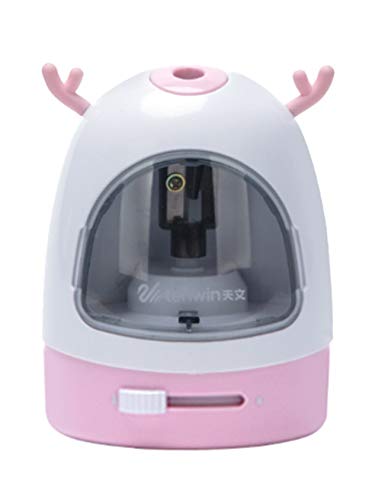
Adjustable Pen Automation Cute Style Non-Slip Office Tool
- Durable and Safe Material: Plastic and metal construction for safety and durability
- Replaceable Tool Holder: Interchangeable tool holder for extended use
- Adjustable Pen Thickness: Electric pen with adjustable tip thickness
As an affiliate, we earn on qualifying purchases.
As an affiliate, we earn on qualifying purchases.
Next Steps for Briefro and Industry Adoption
Briefro plans to continue refining its features, including fixing bugs in the scenario engine and expanding template offerings for various industries. The company will likely engage in user testing and gather feedback from early adopters in regulated sectors. Industry analysts will observe how quickly organizations transition from traditional tools to this local, trust-focused platform, and whether it gains widespread acceptance as a secure alternative to cloud-based AI solutions.
![Free Fling File Transfer Software for Windows [PC Download]](https://m.media-amazon.com/images/I/41Vq6ZqHfjL._SL500_.jpg)
Free Fling File Transfer Software for Windows [PC Download]
- User-Friendly FTP Interface: Intuitive and easy to use
- Reliable Site Maintenance: Ensures stable FTP connections
- Automation & Sync: Automates transfers and synchronization
As an affiliate, we earn on qualifying purchases.
As an affiliate, we earn on qualifying purchases.
Key Questions
How does Briefro ensure data privacy?
Briefro runs entirely on the user’s hardware, ensuring that no data leaves the local environment, which addresses privacy and compliance concerns.
Can Briefro replace existing document tools?
Yes, Briefro aims to unify functions like slide creation, data binding, and branding into a single platform, reducing reliance on multiple tools.
Are all features available now?
Most core features are available in version 1, but some advanced capabilities, such as the what-if scenario engine, are still in development and may contain bugs.
Is Briefro suitable for large organizations?
While designed to serve regulated industries, the platform’s scalability and integration with complex enterprise workflows are still being evaluated.
What makes Briefro different from other AI document tools?
Its emphasis on local operation, data-binding accuracy, and verifiable outputs set it apart from cloud-dependent solutions, especially for sensitive data environments.
Source: ThorstenMeyerAI.com