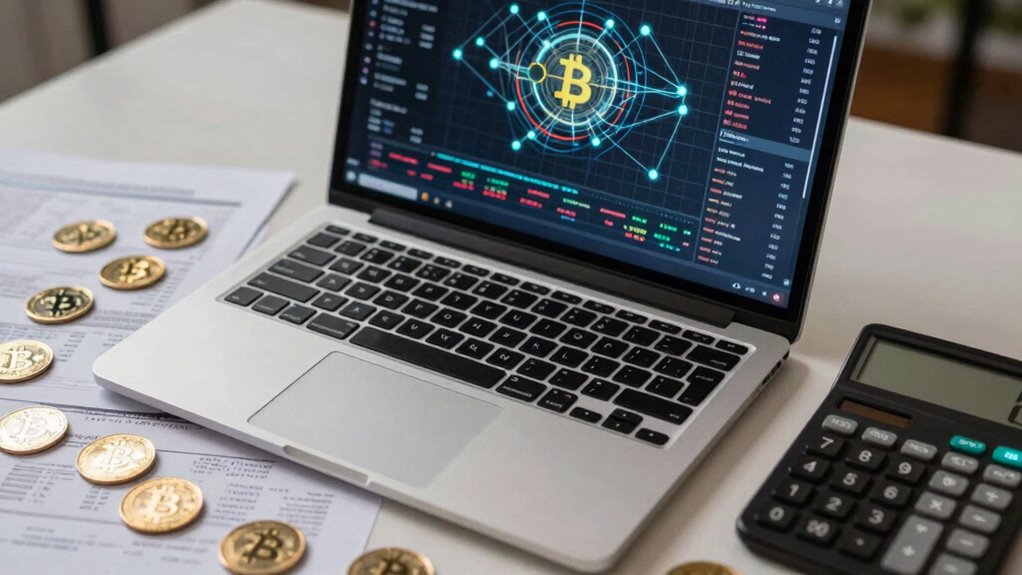

Estimating Bitcoin fees is harder than it looks because network congestion and real-time changes constantly impact how much you need to pay for quick confirmation. Miners prioritize transactions based on fee per byte, and sudden surges or drops in demand can make it tricky to set the right amount. Fees fluctuate due to scalability issues and market activity, meaning you must stay vigilant and adaptable. Keep going to discover how these factors influence your fee strategies.
Key Takeaways
- Fluctuating network congestion makes it difficult to predict optimal fees accurately.
- Sudden surges in demand cause rapid fee changes, challenging real-time estimation.
- Limited block capacity creates unpredictable competition among transactions.
- Fee dynamics depend on transaction size, demand, and miner prioritization strategies.
- Continuous network variability requires constant monitoring for effective fee adjustment.
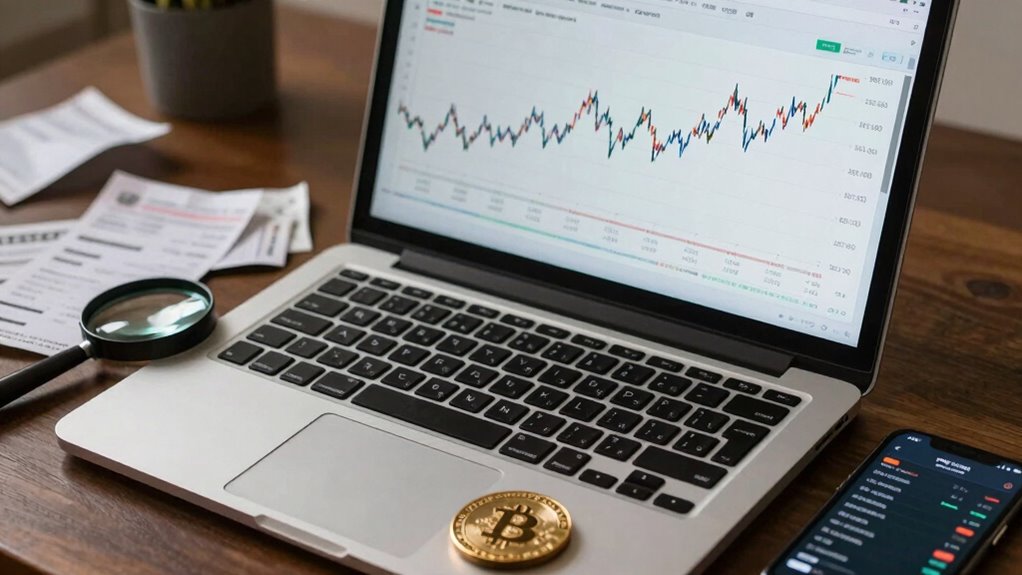
Estimating transaction fees on Bitcoin is vital to guarantee your transfers are confirmed promptly without overpaying. But figuring out the right fee isn’t as straightforward as it might seem. The complexity stems largely from the ongoing challenges with blockchain scalability, which directly impacts how quickly your transaction gets processed. When the network is crowded, miners prioritize transactions that include higher fees, making transaction prioritization a key factor in fee estimation. If you set your fee too low, your transaction could sit unconfirmed for hours or even days. Conversely, if you overestimate, you end up wasting money without any real benefit.
The difficulty in accurate fee estimation arises because the network’s congestion levels fluctuate constantly. During peak times, blocks fill up quickly, and miners tend to pick transactions offering higher fees to maximize their earnings. This means the ideal fee varies depending on current demand, and predicting that demand isn’t always easy. You need to consider not only the current transaction backlog but also how that backlog might change in the next few minutes or hours. Tools that provide real-time data attempt to help with this, but they are only as good as the data they rely on. Sudden surges in activity—like during market volatility or major news—can dramatically change the fee landscape in a matter of moments.
Another challenge is that the Bitcoin network itself has inherent limitations on how much data can be processed per block, which directly affects blockchain scalability. When blocks are full, the network becomes congested, and fee estimation becomes more critical and more difficult. If the network were more scalable, transactions could process faster and with lower fees, but current limitations mean you have to be more strategic about how you set your fees. This is where transaction prioritization plays an indispensable role; miners typically choose transactions based on the fee per byte, so understanding this dynamic can help you avoid overpaying while still getting confirmed in a timely manner. Additionally, understanding the blockchain scalability challenges can help users better anticipate fluctuations in fee requirements and plan accordingly.
In the end, fee estimation on Bitcoin requires a balance of real-time network awareness, understanding of how blockchain scalability impacts transaction processing, and insight into transaction prioritization. It’s a dynamic process that demands attention and adaptability. While automated tools can assist, no system can predict network conditions perfectly at all times. That’s why, as a user, you need to stay informed and be ready to adjust your fee strategy as network conditions evolve.

PCB Surface Quality Check Tool SEC Transparency Size Estimation Gauge (1)
- Accurate size estimation chart: High precision measurement tool
- High transparency: Clear and easy to read
- High resolution: Detailed and sharp display
As an affiliate, we earn on qualifying purchases.
As an affiliate, we earn on qualifying purchases.
Frequently Asked Questions
How Do Network Congestion Levels Impact Fee Estimation Accuracy?
When network congestion levels rise, fee estimation becomes less accurate because block propagation slows, and the mempool fills quickly. You might overpay during high congestion or underpay if the network clears faster than expected. Proper mempool management helps, but unpredictable congestion makes it tricky to set the right fee. As a result, your transaction could be delayed or incur unnecessary costs, highlighting how congestion impacts fee estimation precision.
Can Fee Estimation Algorithms Adapt to Sudden Transaction Volume Spikes?
Fee estimation algorithms can adapt to sudden transaction volume spikes by monitoring block propagation times and mempool prioritization changes. When a spike occurs, they analyze how quickly blocks are being mined and adjust fee suggestions accordingly. This dynamic approach helps prevent delays, ensuring your transactions get confirmed faster. However, rapid fluctuations still pose challenges, and algorithms may need continual updates to stay accurate during unpredictable network congestion.
What Role Do Transaction Sizes Play in Fee Calculation?
Transaction sizes directly impact fee calculation because larger transactions take up more space in a block’s limited size. You need to pay higher fees for bigger transactions to guarantee they get prioritized in the block, especially during high demand. Fee prioritization depends on balancing transaction size and the current block size, making it tricky to estimate fees accurately. Smaller, more efficient transactions often get confirmed faster with lower fees.
Are There Best Practices for Setting Fees During Peak Times?
During peak times, you should prioritize using dynamic fee estimation tools that consider blockchain scalability and current network congestion. Setting higher fees can incentivize miners, ensuring quicker confirmation. Keep an eye on mempool activity and recommended fee rates, adjusting your fees accordingly. This approach balances miner incentives and network demand, helping your transactions confirm faster without overpaying. Always stay updated with the latest fee guidelines for ideal results.
How Do Different Bitcoin Wallets Handle Fee Estimation?
Imagine each wallet as a skilled sailor steering the fee market’s unpredictable currents. Different Bitcoin wallets handle fee estimation with unique algorithms, like compasses guiding you through choppy waters. Some use historical data to predict ideal fees, while others adjust dynamically based on network congestion. This variety means your experience varies—some wallets aim for speed, others prioritize cost-efficiency, making fee estimation a complex dance across the ocean of Bitcoin transactions.
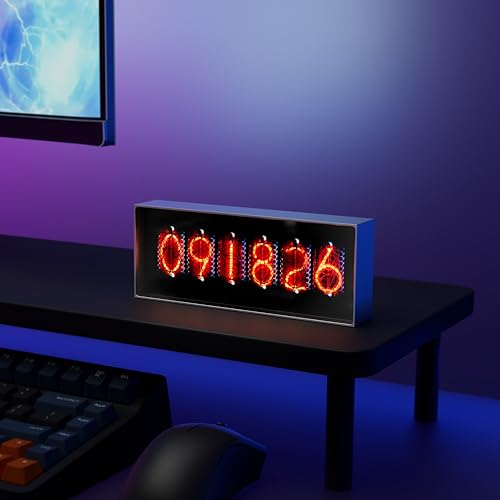
Electronic Display for Real-Time Cryptocurrency/Bitcoin/Stock Market Data, Time, Weather & Temperature, 164*28*65mm, Supports Image Upload and 30s Video Playback, App-Controlled, 960*360 Resolution
- Real-Time Data Display: Cryptocurrency, stock, time, weather updates
- Custom Media Uploads: Upload images and 30s videos
- App-Controlled Management: Control content and display modes
As an affiliate, we earn on qualifying purchases.
As an affiliate, we earn on qualifying purchases.
Conclusion
Estimating fee estimation on Bitcoin is like trying to read the subtle currents beneath a calm surface—what seems straightforward can quickly become complex. While it might look simple at first glance, countless unseen factors influence the right fee, making your journey more intricate than it appears. So, approach with patience and awareness, knowing that behind every smooth transaction lies a delicate dance of digital signals, quietly working to keep your experience seamless amid the depths.
Bitcoin transaction fee calculator
As an affiliate, we earn on qualifying purchases.
As an affiliate, we earn on qualifying purchases.
Bitcoin network congestion indicator
As an affiliate, we earn on qualifying purchases.
As an affiliate, we earn on qualifying purchases.