
📊 Full opportunity report: The City That Watches Itself: The Living Digital Twin, And The God’s-Eye View We’re Building on ThorstenMeyerAI.com — validation score, market gap, and execution plan.
TL;DR
Cities are creating dynamic digital twins that mirror real-time urban activity using advanced sensors and AI. This development enhances planning but also raises privacy and sovereignty issues. The story is ongoing and evolving with technological and policy debates.
Urban centers worldwide are now developing living digital twins, real-time virtual replicas of their physical environments, driven by advanced sensors and AI. These models enable city officials to monitor, simulate, and manage urban systems with increased detail, but also introduce new considerations around surveillance and sovereignty.
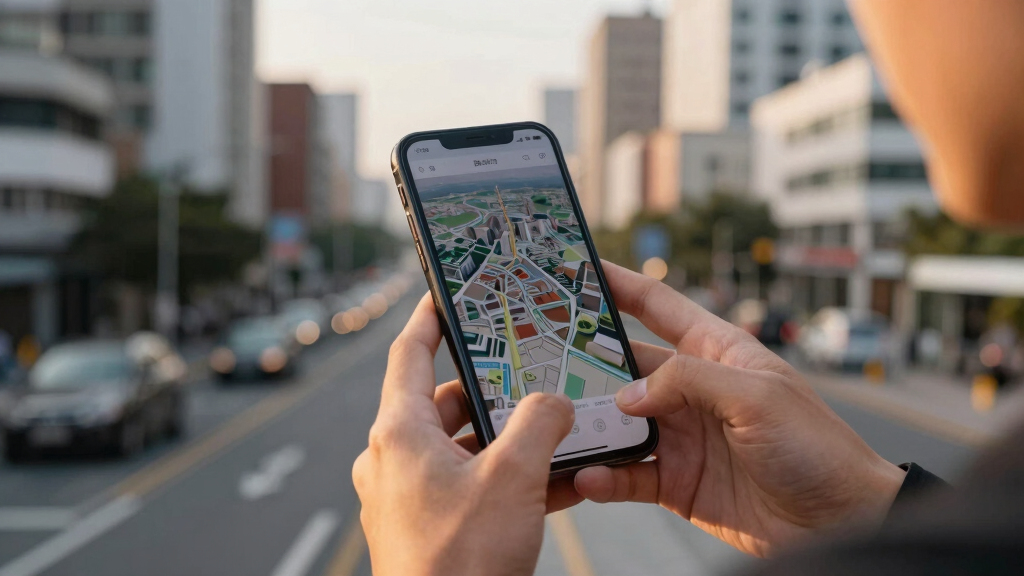
The core of this innovation involves integrating data from IoT sensors, satellite imagery, and AI models into a continuous, dynamic virtual replica of a city. Cities like Singapore, Helsinki, and Las Vegas have already implemented operational digital twins that assist in planning and infrastructure management. These models update second by second, providing a comprehensive view of urban activity, including traffic, utilities, and environmental conditions.
Recent technological convergence—such as Wide-Area Motion Imagery (WAMI), all-weather radar, and frontier AI—has contributed to these models becoming real-time, queryable representations of city dynamics. WAMI sensors track vehicles and pedestrians, storing their movements for analysis. When combined with synthetic-aperture radar and satellite data, the digital twin offers a multi-sensor, continuously updated depiction of urban environments.
Experts emphasize that the key development is AI’s ability to interpret diverse data sources, recognize patterns, and respond to natural language queries, transforming the digital twin from a static map into an interactive analytical tool. However, this raises questions about data privacy, city sovereignty, and the potential for external influence, especially when foreign AI models are involved.
The city that watches itself: the living digital twin, and the god’s-eye view we’re building
Soon most cities will exist twice — once in concrete, once as a live data model you can rewind, simulate, and question in plain language. Persistent sensing + frontier AI turn the planner’s digital twin into an oracle. The most useful thing we’ve built — and the most powerful surveillance instrument. Both at once.
- Plan better — cities & rural: traffic, zoning, energy, land use
- Emergency response — route crews, one live picture, ~50% faster
- Disaster resilience — simulate, track live, assess damage in hours
- Mass surveillance — track everyone, retroactively, forever
- Pattern-of-life — AI links movements, infers associations
- Social control — no warrant, no suspicion (cf. Baltimore, 2021 ruling)
We’re building a city that watches itself, remembers everything, and can be asked anything. The technology won’t choose between saving lives and ending privacy — we will, through the rules we write now, while the twin is still under construction and the defaults haven’t yet hardened into permanence. WAMI and the living twin open our lives to a view from the heavens that, from the dawn of civilization until a heartbeat ago, was reserved for gods and stars. The question is no longer whether we can see everything — it’s who gets to look, and who watches the watchers.
Implications for Urban Planning and Surveillance
The development of real-time digital twins offers potential benefits for urban planning, such as supporting data-driven decision-making, infrastructure management, and environmental monitoring. These models can help city officials evaluate the impacts of proposed developments and optimize resource use.
At the same time, the technology enhances the capacity for detailed monitoring of urban activities. This dual-use nature prompts discussions about privacy, civil liberties, and the governance of sensitive infrastructure, particularly considering reliance on foreign AI systems that may influence data sovereignty.

SMARTHON Smart City IoT Starter Kit for Micro:bit
- Complete IoT Learning Kit: Hands-on smart city projects with WiFi extension
- Includes 11 Projects: Build applications like traffic lights and weather stations
- Comprehensive Accessories: Sensors, modules, and building models included
As an affiliate, we earn on qualifying purchases.
As an affiliate, we earn on qualifying purchases.
Technological Foundations and Recent Advances in Digital Twins
The concept of digital twins originated as static models used for planning, but recent technological advancements have enabled their evolution into real-time, dynamic representations. Singapore’s Virtual Singapore, launched after severe flooding in 2012, exemplifies this progression by modeling urban infrastructure in three dimensions with live data overlays.
The integration of persistent wide-area sensing, all-weather radar, and advanced AI models has been instrumental in this development. WAMI sensors can track vehicles and pedestrians at scale, storing movement data for analysis. When combined with AI capable of understanding complex data, these models become interactive tools that can be queried in natural language, providing detailed insights and simulations.
This technological progress is driven by the maturation of frontier AI models like GPT-5.6, which can fuse heterogeneous data sources and interpret scenes with human-like understanding. Nonetheless, issues related to data sovereignty and external influence remain important considerations.
“The convergence of sensors and frontier AI is transforming city models into dynamic, interactive systems that can be queried for detailed insights.”
— Thorsten Meyer, AI researcher

Geodesign, Urban Digital Twins, and Futures
As an affiliate, we earn on qualifying purchases.
As an affiliate, we earn on qualifying purchases.
Unresolved Issues of Data Sovereignty and Privacy Risks
The widespread adoption of digital twins raises questions about their impact on civil liberties and how regulatory frameworks will evolve. Dependencies on foreign AI systems and data infrastructure pose potential risks to data sovereignty and security. The legal and ethical guidelines governing these systems are still under development, and their future application remains uncertain.

ANNKE 3K Lite Wired Security Camera System Outdoor, 8X 2MP Cameras, 1TB HDD
- AI Human/Vehicle Detection: Enhanced accuracy and smart searching
- Universal Compatibility: Works with TVI, AHD, CVI, CVBS, IP cameras
- Flexible Camera Support: Supports 1080P and 3K/5MP cameras
As an affiliate, we earn on qualifying purchases.
As an affiliate, we earn on qualifying purchases.
Next Steps in Regulation and Deployment of Digital Twins
As cities expand their digital twin capabilities, policymakers are expected to develop regulations that balance technological innovation with privacy protections. Advances in security measures and transparency in AI governance are anticipated. International cooperation and the development of standards may also become priorities to address issues related to sovereignty and cross-border data flows.
Ongoing pilot projects and research will help clarify practical limitations and risks, informing future deployment strategies for urban digital twins worldwide.

Deep Learning for Satellite Imagery with Python: End-to-End Workflows for Image Analysis, Object Detection, and Change Monitoring
As an affiliate, we earn on qualifying purchases.
As an affiliate, we earn on qualifying purchases.
Key Questions
How do digital twins improve city planning?
They enable simulation and analysis of infrastructure changes, environmental impacts, and resource management in a real-time, interactive environment, which can support more informed decision-making and reduce planning errors.
What are the main privacy concerns?
Digital twins equipped with extensive sensors can collect detailed data on individual movements and activities, raising concerns about mass surveillance and data security if appropriate safeguards are not in place.
Are these systems vulnerable to external control?
Dependence on foreign AI models and data infrastructure can introduce risks related to external influence or cyber vulnerabilities, which may affect city sovereignty and security.
Can digital twins replace traditional city management?
They are intended to serve as tools to support decision-making and planning, complementing human oversight rather than replacing it, especially considering ethical and security considerations.
What is the timeline for wider adoption?
Implementation is ongoing, with more cities expected to adopt digital twin systems in the coming years, depending on technological, legal, and political developments.
Source: ThorstenMeyerAI.com