

📊 Full opportunity report: Glasspane: When Transparency Itself Becomes the Product on ThorstenMeyerAI.com — validation score, market gap, and execution plan.
TL;DR
Glasspane has launched new features that deliver role-aware data views and AI-generated summaries, making infrastructure transparency more accessible and actionable for different stakeholders. This approach aims to build trust and improve decision-making across organizations.
Glasspane has unveiled a new set of capabilities that enhance infrastructure transparency by tailoring data presentation to different roles within an organization, supported by an open-source AI layer. This development aims to address longstanding challenges in enterprise IT visibility and trust.
The core innovation of Glasspane is its role-aware presentation, which displays identical underlying data differently for CFOs, account managers, and engineers, aligning with their specific informational needs. This approach moves beyond traditional dashboards, which often fail to engage diverse stakeholders effectively. The latest release introduces three interconnected features: Workforce Growth, AI Model Transparency, and expanded AI provider support.Workforce Growth enables managers to view personalized, AI-generated development insights for engineers, facilitating evidence-based performance discussions and career planning. This feature helps enterprises and MSPs demonstrate operational maturity and talent management capabilities. AI Model Transparency records telemetry on AI calls, including latency, success rates, and errors, providing visibility into AI performance and quality over configurable periods. This supports trust in AI-driven insights and helps detect model degradation early.
When transparency itself becomes the product
The infrastructure is healthy — but nobody can see it. Static PDFs and “trust us” status calls don’t scale. Glasspane replaces them with real-time, role-aware transparency, and an AI layer that explains what’s happening, why it matters, and what to do next.
“It’s healthy — trust us” doesn’t scale
MSPs and enterprise IT share the same problem from opposite sides of the table: the same question, asked over and over in different words — how do I know?
- Monthly PDF reports, already out of date
- Screenshots pasted into slide decks
- “Trust us, it’s fine” status calls
- Real-time status, not last month’s
- The right view for each audience
- AI that says what to do next
role-specific data visualization tools
As an affiliate, we earn on qualifying purchases.
As an affiliate, we earn on qualifying purchases.
One dataset, three audiences
The CFO, the account manager, and the on-call engineer look at the same infrastructure — but need completely different things from it. A dashboard that forces a CFO to read latency histograms is a dashboard the CFO closes. Switch the role and watch the same data re-present itself.
Role-aware presentation
The data underneath is identical. Only the framing changes — fitted to whoever’s asking.

AI-Driven Digital Transformation: A Proven Blueprint for Responsible AI Scaling
As an affiliate, we earn on qualifying purchases.
As an affiliate, we earn on qualifying purchases.
Model-agnostic — and inspectable by design
The AI turns what is happening into why it matters and what to do next. Two architectural choices keep that layer from becoming a liability.
Eight providers · assign per task · automatic fallback
If a primary provider fails, the next takes over transparently. Run a local model and sensitive infrastructure data never leaves your network.
Per-task + fallback chains
A different provider per task with one env var each; define a chain so a failure fails over, not down.
AGPL-3.0 · self-hostable
A transparency tool that can’t be audited would be a contradiction. Every line is inspectable.

Hands-On Infrastructure Monitoring with Prometheus: Implement and scale queries, dashboards, and alerting across machines and containers
As an affiliate, we earn on qualifying purchases.
As an affiliate, we earn on qualifying purchases.
Each feature extends the same thesis
None is really standalone. Each pushes transparency onto a new surface — the people, the AI itself, and the outsiders who need to see in.
Transparency for the people who run it
Career-ladder progression, growth signals, skills & goals — with AI generating evidence-backed development recommendations grounded in the next rung. Turns reviews from anecdote into evidence.
The tool that watches itself
Telemetry on every AI call — latency, errors, fallback events, version drift — across 1h / 24h / 7d. Alerts on degradation or version drift; every result footnotes the exact provider, model, version & latency.
Trust, delivered safely
Time-limited, role-based public links. Choose an audience, curate widgets from a public-safe whitelist, set an expiry. A read-only “Transparency Center” — no login, nothing you didn’t share.
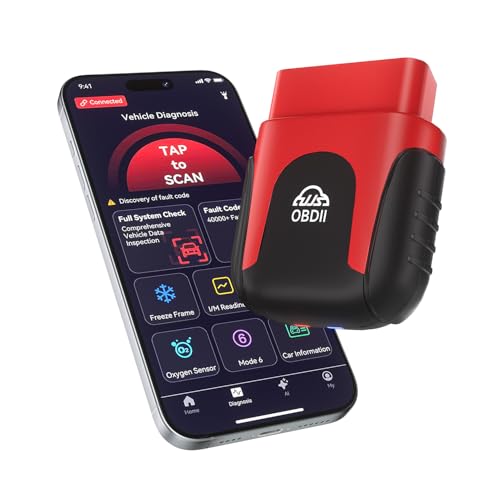
UJS Rocco OBD2 Scanner Bluetooth for iOS Android, AI Diagnostic Tool for Car Buying Repair, No Subscription Fee, AutoVIN, 45000+ Fault Codes, Check & Clear Engine Codes, Real-Time Data, Vehicles 1996+
AI-Powered Car Health Reports in Minutes: Get beyond confusing codes. Our Rocco OBD2 scanner connects to your phone…
As an affiliate, we earn on qualifying purchases.
As an affiliate, we earn on qualifying purchases.
Transparency compounds
Each layer is only as valuable as the one beneath it is credible — which is exactly why one coherent system beats bolting any single piece onto a tool that hasn’t earned the layers below.
The compounding stack
Infrastructure data
earns a customer’s trust — SLAs, security, cost, operations
Model Transparency
earns trust in the AI interpreting that data — no unaccountable black box
Public Sharing
delivers that trust directly & safely to the people who need it
Workforce Growth
extends the same evidence-based philosophy to the team behind it
Impact of Role-Specific Transparency on Organizational Trust
By providing tailored data views and transparent AI operations, Glasspane aims to foster greater trust among stakeholders—executives, engineers, and clients—by making infrastructure metrics more understandable and actionable. This approach reduces reliance on opaque reports and manual interpretation, potentially transforming how organizations manage and communicate about their IT environments. It also advances the broader movement toward transparency in AI and enterprise tools, emphasizing auditability and data sovereignty, especially with open-source architecture. Ultimately, this could lead to more confident decision-making, improved operational efficiency, and stronger stakeholder engagement.Background of Transparency Challenges in Infrastructure Monitoring
Traditional infrastructure dashboards often fail to meet the diverse needs of organizational roles, resulting in underutilized tools and persistent trust gaps. Managed service providers and enterprise IT teams have long struggled with providing clear, role-appropriate visibility. Prior efforts focused on static reports or generic dashboards, which do not scale or foster confidence. Glasspane’s approach builds on the recognition that transparency must be role-specific and trustworthy, supported by open-source AI that can be inspected and audited. The recent release aligns with ongoing trends toward AI-enhanced monitoring and self-hosted solutions, addressing concerns about data privacy and model reliability.“Glasspane’s role-aware presentation transforms transparency from a passive report into an active trust-building tool, tailored to each stakeholder’s needs.”
— Thorsten Meyer, founder of ThorstenMeyerAI.com
Unresolved Questions About Implementation and Adoption
It is still unclear how widely organizations will adopt the new role-specific views and AI transparency features, and how they will impact existing workflows. The effectiveness of AI-generated development recommendations in improving talent retention and performance remains to be validated through real-world use. Additionally, the long-term stability and security implications of integrating multiple AI providers, especially with local hosting options, are still being evaluated. Further user feedback and case studies are needed to assess overall impact.Next Steps for Glasspane and User Engagement
Glasspane plans to gather user feedback on the new features over the coming months, refining role-specific views and AI telemetry tools. The company is also expected to expand integrations with more AI providers and enhance customization options. For users, early adoption will involve pilot programs within enterprise teams and MSPs, with broader rollout anticipated as feedback informs improvements. Monitoring the impact on trust, operational efficiency, and talent management will be key to assessing success.Key Questions
How does role-aware presentation improve infrastructure monitoring?
It tailors data views to meet the specific informational needs of different stakeholders, making complex metrics more understandable and actionable for each role.
What is AI Model Transparency, and why is it important?
It records telemetry on AI calls, including success rates and errors, allowing organizations to verify AI quality and build trust in automated insights.
Can I run Glasspane’s AI locally?
Yes, the platform supports local hosting of AI models like Ollama or LM Studio, ensuring data privacy and sovereignty.
Will these features replace human judgment?
No, the features are designed to support human decision-making by providing evidence-backed insights, not to automate management processes entirely.
What are the main benefits for managed service providers?
Enhanced transparency, improved talent management, and the ability to demonstrate operational maturity to clients are key benefits for MSPs adopting these features.
Source: ThorstenMeyerAI.com