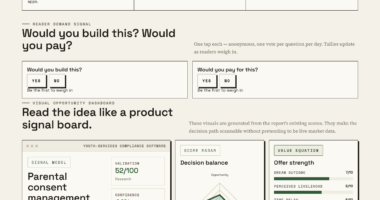

📊 Full opportunity report: Capability or Control: The European Enterprise AI Playbook for the AI Act Era on ThorstenMeyerAI.com — validation score, market gap, and execution plan.

Get hardware and tech essentials delivered free with Prime
- Fast, free delivery on millions of items
- Prime Video, Amazon Music and more included
- Member-only deals all year
TL;DR
European companies face a strategic shift due to the EU AI Act, requiring careful choices about model origin, deployment location, and licensing. The new landscape emphasizes control over capability, with new infrastructure and licensing rules shaping AI use.
European enterprises are now navigating a transformed AI landscape driven by the EU AI Act, which emphasizes control over capability rather than model origin. With enforcement deadlines approaching in 2026 and 2027, companies must carefully choose models, licensing, and deployment locations to remain compliant and operational in Europe.
The EU AI Act, effective since August 2025 for general-purpose AI (GPAI) models and with enforcement deadlines in August 2026 and December 2027, is reshaping enterprise AI strategies across Europe. Companies are no longer solely focused on model performance but now must prioritize legal compliance, data sovereignty, and supply chain resilience.
Key to this shift are three factors: the importance of licensing and origin, the deployment location within European infrastructure, and the legal jurisdiction governing data. The Act exempts some open-source models, favoring those with clear licenses and European-specific deployment, which reduces compliance burdens. Notably, signatories of the GPAI Code of Practice, such as OpenAI and Google, are viewed more favorably, while non-signatories face increased scrutiny.
European infrastructure investments have surged, with initiatives like EuroHPC’s supercomputers and AI Factories, and sovereign cloud offerings from AWS and Microsoft, aiming to reduce reliance on US-based providers. However, US cloud providers remain subject to the CLOUD Act, which can compel data disclosure regardless of physical location, posing ongoing legal risks for European enterprises.
Capability or Control
● EnterpriseThe EU AI Act doesn’t ban models by origin. Together with the CLOUD Act, GDPR, and a supply chain that can be switched off, it forces European enterprises to choose — workload by workload — between capability and control. Origin matters far less than license, deployment, and jurisdiction.
Nationality isn’t the gate. License, data destination, and where you deploy are.
No single point is right for a whole company. The right answer is a portfolio, assigned per workload.
Sort workloads by data sensitivity & regulatory exposure, then match each to a stack.
Independent commentary, produced with AI assistance under human editorial oversight; the views are the author’s own and may change. This is analysis and opinion, not legal, compliance, investment, or technical advice; the EU AI Act, its implementation, and model availability are evolving — verify specifics with qualified counsel and primary regulatory sources before acting. Figures and milestones are drawn from public sources read as of June 2026 and are subject to change. References to specific companies, models, regulators, and government actions are factual and analytical, not partisan, and imply no affiliation or endorsement.
Why Enterprise AI Strategy Is Shifting in Europe
This shift matters because European companies must now balance AI capability with legal and geopolitical risks. The focus on licensing, deployment, and jurisdiction impacts procurement, operational resilience, and compliance costs. The evolving infrastructure and legal landscape mean that strategic decisions made now will determine whether enterprises can sustain AI operations within regulatory boundaries, influencing Europe’s competitiveness in AI development and deployment.
European cloud infrastructure for AI
As an affiliate, we earn on qualifying purchases.
As an affiliate, we earn on qualifying purchases.
European AI Regulation and Infrastructure Buildout in 2025–2026
Since 2025, the EU has been implementing the AI Act, which sets compliance deadlines for GPAI models and high-risk systems. The regulation emphasizes control, legal jurisdiction, and supply chain integrity. Concurrently, Europe has invested heavily in AI infrastructure, including supercomputers, AI Factories, and sovereign clouds, to provide compliant environments for AI deployment. US hyperscalers have responded with sovereign offerings, but legal risks remain due to US laws like the CLOUD Act. European models, designed with GDPR and the AI Act in mind, are gaining traction, but US and Chinese models still dominate in raw capability, with legal and political access restrictions creating additional hurdles.
“The real challenge for European enterprises is not where the model originates but how and where they deploy it, and under whose legal jurisdiction the data resides.”
— Thorsten Meyer, AI Policy Expert
enterprise AI licensing management tools
As an affiliate, we earn on qualifying purchases.
As an affiliate, we earn on qualifying purchases.
Legal and Operational Risks Still Evolving
It remains unclear how strictly enforcement will be applied across different sectors and how non-signatory providers will be scrutinized. The legal implications of data jurisdiction, especially regarding US CLOUD Act exposure, are complex and evolving, and enterprises are still assessing how to best mitigate these risks.
data sovereignty compliance software
As an affiliate, we earn on qualifying purchases.
As an affiliate, we earn on qualifying purchases.
Upcoming Deadlines and Strategic Adaptations for Enterprises
By August 2026, enforcement of GPAI obligations will intensify, requiring enterprises to demonstrate compliance and adjust procurement strategies. The December 2027 deadline for high-risk system regulation will further shape operational practices. Companies should focus on licensing, infrastructure choices, and legal risk assessment to ensure ongoing compliance and AI capability within Europe.
As an affiliate, we earn on qualifying purchases.
Key Questions
How does the EU AI Act affect model origin and licensing?
The Act shifts focus from model origin to licensing and deployment practices. Open-source licenses and European deployment locations reduce compliance burdens, while non-signatories face increased scrutiny.
What infrastructure options are available for compliant AI deployment in Europe?
European investments include EuroHPC supercomputers, AI Factories, and sovereign clouds from AWS and Microsoft, offering compliant environments. However, legal risks from US laws like the CLOUD Act persist.
What are the main legal risks for US-based cloud providers operating in Europe?
US providers are subject to the CLOUD Act, which can compel data disclosure regardless of physical location, posing ongoing legal risks for European enterprises relying on US infrastructure.
How are European models competing with US and Chinese models?
European models are designed with GDPR and the AI Act in mind, often with open licenses and local hosting, but currently trail US models in raw capability. Licensing and jurisdiction are key factors in their adoption.
What should enterprises do now to prepare for upcoming compliance deadlines?
Enterprises should review their AI procurement and deployment strategies, prioritize models with clear licenses and European deployment, and assess legal risks associated with cloud providers to ensure compliance and operational resilience.
Source: ThorstenMeyerAI.com
Halloween Picks
halloween
As an affiliate, we earn on qualifying purchases.