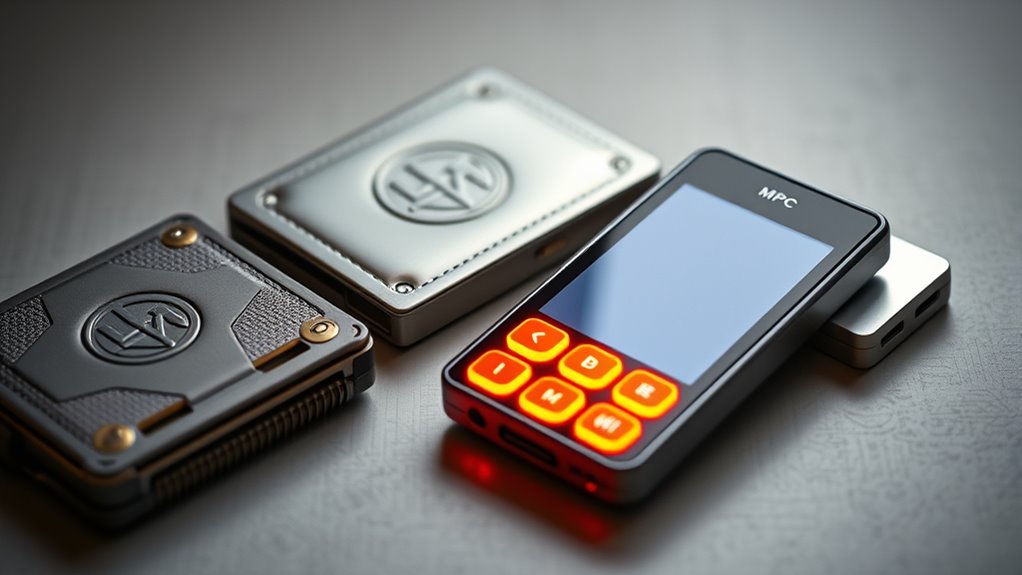

MPC wallets split control of your private keys among multiple parties or devices, making it harder for hackers to access your funds and offering flexible security protocols. Hardware wallets store private keys offline on physical devices, providing excellent protection from online threats. While MPC is ideal for organizations and shared control, hardware wallets suit individuals prioritizing ease and offline security. To understand the strengths and limitations of each option, continue exploring their security benefits and challenges.
Key Takeaways
- MPC wallets distribute private key control among multiple parties, reducing single-point failure risks, while hardware wallets store keys offline for maximum protection.
- Hardware wallets are highly resistant to online hacking and malware, whereas MPC offers flexible, programmable security protocols suited for organizations.
- MPC is ideal for shared or enterprise funds, providing multi-party access, while hardware wallets are best for individual users seeking offline, straightforward storage.
- Hardware wallets face risks of physical loss, theft, or damage, whereas MPC’s security depends on the integrity of multiple devices and stakeholders.
- Both methods enhance security but cater to different needs: MPC for multi-user control of large assets, hardware wallets for simple, offline individual security.

When it comes to securing your cryptocurrency assets, understanding the differences between multi-party computation (MPC) wallets and hardware wallets is crucial. These two options serve different security needs and come with distinct advantages and disadvantages. MPC wallets leverage multi-signature technology, often called multi signature, to divide control of private keys across multiple parties or devices. Instead of storing a single private key in one location, MPC splits the key into parts, making it nearly impossible for hackers to compromise your funds with a single breach. This approach fundamentally creates a form of cold storage, since the private key never exists in a single, easily accessible location. It’s a dynamic way to secure large holdings, especially when multiple stakeholders are involved, such as in enterprise settings or joint accounts. Since the private key parts are distributed, an attacker would need to compromise several devices or parties simultaneously to access your assets, vastly increasing security. Multi-party computation also enables flexible and programmable security protocols, enhancing the adaptability of wallet security measures.
Hardware wallets, on the other hand, are physical devices designed specifically to store private keys offline. They are a popular choice for individual users who want a straightforward, secure way to manage their cryptocurrencies. Hardware wallets are considered a form of cold storage because they keep private keys disconnected from the internet, preventing remote hacking attempts. When you want to make a transaction, you connect the device to a computer or smartphone, verify the transaction on the device itself, and then sign it securely. This process guarantees that even if your computer is infected with malware, your private keys remain protected. However, hardware wallets are typically single-user devices, which may not be suitable for situations requiring multi-party control unless combined with additional security measures. They’re easy to use and provide a high level of security for individual investors, but their physical nature means they can be lost, stolen, or damaged, posing a different kind of risk.
Both options serve as effective forms of cold storage but cater to different needs. Multi signature setups with MPC wallets are ideal for organizations or groups who need shared control and enhanced security, especially with large funds. Hardware wallets excel for individual users prioritizing ease of use and secure offline storage. Ultimately, your choice depends on your specific requirements, including the size of your holdings, your technical expertise, and whether you prefer a multi-party or single-user approach. Understanding these distinctions helps you make an informed decision to best protect your crypto assets.

TANGEM Crypto Wallet Pack of 2 – Trusted Cold Storage Hardware Wallet
- Proven Security: Over 9 years of secure card issuance
- Military-Grade Encryption: EAL6+ security keeps private keys safe
- Easy Wallet Management: Tap once to access 90 blockchains
As an affiliate, we earn on qualifying purchases.
As an affiliate, we earn on qualifying purchases.
Frequently Asked Questions
Can MPC Wallets Be Hacked Remotely?
Yes, MPC wallets can be hacked remotely if security vulnerabilities are exploited. While they use advanced cryptography to protect your assets, hackers may target weaknesses in their software or implementation. Remote hacking is possible through phishing attacks or exploiting software flaws. To stay safe, keep your MPC wallet updated, use strong passwords, and enable two-factor authentication, minimizing the risk of remote hacking threats.
How Do Hardware Wallets Protect Against Physical Theft?
Hardware wallets protect against physical theft through robust physical security measures. They often feature tamper-proof designs, secure chips, and secure elements that disable the device if tampering is detected. Additionally, they require a PIN or passphrase for access, preventing unauthorized use even if stolen. These theft prevention features guarantee that your private keys stay safe, offering peace of mind by safeguarding your assets from physical threats.
Are MPC Wallets Suitable for Large Cryptocurrency Holdings?
Yes, MPC wallets are suitable for large cryptocurrency holdings. They use a multi-signature setup, which enhances security by requiring multiple approvals for transactions. You manage private keys more securely with MPC technology, reducing the risk of theft or loss. This setup is ideal for institutional or high-value users, providing robust protection while allowing flexible access and control over your assets.
Do Hardware Wallets Require Internet Access for Transactions?
No, hardware wallets don’t require internet access for transactions. You connect the device to your computer or mobile device, and then sign transactions offline, ensuring offline security. This portability allows you to carry your wallet easily while keeping your private keys safe from online threats. Once connected, you can securely authorize transactions, making hardware wallets ideal for secure, on-the-go cryptocurrency management without exposing your keys to the internet.
What Are the Long-Term Durability Differences Between MPC and Hardware Wallets?
You’ll find that hardware wallets generally have a longer hardware lifespan due to their robust build quality, offering better long-term durability. MPC devices, on the other hand, focus on cryptographic resilience, which makes them more adaptable to evolving security threats but may have shorter hardware longevity. Overall, hardware wallets tend to last longer physically, while MPCs excel in maintaining cryptographic security over time.

boshiho RFID Blocking 24 Slot Credit Card Holder Wallet Real Leather Multi Card Organizer Wallet with Zipper (Black)
- Number of Card Slots: 24 slots for cards
- RFID Blocking Security: Protects against RFID theft
- Material Quality: Made from genuine leather
As an affiliate, we earn on qualifying purchases.
As an affiliate, we earn on qualifying purchases.
Conclusion
Think of MPC and hardware wallets as two ships steering the same stormy sea of crypto security. MPC offers a sturdy vessel with flexible defenses, while hardware wallets are a solid fortress on solid ground. Your choice depends on how much risk you’re willing to sail through. Whichever you pick, remember that staying vigilant keeps your treasure safe. In this high-stakes voyage, steering wisely is your best bet for smooth sailing.
TANGEM Crypto Wallet Pack of 2 – Trusted Cold Storage Hardware Wallet
- Proven Security: Over 9 years of secure card issuance
- Military-Grade Encryption: EAL6+ security keeps private keys safe
- Easy Wallet Management: Tap once to access 90 blockchains
As an affiliate, we earn on qualifying purchases.
As an affiliate, we earn on qualifying purchases.
TANGEM Crypto Wallet Pack of 2 – Trusted Cold Storage Hardware Wallet
- Proven Security: Over 9 years of secure card issuance
- Military-Grade Encryption: EAL6+ security keeps private keys safe
- Easy Wallet Management: Tap once to access 90 blockchains
As an affiliate, we earn on qualifying purchases.
As an affiliate, we earn on qualifying purchases.