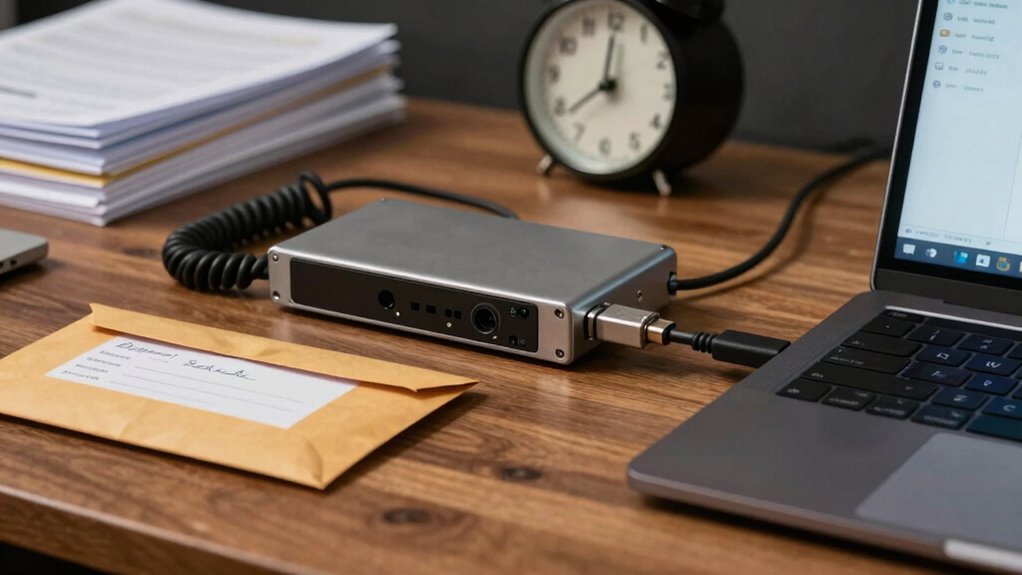

To set up an air-gapped signing flow, you should isolate your signing operations from online systems by using a dedicated offline environment with hardware security modules (HSMs) or secure elements for key storage. Transfer data securely via encrypted media, verify data integrity with cryptographic checks, and perform signing within the air-gapped setup. Regularly update your protocols and audit hardware for vulnerabilities to maintain long-term security. Continue to explore how to strengthen your secure signing environment.
Key Takeaways
- Establish a physically isolated environment for signing operations, ensuring no internet connectivity.
- Use hardware security modules (HSMs) to generate and store private keys securely within the air-gapped system.
- Transfer data via encrypted and verified media, performing signing within the offline environment to keep private keys protected.
- Implement cryptographic protocols to verify data integrity during transfer and signing processes.
- Regularly audit hardware security devices and update cryptographic protocols to maintain long-term security.
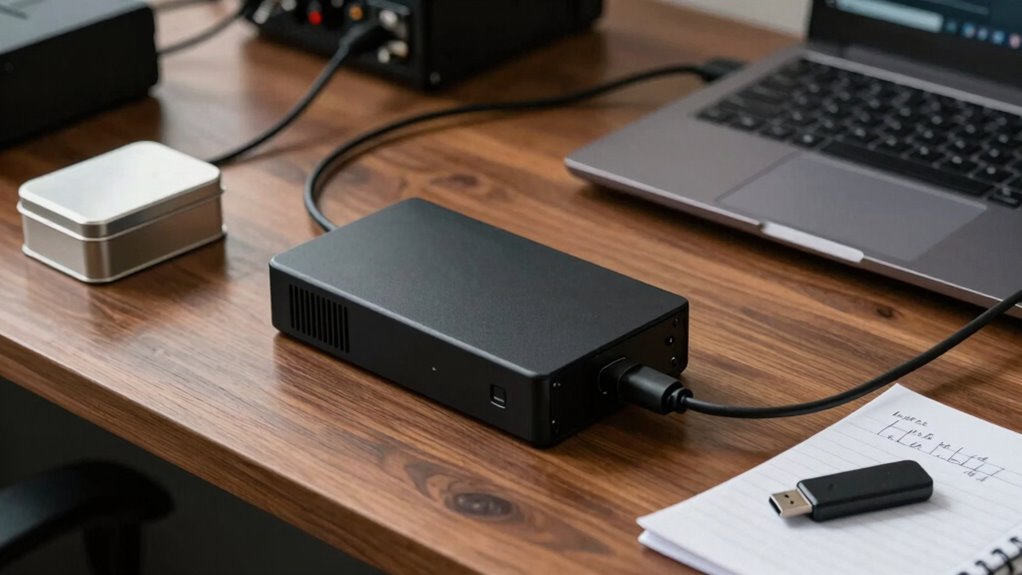
If you’re looking to enhance your security, setting up an air-gapped signing flow is a critical step. This process isolates your signing operations from the internet, drastically reducing the risk of remote attacks. The core idea is to ensure that your private keys and sensitive data never leave a secure, offline environment. To do this effectively, you’ll need to understand how cryptographic protocols and hardware security play essential roles in maintaining integrity and confidentiality. An air-gapped setup relies on strict physical separation, but it’s equally important to implement robust cryptographic protocols to safeguard your operations. These protocols verify the authenticity and integrity of your data during signing, guaranteeing no malicious alterations occur. They also facilitate secure key management, especially when transferring data between the online and offline environments. Hardware security is equally important; using dedicated hardware security modules (HSMs) or secure elements provides a tamper-resistant environment for your private keys. These devices store cryptographic secrets securely, preventing unauthorized access even if the physical hardware is compromised. When establishing your air-gapped signing flow, start by generating your key pairs within a secure, hardware-backed environment. Never generate or store private keys on internet-connected devices. Instead, use a trusted hardware security device, which can generate keys and perform cryptographic operations securely. Once generated, you can transfer the public key to your online environment for verification purposes, but never expose your private key outside the secure hardware. The transfer of data between your online and offline systems should be done via secure, encrypted media—like a hardware token or secure USB drive—using cryptographic protocols to verify the integrity of the data. When signing documents or transactions, perform the signing process within the air-gapped environment, ensuring that the private key remains isolated from any network. After signing, transfer the signed data back to your online system with the same level of security, verifying its integrity through cryptographic checks. Regularly update and audit your hardware security devices to detect any tampering or vulnerabilities, and keep your cryptographic protocols up to date to address emerging threats. Additionally, understanding the importance of color accuracy and contrast ratios in your setup can enhance your overall security and performance by ensuring visual clarity and reducing misinterpretations of data. Incorporating comprehensive cryptographic protocols further strengthens your defenses against evolving attack vectors. Implementing a comprehensive cryptographic protocol is vital for maintaining trust and security in your long-term storage solutions. This layered approach—combining strict physical separation, trusted hardware security, and robust cryptographic protocols—creates a resilient long-term storage solution. It guarantees that your cryptographic keys and signed data stay protected against both remote and physical threats, giving you peace of mind that your most sensitive information remains secure over time.

iStorage CloudAshur Hardware Security Module | Encryption Key | Password Protected | Dust & Water Resistant | Hardware Encryption. IS-EM-CA-256
- Data Encryption: Secure data across devices and cloud
- Secure Data Sharing: Share encrypted data with authorized users
- Central Device Management: Manage devices via remote console
As an affiliate, we earn on qualifying purchases.
As an affiliate, we earn on qualifying purchases.
Frequently Asked Questions
How Often Should the Air-Gapped Signing Environment Be Audited?
You should audit your air-gapped signing environment at least quarterly to guarantee operational procedures and security protocols are followed. Regular audits help identify vulnerabilities or unauthorized changes, maintaining the integrity of your long-term storage system. Additionally, after any significant updates or security incidents, conduct immediate audits. Consistent evaluations reinforce your security posture, and documenting these reviews ensures compliance with best practices and helps address potential issues proactively.
What Hardware Specifications Are Recommended for Secure Signing Devices?
Imagine a sturdy fortress guarding your keys—your hardware should be robust with high durability, resistant to physical damage and tampering. Opt for devices with secure encryption standards like AES-256 and TPM modules for hardware security. They should have ample processing power to handle cryptographic tasks efficiently, yet remain isolated from networks. Prioritize reliability, durability, and top-tier encryption to guarantee your signing device remains secure over the long haul.
Can Remote Updates Be Securely Integrated Into the Air-Gapped Flow?
You can securely integrate remote updates into your air-gapped signing flow by implementing a strict, multi-layered process. First, verify updates on an isolated, internet-connected device before transferring them via secure, encrypted media. Then, conduct thorough integrity checks before applying updates to your signing device. This approach guarantees remote updates are securely integrated without compromising your air-gapped environment, maintaining long-term security and integrity.
How to Recover From a Signing Device Failure Without Compromising Security?
Did you know that 81% of data breaches involve stolen or compromised credentials? To recover from a signing device failure securely, you should implement secure key rotation and have multiple hardware backups stored offline. This approach minimizes risks of hardware tampering, ensuring that even if one device fails, your signing process remains secure without exposing sensitive keys. Regularly testing recovery procedures keeps your system resilient and trustworthy.
What Are Common Pitfalls When Maintaining Long-Term Air-Gapped Storage?
When maintaining long-term air-gapped storage, you should watch out for common pitfalls like neglecting data redundancy, which risks data loss from hardware failure. Additionally, failing to guarantee physical security can expose your storage to theft or tampering. Regularly verify your backups and keep the storage in a secure, monitored environment. Avoid complacency, and always have a plan for hardware maintenance and access controls to preserve the integrity of your stored data.

Integral Courier 16GB Encrypted USB Flash Memory – Keep Sensitive Data Safe with USB Drive Hardware Encryption – USB Flash Drive with FIPS 197 Security Standard to Help with GDPR Compliance, Blue
- Security Standard: FIPS 197 certified encryption
- Password Protection: Auto-erases after 6 failed attempts
- Auto-lock Feature: Encrypts and locks when removed
As an affiliate, we earn on qualifying purchases.
As an affiliate, we earn on qualifying purchases.
Conclusion
By setting up an air-gapped signing flow, you’ve built a fortress around your long-term storage, keeping it safe from digital invaders. Think of it as planting a seed in a sealed garden—protected from outside threats, yet still flourishing in its own secure environment. With these steps, you turn your signing process into an unbreakable chain, ensuring your data stays pristine and trustworthy, no matter how wild the digital jungle becomes.

ELLIPAL Titan 2.0 Air-Gapped Crypto Wallet – Cold Wallet for Bitcoin, ETH, SOL, XRP, NFT & 10,000+ Coins and Tokens – Trusted Cold Storage Hardware Wallet
- Offline Air-Gapped Security: Fully isolated from internet for maximum security
- Secure Transaction Signing: Sign transactions via QR code with no network connection
- Large HD Display: 4.1-inch screen for clear transaction details
As an affiliate, we earn on qualifying purchases.
As an affiliate, we earn on qualifying purchases.

Trezor Safe 7 Hardware Wallet with Keep Metal Seed Backup Bundle – Touchscreen Crypto Security, Secure Element Protection & Cold Storage Recovery Kit (Charcoal Black)
- Bundle Includes: Trezor Safe 7 and Keep Metal Backup
- Secure Element: Transparent TROPIC01 Secure Element
- Backup Protection: Stainless-steel seed phrase backup
As an affiliate, we earn on qualifying purchases.
As an affiliate, we earn on qualifying purchases.