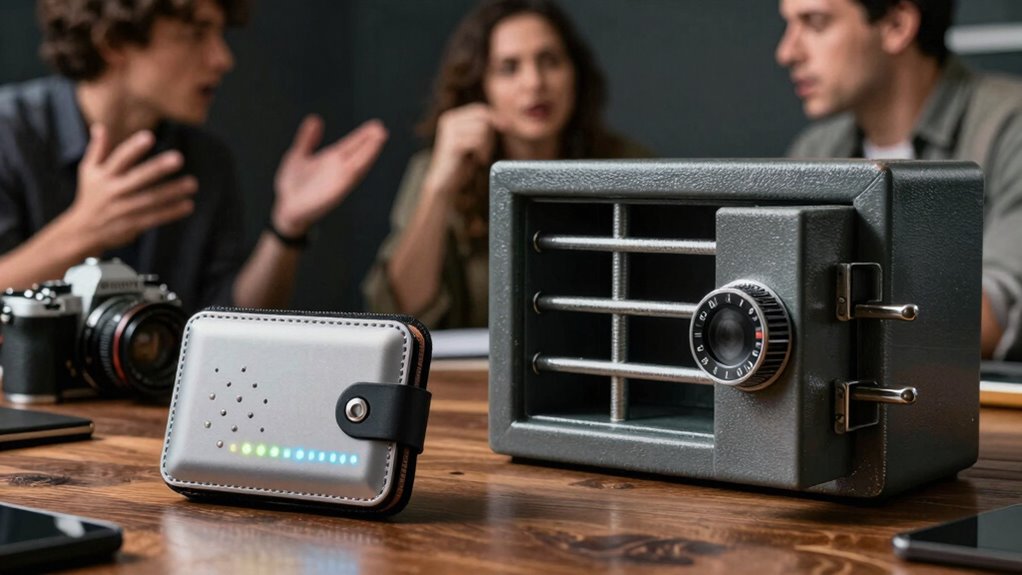
Bitcoiners argue about custody tradeoffs because balancing security, control, and convenience isn’t straightforward. You want to protect your assets from theft but also stay in control of your Bitcoin. At the same time, making access easier often means sacrificing some security or autonomy. Technological innovations and shifting regulations add more complexity, making it hard to find a perfect solution. If you keep exploring, you’ll uncover how these tradeoffs shape your options and decisions.
Listen free for 30 days with Audible
Thousands of audiobooks and originals — cancel anytime.
As an affiliate, we earn on qualifying purchases.
Key Takeaways
- Different priorities between security, control, and convenience lead to ongoing debates among Bitcoiners.
- Regulatory challenges complicate custody options, causing disagreements over the best approach.
- Technological advancements improve security but may increase complexity, fueling differing opinions.
- Custodial services offer convenience but raise concerns about third-party risks and trust.
- The evolving ecosystem requires Bitcoiners to continuously reassess their custody preferences and tradeoffs.
Choosing how to custody your Bitcoin involves balancing security, control, and convenience. This decision isn’t straightforward because each option comes with its own set of tradeoffs. On one hand, you want your Bitcoin to be safe from theft or loss; on the other, you want to maintain control over your assets without sacrificing ease of access. The ongoing debate among Bitcoiners stems from these competing priorities, shaped by evolving technological innovations and shifting regulatory challenges. As the landscape changes, so do the risks and benefits associated with different custody methods.
Regulatory challenges play a significant role in how you choose to store your Bitcoin. Governments and regulators are increasingly scrutinizing digital assets, creating a complex legal environment. Some jurisdictions impose strict rules that make institutional custody solutions less attractive or harder to access, pushing individuals to seek more autonomous options. These regulations can also introduce compliance burdens, adding friction to using certain custodial services. For many Bitcoiners, this uncertainty fuels the desire for self-custody, where they retain full control and avoid third-party risks. Yet, regulatory developments can also threaten self-custody options, creating a tension between legal compliance and personal sovereignty. Regulatory environment continues to evolve, influencing the available choices and strategies. Additionally, the unpredictable nature of regulatory shifts can require users to stay vigilant and adaptable to new restrictions or opportunities.
Technological innovations continually reshape what’s possible in Bitcoin custody. Advances in hardware wallets, multi-signature setups, and decentralized custody solutions offer new layers of security and control. These innovations help mitigate risks like hacking or accidental loss, making self-custody more practical and appealing. However, they also require a certain level of technical expertise, which can be intimidating for newcomers. For example, hardware wallet security has improved significantly, making it easier to safeguard assets. Additionally, the development of decentralized custody solutions introduces new ways to distribute control without relying solely on traditional custodians. On the other hand, custodial services have become more sophisticated, often offering insured and regulated solutions that prioritize convenience. This creates a friction point—do you prioritize technological security features that demand technical know-how, or opt for easier, regulated custodial options that might involve trusting third parties? The rapid pace of technological change fuels ongoing debates about the ideal balance.
Ultimately, your choice hinges on how much risk you’re willing to accept and how much control you want. The discussion among Bitcoiners remains lively because no single solution perfectly addresses all concerns. Regulatory challenges add complexity, forcing individuals to stay informed and adaptable. Technological innovations expand your options, but they also introduce new considerations about security and accessibility. Molecular-scale circuits and other emerging nanotechnologies demonstrate the importance of understanding complex tradeoffs—parallels that can be seen in Bitcoin custody decisions as well. As the ecosystem evolves, so will the arguments, with each person weighing the tradeoffs differently based on their priorities. In this dynamic environment, understanding these factors helps you make more informed choices about how to custody your Bitcoin securely, conveniently, and in accordance with your personal risk appetite.
As an affiliate, we earn on qualifying purchases.
Frequently Asked Questions
How Do Custody Tradeoffs Impact Bitcoin’s Overall Security?
Custody tradeoffs directly impact Bitcoin’s security because custody innovation offers new solutions, but it also shifts more user responsibility onto you. When you choose custodial options, security depends on third parties, which can introduce risks. Conversely, managing your own keys increases your control but requires you to stay vigilant. These tradeoffs influence how secure your holdings are, balancing convenience against the potential for loss if user responsibility isn’t properly managed.
What Are the Long-Term Risks of Different Custody Methods?
Think of custody methods as different boats on a river. Long-term risks vary: custody innovation might give you a speedy, modern vessel but could be less stable, while traditional methods offer proven control but less flexibility. If you value user control, choosing a custody approach that balances innovation with security is key. Without careful consideration, you risk losing your treasure to unforeseen currents or technical failures over time.
Can Custody Tradeoffs Affect Bitcoin’s Decentralization?
Custody tradeoffs directly impact Bitcoin’s decentralization by influencing custody sovereignty and user autonomy. When you choose custodial solutions, you might sacrifice some sovereignty, relying on third parties. Conversely, self-custody enhances your autonomy but can introduce security risks. These tradeoffs shape how decentralized the network remains, as widespread self-custody promotes a more resilient, user-controlled ecosystem, while centralized custody can create vulnerabilities and reduce overall decentralization.
How Do Custody Options Influence User Privacy?
Your custody choices directly impact your privacy. When you opt for self-custody, you gain more control over your data sovereignty, keeping your transactions private and anonymous access intact. Conversely, trusting third parties might expose your information to surveillance or data breaches, reducing privacy. By understanding these tradeoffs, you can choose custody options aligning with your desire for privacy and control, ensuring your Bitcoin usage remains as private and secure as you prefer.
What Are the Cost Implications of Various Custody Solutions?
Think of custody solutions as different ships in a busy harbor. Some require hefty custody fees for added security, while others offer smoother user convenience at lower costs. If you choose a professional custodian, expect higher fees but less hassle. Self-custody might save money but demands more effort. Your choice impacts your wallet directly—balancing custody fees against the ease of managing your Bitcoin becomes a strategic decision.
As an affiliate, we earn on qualifying purchases.
Conclusion
In the end, you’re caught in a relentless storm of custody tradeoffs, each choice feeling like a life-or-death decision. The debate isn’t just about security or convenience—it’s about safeguarding your very future in a digital world teetering on chaos. No matter what side you choose, remember: your Bitcoin’s safety hinges on understanding these risks. Don’t let confusion or fear turn your crypto journey into a nightmare—arm yourself with knowledge, or risk losing everything in the blink of an eye.
As an affiliate, we earn on qualifying purchases.
regulated Bitcoin custody service
As an affiliate, we earn on qualifying purchases.
As an affiliate, we earn on qualifying purchases.
Fall Picks
fall essentials
As an affiliate, we earn on qualifying purchases.