To quickly check on-chain fees before sending Bitcoin, use real-time fee estimation tools available on many wallets and websites. These tools analyze current network conditions, recent block data, and transaction speed estimates, helping you decide whether to pay higher fees for faster confirmation or lower fees to save costs. Monitoring these metrics guarantees you’re making smarter transaction choices, especially during congestion. Keep exploring to gain a deeper understanding of optimizing your Bitcoin transfers.
Key Takeaways
- Use real-time fee estimation tools that analyze recent block data for quick fee guidance.
- Monitor current network activity and congestion levels to predict appropriate fee rates.
- Check platform-provided average fee metrics for specific confirmation time estimates.
- Compare suggested fees with recent transaction data to determine optimal payment amounts.
- Adjust your fee based on desired confirmation speed and current network conditions.
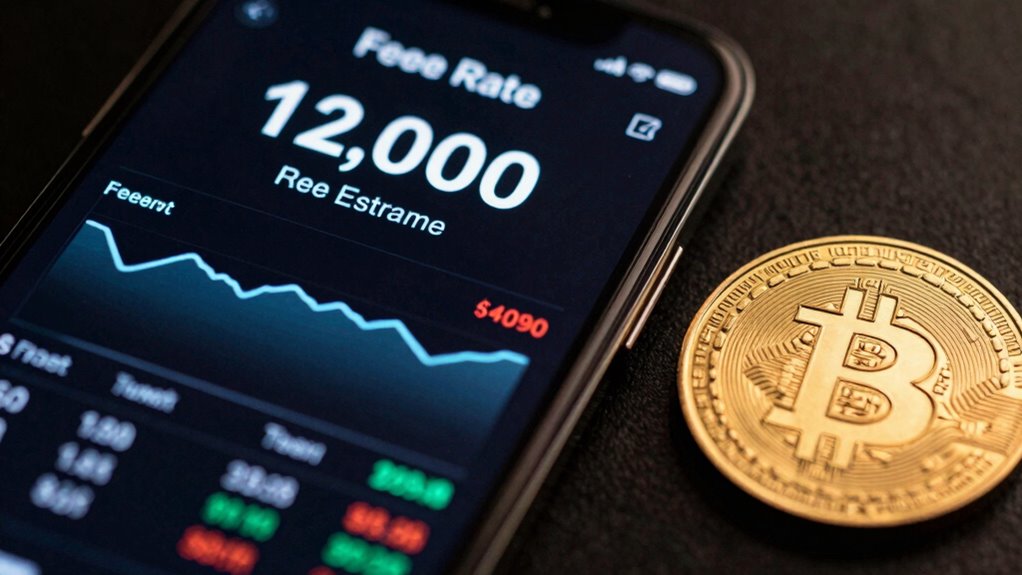
Understanding on-chain fees quickly is essential for optimizing your blockchain transactions. When you send Bitcoin, the fee you pay determines how fast your transaction gets confirmed. The tricky part is that these fees fluctuate based on network conditions, and figuring out the right amount can seem confusing. To make smart decisions, you need a quick way to read on-chain fees, which involves understanding blockchain scalability and fee estimation methods. Blockchain scalability refers to how efficiently a network can process transactions. When the network is congested, fees tend to spike because more users are competing to get their transactions confirmed. Conversely, during periods of low activity, fees drop. So, keeping tabs on network activity helps you anticipate what fees to expect. Additionally, understanding how transaction confirmation times**** are impacted by fee levels can guide your decision-making process. Using fee estimation methods is also important, as these tools analyze **recent blocks and transaction data to estimate the fee required for different confirmation times—say, within 10 minutes or an hour. Some platforms even display the average fee for the last block or two, giving you a quick snapshot of current fee levels**. Employing these estimates allows you to decide whether to pay higher fees for faster confirmation or lower fees if you’re okay waiting longer. Being aware of blockchain scalability helps you better interpret fee fluctuations and plan your transactions accordingly. This understanding is especially crucial during periods of high network congestion when fees can spike unexpectedly, so monitoring **network traffic patterns** can help you avoid overpaying. This way, you avoid overpaying during low congestion and don’t get stuck waiting during busy periods.

PCB Surface Quality Check Tool SEC Transparency Size Estimation Gauge (1)
- Accurate size estimation chart: High precision measurement tool
- High transparency: Clear and easy to read
- High resolution: Detailed and sharp display
As an affiliate, we earn on qualifying purchases.
As an affiliate, we earn on qualifying purchases.
Frequently Asked Questions
How Accurate Are On-Chain Fee Estimations Across Different Wallets?
On-chain fee estimations vary in accuracy across different wallets because they rely on fee prediction models that consider blockchain congestion. Some wallets update their fee suggestions in real-time, making them more reliable during high congestion, while others may lag, leading to less precise estimates. Typically, newer or less sophisticated wallets might not adapt quickly to network conditions, so always double-check current blockchain congestion before sending significant transactions.
Can I Manually Adjust Fees After Initiating a Bitcoin Transaction?
Did you know that about 30% of Bitcoin users actively customize their fees? Yes, you can manually adjust fees after initiating a transaction, but it depends on the wallet. Fee customization allows you to prioritize your transaction, ensuring faster confirmation times. However, not all wallets support fee editing post-sending, so check your wallet’s features. Prioritizing your transaction through fee adjustments can save you time and optimize your Bitcoin sending experience.
What Are the Risks of Setting Fees Too Low or Too High?
Setting fees too low risks delaying your transaction, as miners might ignore it, hindering timely confirmation. Conversely, setting fees too high ensures quick transaction confirmation but wastes money, reducing fee optimization. Both extremes can cause frustration or unnecessary costs. To prevent this, balance your fees carefully based on current network conditions, aiming for timely confirmation without overspending. This way, you optimize your fee strategy for efficient and reliable Bitcoin transactions.
How Often Do On-Chain Fee Recommendations Change?
Timing is everything, especially with blockchain congestion and fee optimization. On-chain fee recommendations change frequently, often every few hours or daily, depending on network activity. During periods of high congestion, fees spike and recommendations shift rapidly to guarantee timely confirmation. To stay ahead, check fee estimates regularly through reliable tools, as these updates help you avoid overpaying or experiencing delays in your transactions.
Are There Tools That Predict Future Fee Trends?
Yes, there are tools that predict future fee trends using trend analysis and fee prediction models. You can use platforms like Blockstream’s mempool explorer or third-party apps like Johoe’s Bitcoin Mempool. These tools analyze historical fee data and current network conditions to give you insights into upcoming fee changes. By leveraging these, you can better plan your transactions, avoiding high fees or delays.
As an affiliate, we earn on qualifying purchases.
Conclusion
By mastering how to quickly read on-chain fees, you stay in control of your Bitcoin transactions and avoid unnecessary delays or costs. Remember, “A penny saved is a penny earned”—being attentive to fees now saves you time and money later. Keep practicing these tips, and you’ll become more confident in steering the crypto world efficiently. Stay vigilant, and your smarter transactions will serve you well in the long run.
Bitcoin transaction fee calculator
As an affiliate, we earn on qualifying purchases.
As an affiliate, we earn on qualifying purchases.

WiFi Bitcoin Crypto Tracker Bitcoin Crypto Price Displayer Currency,Stocks,Futures,Currency Exchange Rate,Price Tracker Ticker,Time Clock Weather Display
- Crypto Price Tracking: Monitors 300+ cryptocurrencies in real-time
- Easy Plug-and-Play: Includes USB-C cable, no battery needed
- Privacy-Friendly: No app or login required, connects via WiFi
As an affiliate, we earn on qualifying purchases.
As an affiliate, we earn on qualifying purchases.