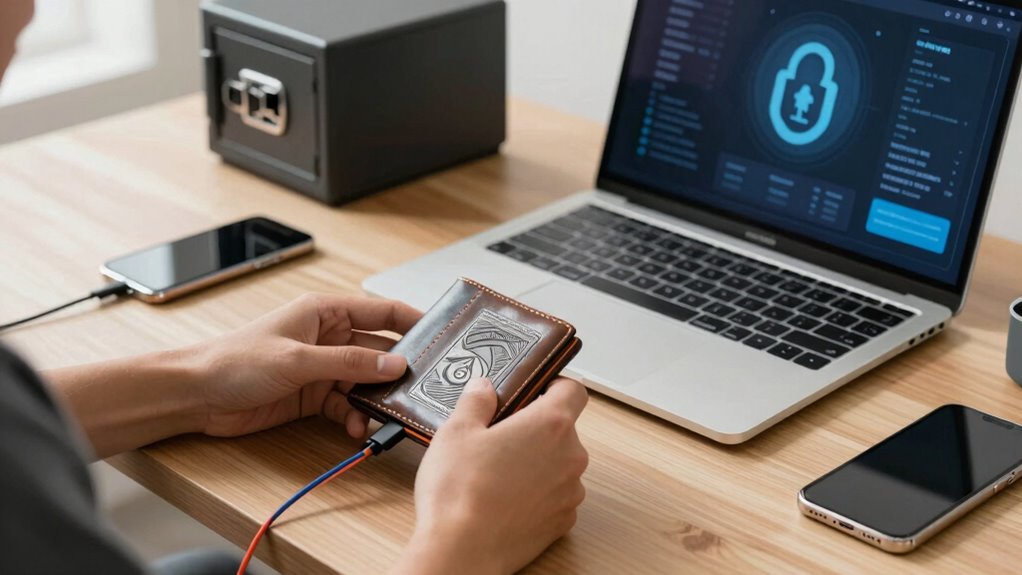
Multi-device self-custody works by splitting your private keys or seed phrases across multiple devices, like hardware wallets or encrypted tools, so you don’t rely on a single point of control. You can use multi-signature setups, requiring multiple approvals for transactions, which boosts security. If one device is lost or compromised, you can recover your assets using other devices and seed fragments. Curiosity about how to set up this resilient system? Keep exploring to find out more.
Key Takeaways
- Multi-device self-custody splits private keys or seed phrases across multiple trusted devices for enhanced security.
- It often employs multi-signature setups requiring multiple device approvals for transactions.
- Devices are secured with PINs, passphrases, and regular software updates to prevent unauthorized access.
- Seed phrases are stored using secure backup methods, such as encrypted fragments or hardware wallets.
- The system provides resilience by enabling asset recovery if one device is lost or compromised.
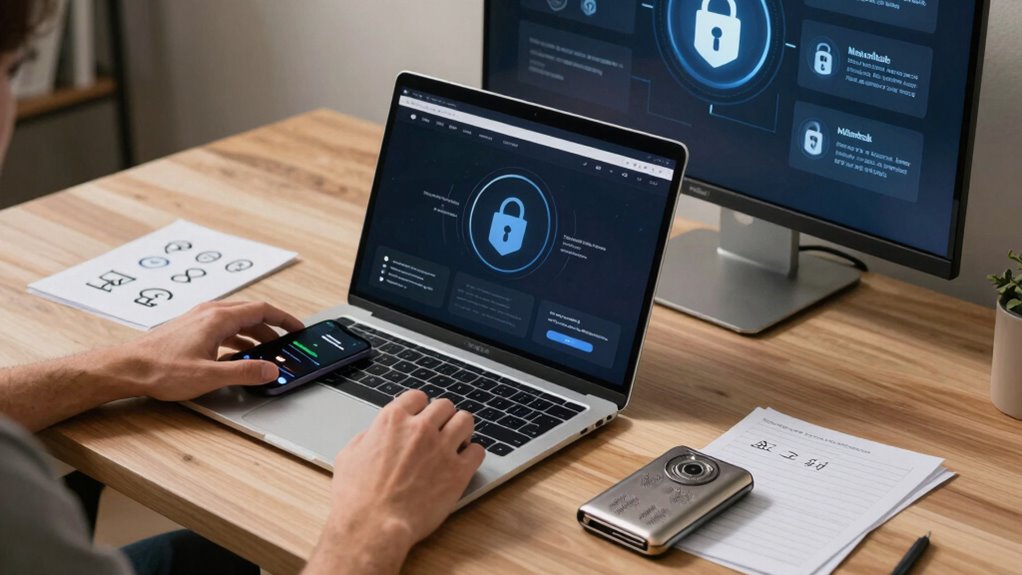
In today’s digital landscape, safeguarding your cryptocurrencies requires more than just a single device or trusting third parties. Multi-Device Self-Custody is an innovative approach that empowers you to control your digital assets securely across multiple devices. This method enhances your cryptocurrency security by reducing reliance on centralized exchanges or online wallets, which can be vulnerable to hacking or technical failures. Instead, you distribute the control of your private keys or seed phrases across several devices, making it significantly harder for malicious actors to access your funds.
Multi-device self-custody strengthens crypto security by distributing control and reducing reliance on vulnerable centralized platforms.
The core idea behind multi-device self-custody is that you don’t store all your keys in one place. Instead, you use a combination of hardware wallets, secure software, and other trusted devices to manage your assets. Hardware wallets play a crucial role because they store private keys offline, away from the internet. When you set up a hardware wallet, it generates a seed phrase that acts as a master key to your holdings. With multi-device setups, you might keep parts of this seed phrase split up and stored securely across different hardware wallets or encrypted devices, so even if one device is compromised, your funds remain protected.
Implementing multi-device self-custody involves careful planning. You’ll need to decide how many devices to use and how to divide your seed phrases or private keys. Popular solutions include using a multi-signature setup, where multiple devices must approve transactions before they’re executed. This adds a layer of security, ensuring that a single compromised device doesn’t grant access to your entire crypto portfolio. For example, you might require signatures from two out of three devices to authorize a transfer, making unauthorized access practically impossible.
This approach not only increases your security but also provides flexibility. If one device fails or is lost, you can still recover your assets using your remaining devices and seed phrase fragments. The key is to keep each device secure and private, avoiding any single point of failure. You also need to regularly update software and ensure your hardware wallets are protected with PINs or passphrases, further strengthening your cryptocurrency security. Additionally, employing secure backup methods can help safeguard your seed phrases against physical damage or loss. Maintaining awareness of market dynamics can influence how you manage your security setup, ensuring it adapts to evolving threats. Proper security protocols are essential to prevent unauthorized access and ensure your setup remains resilient against potential threats. Recognizing the importance of color accuracy and proper calibration can enhance your overall experience and trust in your setup.
In essence, multi-device self-custody transforms how you manage your crypto assets. It combines the robustness of hardware wallets with the resilience of decentralized control, giving you peace of mind that your funds are safe, even if one device faces an issue. This strategy puts the power back into your hands, allowing you to maintain full control over your digital wealth without exposing yourself to unnecessary risks.
Frequently Asked Questions
How Secure Is Multi-Device Self-Custody Against Hacking?
Multi-device self-custody can be quite secure if you use device encryption and robust backup strategies. Encryption protects your private keys from hacking attempts, while regular backups guarantee you won’t lose access if a device fails or is compromised. Staying vigilant, updating software, and using strong, unique passwords further enhances security. However, the security ultimately depends on how carefully you implement these measures and manage your devices.
Can I Access My Funds Without Internet Connectivity?
Imagine your funds are hiding in a vault, playing hide-and-seek with your internet connection. Luckily, with multi-device self-custody, you can access offline, like slipping a secret key into a pocket. Just guarantee your device recovery process is solid, so when your primary device takes a vacation, you can still reach your assets. No internet? No problem—your hardware wallet‘s got your back, ready for action.
What Happens if I Lose All Devices Simultaneously?
If you lose all devices simultaneously, your funds become inaccessible unless you’ve set up device recovery options. To prevent this, implement backup strategies like seed phrases or secure offline backups. These backups allow you to recover your wallet on new devices, ensuring continuous access. Without these recovery methods, you’ll face significant challenges retrieving your assets, emphasizing the importance of having reliable backup plans in place before any device loss occurs.
Are There Recommended Device Types for Optimal Security?
For ideal security, opt for devices that prioritize protection, like hardware wallets or secure smartphones. These devices support broad device compatibility and robust user authentication methods, such as biometrics or PINs. Combining multiple device types reduces risk, ensuring your assets stay safe if one device is compromised. Always choose trusted, security-focused devices, and enable multi-factor authentication to bolster your defenses against potential threats.
How Does Multi-Device Self-Custody Compare to Hardware Wallets?
Multi-device self-custody offers more flexible security than hardware wallets, allowing you to manage your assets across multiple devices. While hardware wallets excel in providing a simple, secure user interface and straightforward user experience, multi-device setups require careful coordination but can enhance convenience. If you prioritize ease of use and minimal setup, a hardware wallet might be better. However, for advanced users seeking multi-layered control, multi-device self-custody offers a powerful alternative.
Conclusion
By now, you see how multi-device self-custody empowers you to control your assets securely without relying on third parties. With over 70% of crypto users adopting multi-device setups, it’s clear that decentralization enhances security and resilience. Remember, spreading your keys across multiple devices minimizes risk and keeps your assets safe even if one device is compromised. Embrace this approach to truly own and protect your digital wealth in today’s evolving landscape.