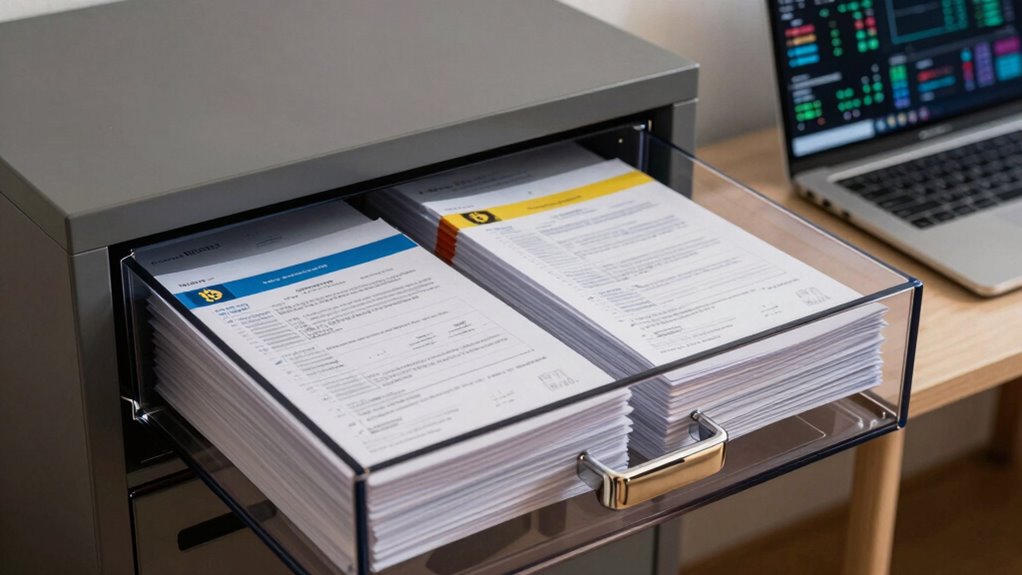

To handle complicated crypto records, set up a clear filing system. Create folders for each exchange or wallet, and organize them by year and month for easy access. Use consistent naming conventions that include dates, platforms, and descriptions. Maintain detailed logs of transactions and back up everything regularly. Using digital tools like crypto tax software helps automate tracking. Keep this system organized and secure, so you’re prepared for tax season or audits. Learn how to optimize your approach further.

Get hardware and tech essentials delivered free with Prime
- Fast, free delivery on millions of items
- Prime Video, Amazon Music and more included
- Member-only deals all year
Key Takeaways
- Implement a hierarchical folder structure by exchange, year, and month for easy navigation.
- Use consistent naming conventions with dates, platforms, and transaction types for quick identification.
- Maintain detailed logs of all transactions, including transfers, trades, and purposes.
- Automate data imports from exchanges to minimize manual errors and streamline record-keeping.
- Regularly back up records securely to prevent data loss and facilitate audits.
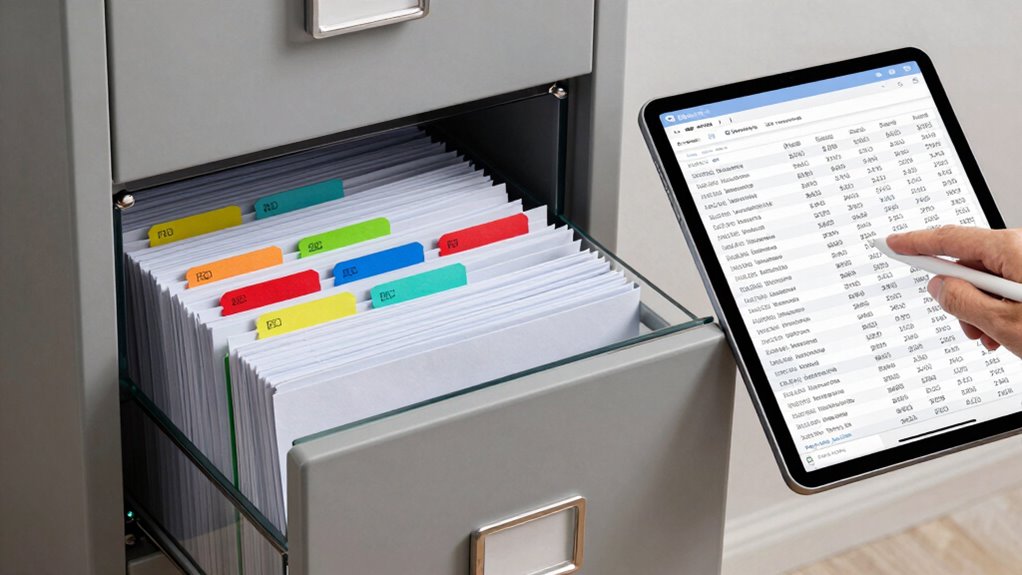
Managing your crypto records efficiently is vital in today’s digital asset landscape, especially as transactions and holdings grow. With the increasing complexity of your crypto activities, staying organized isn’t just about convenience—it’s indispensable for understanding tax implications and guaranteeing compliance. A solid filing system helps you keep track of every trade, transfer, and sale, so you can accurately report your earnings and avoid penalties. When your records are well-organized, you won’t waste time hunting down receipts or transaction IDs during tax season.
Efficient crypto record-keeping is essential for tax compliance and quick access during busy tax season.
Your first step is to set up a logical folder structure that reflects your crypto activities. Create separate folders for each exchange or wallet you use, then subdivide those by year and month. This way, all related records—such as transaction history, deposit and withdrawal receipts, and any correspondence—are stored systematically. Digital folders make it easy to locate information when needed and keep everything in one secure place. Use consistent naming conventions for files: include the date, platform, and a brief description, so you can identify records at a glance. Implementing digital organization principles from other tech fields can help ensure your records are both accessible and secure. Incorporating recordkeeping best practices can further enhance your ability to manage complex crypto data effectively. Additionally, adopting metadata standards can improve searchability and categorization of your digital files. Applying standardized data formats can also facilitate easier data import and export across different tools and platforms.
Next, prioritize record organization by maintaining detailed logs of every transaction. This includes not only buying and selling activities but also transfers between wallets and exchanges. Document the date, amount, cryptocurrency involved, and the purpose of each transaction. This level of detail simplifies calculating gains and losses, especially when you’re reporting taxable events. It also helps you verify the accuracy of your exchange statements and reconcile discrepancies quickly. Incorporating color accuracy principles from home cinema technology can help ensure your digital records are clear and correctly categorized.
To further streamline your record-keeping, consider using specialized crypto tax software or spreadsheets designed for digital assets. These tools can automatically import transaction data from exchanges, reducing manual entry errors and saving time. When you export data, organize it into categorized sheets—such as income, expenses, and transfers—to give you a thorough overview of your portfolio. This structured approach makes it easier to prepare accurate tax reports and understand your overall financial position.
Finally, back up all your records regularly and store copies securely, whether in cloud storage or external drives. Losing access to your files could cause headaches during tax season and complicate your record organization efforts. By establishing a consistent filing system and maintaining detailed, organized records, you minimize the stress and confusion that come with handling complicated crypto transactions. This proactive approach not only clarifies your financial picture but also ensures you’re prepared for tax implications, audits, or any future inquiries about your digital assets.
crypto record keeping filing system
As an affiliate, we earn on qualifying purchases.
As an affiliate, we earn on qualifying purchases.
Frequently Asked Questions
How Often Should I Update My Crypto Filing System?
You should update your crypto filing system regularly, ideally monthly or after any significant transaction. This keeps your records accurate for tax implications and simplifies record retention. Regular updates make sure you don’t miss any deductions or report discrepancies, especially when preparing for taxes. Staying organized helps you avoid penalties and makes it easier to track your crypto investments over time, giving you peace of mind and financial clarity.
Can I Automate My Crypto Record-Keeping Process?
Yes, you can automate your crypto record-keeping process to improve record accuracy and stay ahead of tax implications. By using specialized tools or software, you streamline tracking transactions, minimize errors, and guarantee timely updates. Automating reduces manual effort, keeps your records consistent, and helps you stay compliant with changing regulations. Embrace automation to simplify your crypto management, protect your investments, and confidently prepare for tax season.
What Security Measures Protect My Crypto Records?
You protect your crypto records with strong encryption protocols, ensuring that your sensitive data stays secure from unauthorized access. Regular backup strategies are essential; they safeguard your records against data loss due to hardware failures or cyberattacks. By combining these security measures—encryption and consistent backups—you create a robust defense for your crypto records, giving you peace of mind knowing your valuable information remains protected and recoverable.
How Do I Organize Records From Multiple Exchanges?
Imagine juggling flaming swords while riding a unicycle—that’s what organizing crypto records from multiple exchanges feels like. To tame this chaos, use a robust filing system with clear transaction categorization, sorting each trade by type and date. Keep tax documentation neatly filed to avoid frantic searches during tax season. This way, you turn your crypto chaos into a well-oiled machine, ready for audits and peace of mind.
What to Do if I Lose Access to My Crypto Records?
If you lose access to your crypto records, act quickly by checking backups, email archives, or cloud storage. Contact exchanges or wallet providers for assistance, and consider using record keeping best practices like maintaining detailed logs. Remember, missing records can impact your crypto tax implications, so staying organized helps avoid penalties. Regularly backing up your data and keeping detailed transaction records guarantees you’re prepared for any future record-keeping challenges.
digital crypto wallet organization folders
As an affiliate, we earn on qualifying purchases.
As an affiliate, we earn on qualifying purchases.
Conclusion
Don’t let the complexity of crypto records overwhelm you. A solid filing system keeps everything organized and accessible, saving you time and stress during tax season or audits. Sure, it might seem like extra effort now, but trust me, the peace of mind it brings is worth it. With a simple system in place, you’ll confidently manage your records, no matter how complicated your crypto dealings get. Stay organized and stay ahead—your future self will thank you.
As an affiliate, we earn on qualifying purchases.
secure backup external hard drive
As an affiliate, we earn on qualifying purchases.
As an affiliate, we earn on qualifying purchases.
Fall Picks
fall essentials
As an affiliate, we earn on qualifying purchases.