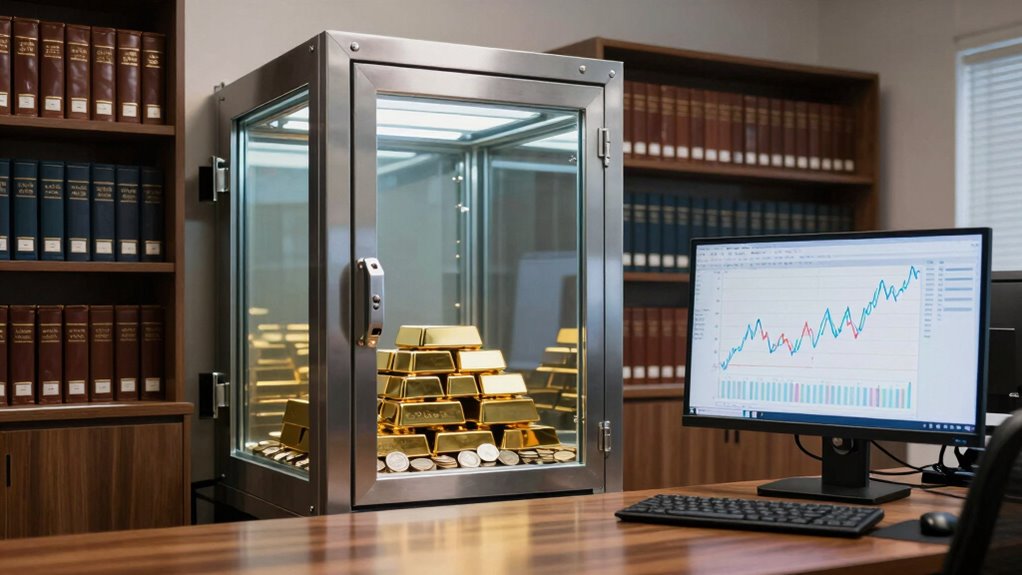

Proof-of-reserves helps you verify that an exchange holds enough assets for your deposits, but it doesn’t guarantee full trust. It addresses only the financial aspect, ignoring wider issues like weak regulation, technology vulnerabilities, and transparency problems. If the industry isn’t more regulated or technologically secure, false or misleading data could still be a concern. To fully understand how trust can be built and maintained, you’ll want to explore the deeper challenges involved.

Get hardware and tech essentials delivered free — and shop member deals
- Fast, free delivery on millions of items
- Access to Prime Big Deal Days deals on October 6–7
- Prime Video, Amazon Music and more included
Key Takeaways
- Proof-of-reserves verifies asset holdings but doesn’t address deeper confidence and transparency issues in the industry.
- Lack of clear regulations and legal accountability can allow manipulation or false disclosures.
- Technological vulnerabilities and reliance on third-party auditors can compromise data integrity.
- It is a partial measure; broader solutions like stronger regulations and technological safeguards are needed.
- Ongoing oversight, improvements, and industry standards are essential to build genuine trust beyond proof-of-reserves.
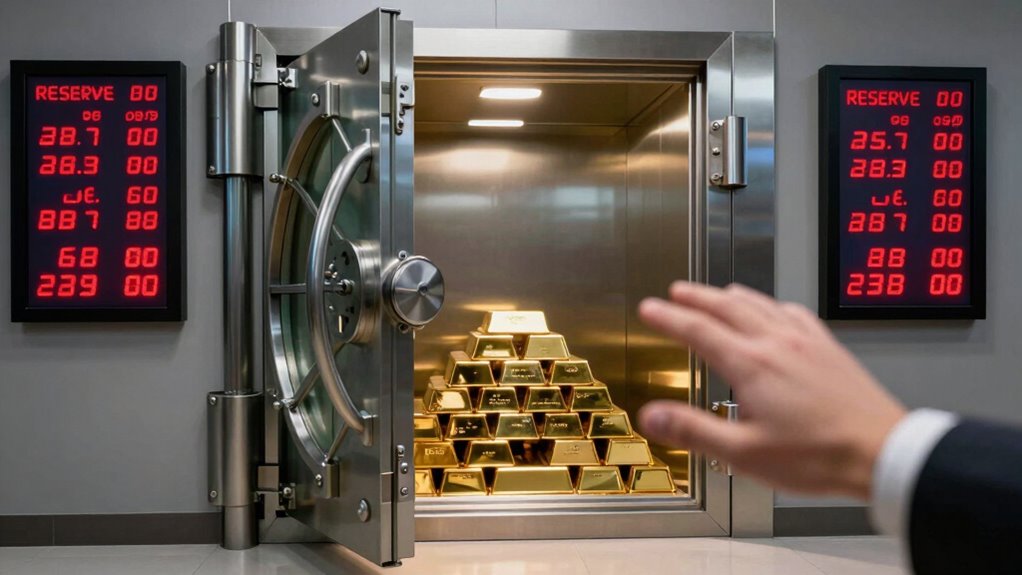
In the world of cryptocurrency, trust hinges on transparency, and proof-of-reserves is a vital tool to establish that trust. It allows you to verify that a crypto exchange holds enough assets to cover customer deposits, providing reassurance that your funds are safe. However, relying solely on proof-of-reserves won’t automatically solve the deeper issues that undermine confidence in the industry. You need to recognize that there are significant regulatory challenges and technological limitations that can restrict the effectiveness of these proofs.
Regulatory challenges are a major obstacle. Many jurisdictions lack clear rules or enforceable standards for audits and disclosures, making it difficult to ensure that proof-of-reserves reports are accurate and trustworthy. Without consistent regulation, some exchanges might manipulate or selectively disclose data to appear more solvent than they actually are. Moreover, regulatory uncertainty means there’s little legal accountability if an exchange misleads users or becomes insolvent. As a result, proof-of-reserves can become a superficial measure if it’s not backed by robust legal frameworks that enforce transparency and accountability. Legal accountability is essential to truly ensure the integrity of these disclosures.
Technological limitations also play a crucial role. Implementing proof-of-reserves requires sophisticated cryptographic techniques and secure systems, but these are not foolproof. For example, if an exchange’s infrastructure isn’t secure, attackers could tamper with data or manipulate the verification process. Additionally, some proof-of-reserves methods rely on third-party auditors, whose integrity and independence might be questionable. Even with technological safeguards, vulnerabilities can exist in the underlying blockchain or the audit process itself, making it possible for false or misleading data to be published. This means that, despite the appearance of transparency, your trust could still be misplaced if the technology behind the proof isn’t robust or if it’s misused. Furthermore, technological vulnerabilities can undermine the entire process and create opportunities for deception, highlighting the need for continuous improvement and vigilant oversight. Incorporating advanced cryptography can help mitigate some of these risks, but they are not a panacea.
Ultimately, proof-of-reserves is a valuable piece of the puzzle, but it isn’t a silver bullet. To truly foster trust, the industry needs stronger regulations that standardize audits and enforce penalties for misrepresentation. At the same time, technological advancements must be continuously improved to ensure integrity and security. Until then, you should remain cautious and remember that proof-of-reserves, while helpful, is just one part of a broader effort to build genuine trust in the crypto space. It’s essential to stay informed and advocate for better oversight, so that these tools can work effectively and protect your investments.
cryptocurrency proof of reserves verification tools
As an affiliate, we earn on qualifying purchases.
As an affiliate, we earn on qualifying purchases.
Frequently Asked Questions
How Often Should Proof-Of-Reserves Be Verified?
You should verify proof-of-reserves regularly—ideally, at least quarterly—to maintain operational transparency and guarantee regulatory compliance. Frequent checks help detect discrepancies early, building trust with your clients and regulators. By staying consistent with these verifications, you demonstrate your commitment to transparency and sound financial practices. This proactive approach reassures stakeholders and strengthens confidence in your institution, making trust sustainable and resilient over time.
Can Proof-Of-Reserves Prevent All Types of Financial Fraud?
Proof-of-reserves can’t prevent all types of financial fraud because custodial security breaches and transparency challenges still exist. While it verifies that assets match liabilities at a specific moment, it doesn’t guarantee ongoing security or reveal hidden liabilities. You need thorough oversight, regular audits, and strict security measures to truly safeguard assets. Relying solely on proof-of-reserves leaves gaps that fraudsters could exploit, so it’s not a foolproof solution.
What Are the Limitations of Proof-Of-Reserves?
Proof-of-reserves isn’t a magic wand; it can’t reveal every hidden flaw. Its limitations include superficial asset transparency—sometimes only showing what’s easily verifiable— and it can’t guarantee ongoing regulatory compliance. You might think it’s foolproof, but it often overlooks off-balance-sheet liabilities or internal risks. So, while helpful, proof-of-reserves alone leaves gaps, and trust requires a broader, more thorough approach to ensure true financial integrity.
Who Audits the Proof-Of-Reserves?
You should know that third-party audits typically verify proof-of-reserves, ensuring transparency and accuracy. These audits are conducted by independent firms that follow regulatory standards, providing an unbiased assessment of a company’s reserves. While these audits help build trust, they aren’t foolproof. You need to take into account that ongoing scrutiny, strict adherence to regulations, and transparency in reporting are essential for truly restoring confidence in financial institutions or platforms.
How Do Proof-Of-Reserves Impact User Confidence Long-Term?
Proof-of-reserves can boost your confidence long-term if they address transparency challenges and meet regulatory standards. When a company openly shares verifiable reserve data, you trust that your assets are backed. However, if transparency is lacking or standards aren’t consistent, doubts may persist. Regular, independent audits aligned with regulatory standards help solidify trust, but without them, proof-of-reserves alone may not fully reassure you about the long-term stability of your holdings.
cryptocurrency exchange security audit software
As an affiliate, we earn on qualifying purchases.
As an affiliate, we earn on qualifying purchases.
Conclusion
Proof-of-reserves might seem like a shining beacon, but relying on it alone is like trusting a lighthouse’s flicker in a storm—bright but not infallible. Trust is built not just on visible proof, but on consistent honesty and transparency beneath the surface. Without that solid foundation, even the brightest beacon can falter. So, remember, true trust is a sturdy ship, not just a shining lighthouse guiding you through the fog.
blockchain cryptography security hardware
As an affiliate, we earn on qualifying purchases.
As an affiliate, we earn on qualifying purchases.
crypto exchange transparency reporting tools
As an affiliate, we earn on qualifying purchases.
As an affiliate, we earn on qualifying purchases.
Fall Picks
fall essentials
As an affiliate, we earn on qualifying purchases.