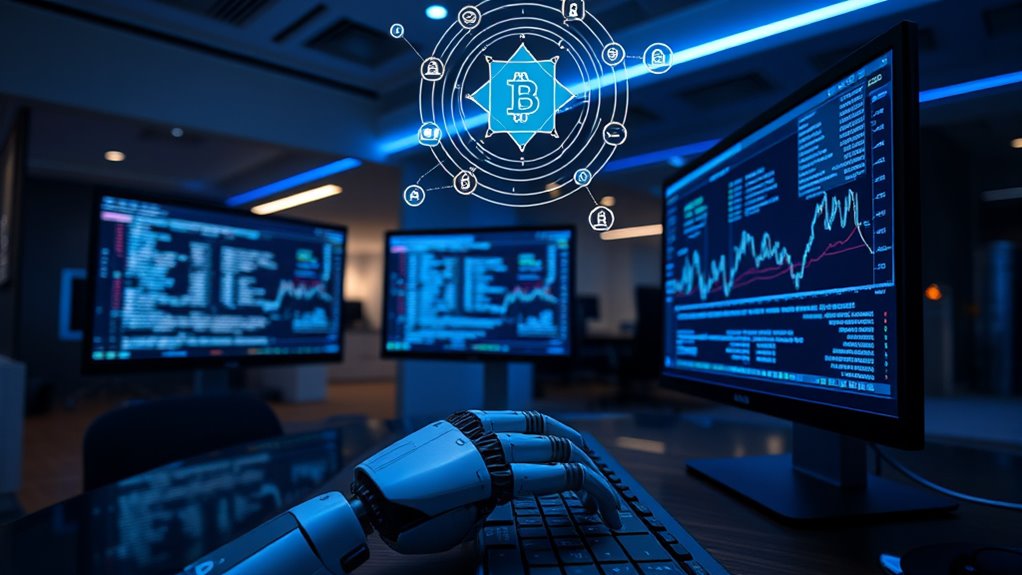

AI agents and crypto trading bots are complex tools that automate high-speed trading, analyze vast market data, and execute rapid transactions. However, their architectures often include proprietary algorithms that aren’t disclosed, raising transparency and fairness concerns. These systems can be used for market manipulation or create risks for market stability. Understanding how these bots operate and the ethical issues involved can help you navigate their evolving landscape—if you’re curious, there’s more to discover ahead.
Key Takeaways
- AI trading bots utilize proprietary algorithms that lack transparency, complicating assessment of fairness and decision-making processes.
- Architecture often involves rapid data analysis and high-frequency trading to maximize profit opportunities.
- Ethical concerns include market manipulation risks, such as pump-and-dump schemes and artificial price inflation.
- Regulatory challenges stem from limited transparency, making it difficult to enforce fair practices and prevent unfair advantages.
- Implementing safeguards and transparency measures is essential to maintain market stability and prevent manipulation.

AI agents and crypto trading bots have revolutionized how traders approach the volatile world of cryptocurrency. These technologies automate trading strategies, analyze vast amounts of data quickly, and execute transactions at speeds impossible for humans. As a result, many traders now rely heavily on these systems to stay competitive. However, their complexity raises important questions about transparency and ethics, particularly regarding how decisions are made and the potential for market manipulation.
One major concern is algorithm transparency. Many trading bots operate using proprietary algorithms that aren’t fully disclosed to users or regulators. This lack of transparency can make it difficult to understand how specific trading decisions are reached, creating a gap in accountability. When you’re using these bots, it’s essential to know whether their algorithms are based on sound, fair principles or if they incorporate hidden biases that could lead to unpredictable or even harmful outcomes. Without clear insight into how these algorithms function, traders might unknowingly contribute to market instability or fall prey to manipulative practices.
Proprietary trading algorithms lack transparency, risking unpredictable outcomes and market instability.
Market manipulation is another pressing issue associated with AI agents and crypto trading bots. Because these systems can execute trades at lightning speeds and in large volumes, they can be exploited to manipulate prices or create artificial trading volumes. For instance, some traders or malicious actors might use bots to perform pump-and-dump schemes, artificially inflate prices to lure unsuspecting investors, then quickly sell off holdings for profit. This kind of manipulation not only distorts market prices but also erodes trust among participants. As a trader, you need to be aware of these risks and consider whether the platforms you use have safeguards against such practices.
Furthermore, the ethical implications extend beyond manipulation. The use of AI in trading raises questions about fairness—whether small or individual investors are at a disadvantage compared to well-funded entities employing advanced bots. It also prompts discussions about regulatory oversight. Should there be stricter rules governing the transparency of these algorithms? How can authorities detect and prevent manipulative tactics without stifling innovation? These questions are essential because lack of oversight can lead to a chaotic environment where market integrity suffers. Additionally, the use of algorithmic trading can sometimes lead to unintended market fluctuations, emphasizing the need for proper safeguards.

Ultimate Beginner's Guide to Crypto Trading Bots
As an affiliate, we earn on qualifying purchases.
As an affiliate, we earn on qualifying purchases.
Frequently Asked Questions
How Do AI Agents Adapt to Sudden Market Crashes?
When a market crashes, you rely on AI agents with adaptive algorithms to respond swiftly and maintain market resilience. These agents analyze real-time data, recognize patterns indicating instability, and adjust trading strategies accordingly. They can halt trading, reduce risk exposure, or shift to safer assets automatically. By continuously learning and adapting, these algorithms help you navigate sudden market crashes more effectively and protect your investments from severe losses.
What Are the Legal Implications of Using Crypto Trading Bots?
Using crypto trading bots can feel like walking a legal tightrope. You need to guarantee regulatory compliance to avoid hefty fines or bans, and respect intellectual property rights to prevent lawsuits. Laws vary wildly across jurisdictions, so you might unknowingly break rules that could cost you everything. Always stay informed, document your compliance efforts, and consult legal experts—this way, you keep your trading operations safe and legit.
How Do AI Agents Handle Data Privacy Concerns?
You handle data privacy concerns by guaranteeing AI agents use data encryption to protect sensitive information from unauthorized access. They also follow strict privacy policies that specify how data is collected, stored, and shared. Regular audits help verify compliance, and you should stay updated on regulations to ensure ongoing privacy. This approach keeps your data secure, maintains user trust, and minimizes legal risks associated with data mishandling.
Can AI Agents Predict Long-Term Market Trends?
Yes, AI agents can predict long-term market trends by analyzing market sentiment and data patterns. You’ll find they process vast amounts of data, identify trends, and forecast potential shifts. While predictions aren’t always perfect, their ability to analyze historical data and current sentiment helps you make more informed decisions. Keep in mind, though, that external factors can still influence markets unpredictably, so use AI insights as a guide, not a guarantee.
What Are the Costs Associated With Deploying Advanced Crypto Bots?
Deploying advanced crypto bots involves significant costs, including deployment costs like hardware, software, and initial setup fees. You also need to take into account ongoing maintenance expenses such as algorithm updates, server fees, and security measures. These costs can add up quickly, especially if you aim for high-frequency trading or complex strategies. Planning your budget carefully helps ensure your investment remains profitable and sustainable over time.
Machine Learning for Algorithmic Trading: Predictive models to extract signals from market and alternative data for systematic trading strategies with Python
As an affiliate, we earn on qualifying purchases.
As an affiliate, we earn on qualifying purchases.
Conclusion
Imagine trusting a skilled pilot to navigate turbulent skies—you rely on their expertise to keep you safe. Similarly, AI agents and crypto trading bots can guide your investments, but their complex architectures and ethical dilemmas demand caution. Just like a pilot’s judgment, their decisions can lead to soaring profits or crashing losses. Stay aware, question their motives, and remember that behind every bot, there’s a human responsibility to guarantee ethical and responsible trading.

Crypto Gift Price Display – Real-Time Desktop Stock & Crypto Candlestick Charts – Live Market Data Ticker – Customizable – Multiple Finishes & Battery Options – Track SPY TSLA BTC ETH Doge
Stock & Crypto Market Display – Track both US stocks (SPY, TSLA, NVDA) and crypto pairs (BTC, ETH,…
As an affiliate, we earn on qualifying purchases.
As an affiliate, we earn on qualifying purchases.

Trade Like A Boss – Module 4: Automated Algo Trading
As an affiliate, we earn on qualifying purchases.
As an affiliate, we earn on qualifying purchases.