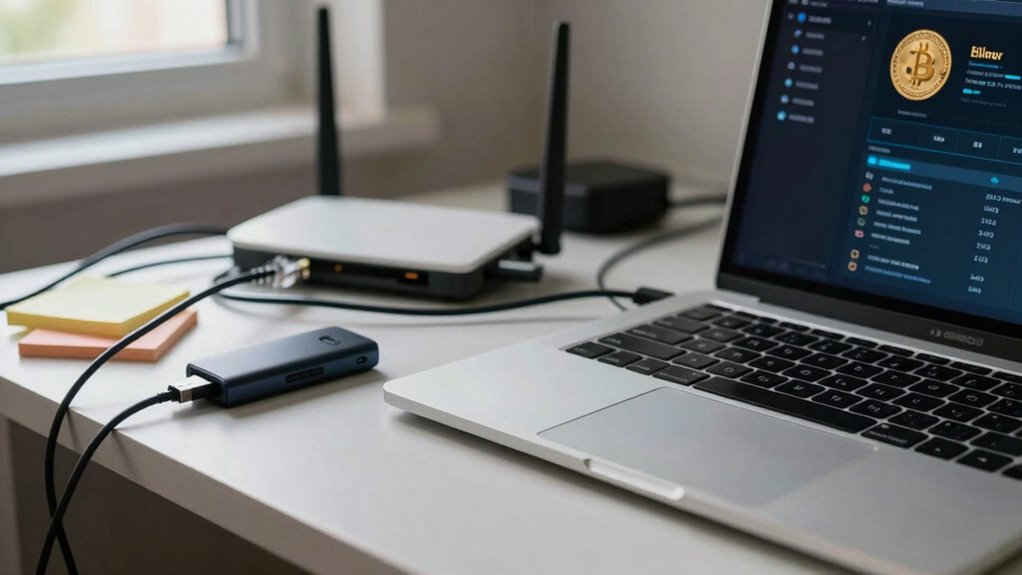

Your biggest vulnerability in a home office crypto setup is often physical and digital security gaps. Weak passwords, lack of multi-factor authentication, or unsecured cloud backups can expose your private keys and seed phrases to hackers. Additionally, failing to secure hardware wallets physically or update firmware regularly increases your risk. Small oversights, like storing seed phrases insecurely, can lead to severe losses. Keep an eye out to discover how to strengthen your defenses further.

Get hardware and tech essentials delivered free with Prime
- Fast, free delivery on millions of items
- Prime Video, Amazon Music and more included
- Member-only deals all year
Key Takeaways
- Insecure cloud storage without multi-factor authentication exposes private keys and seed phrases to hacking risks.
- Physical access to hardware wallets and seed phrases can lead to theft or tampering.
- Outdated firmware on hardware wallets may contain exploitable vulnerabilities.
- Storing seed phrases digitally or in cloud backups compromises their security.
- Lack of regular security reviews leaves vulnerabilities open to emerging cyber threats.
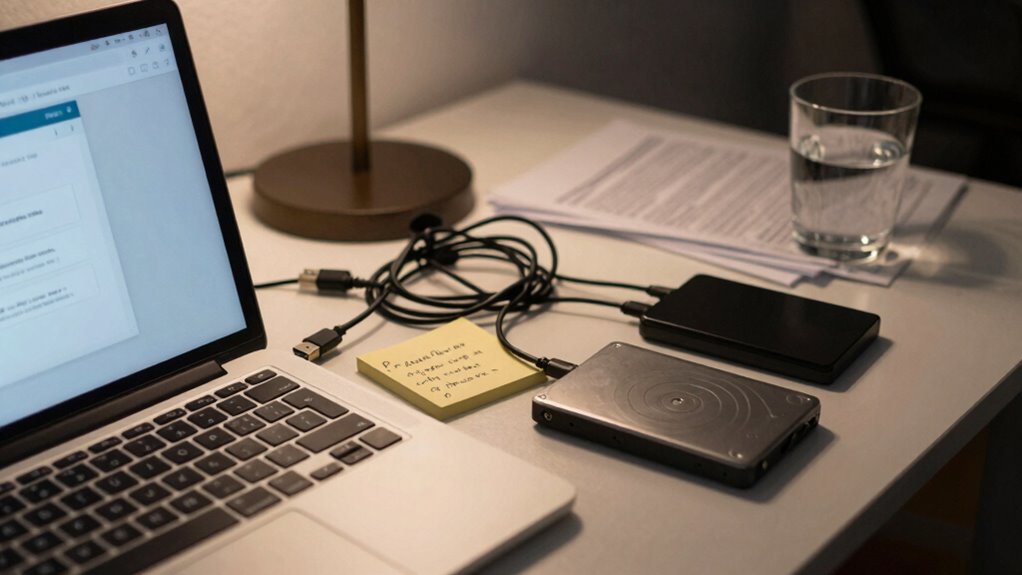
Many home office crypto setups are more vulnerable than users realize, often due to overlooked security gaps. You might think that simply storing your cryptocurrencies on a personal device or using basic security measures is enough, but the reality is more complex. One of the most common weak spots is how you handle cloud storage. Cloud services like Dropbox or Google Drive are convenient for backing up data, but they can also be prime targets for hackers if not properly secured. If your cloud accounts aren’t protected with strong, unique passwords and multi-factor authentication, malicious actors can gain access and potentially compromise your private keys or seed phrases stored there. Relying solely on cloud storage for sensitive information is risky because vulnerabilities in cloud providers or weak passwords can lead to devastating breaches.
Storing crypto data solely in cloud services risks breaches without strong passwords and multi-factor authentication.
Another vital security flaw often overlooked is the use of hardware wallets. While hardware wallets are widely considered among the safest options for storing cryptocurrencies, they’re not immune to risks. If you don’t keep your hardware wallet physically secure, it can be stolen or tampered with. Furthermore, if you buy a hardware wallet from an untrusted source or don’t verify its authenticity, you could end up with a compromised device. Attackers can also target your recovery seed—often a series of words you write down and store separately—if it’s not kept in a safe, offline location. Many users tend to store their seed phrases insecurely, like in digital notes or on cloud services, which defeats the device’s security advantages. Additionally, digital security practices play a crucial role in safeguarding your assets in the digital age. Incorporating cybersecurity best practices can further minimize your risk exposure. Recognizing common security vulnerabilities can help you identify weak points in your setup before an attacker does. Regularly reviewing your security protocols is essential as new threats and attack vectors continually evolve. Staying informed about emerging threats can help you adapt your defenses proactively.
You might also overlook the importance of keeping your hardware wallet firmware up to date. Outdated firmware can contain vulnerabilities that hackers can exploit. Regularly checking for updates and following manufacturer instructions helps protect your device from known threats. Additionally, many home office setups neglect to implement physical security measures. If your hardware wallet or backup seed is accessible to others—either family members or potential intruders—your crypto assets become vulnerable.
Ultimately, the security of your crypto holdings depends on how well you manage these vulnerabilities. Cloud storage offers convenience but requires rigorous safeguards. Hardware wallets offer robust security, but only if you use them correctly—keeping firmware current, storing seed phrases offline, and securing physical access. Recognizing that these are often the weak links in your setup is essential. Strengthening these areas can make a significant difference, preventing a minor oversight from turning into a costly loss. By being proactive and attentive, you can better protect your digital assets from the many threats lurking in home office environments.
hardware crypto wallet with secure backup
As an affiliate, we earn on qualifying purchases.
As an affiliate, we earn on qualifying purchases.
Frequently Asked Questions
How Can I Detect if My Crypto Wallet Has Been Compromised?
You can detect if your crypto wallet has been compromised by monitoring for unusual activity, such as unauthorized transactions or transfers. Watch out for signs of phishing scams and malware infections, which often lead to wallet breaches. Regularly check your account history, update your security software, and be cautious with links or attachments. If suspicious activity occurs, act quickly by changing passwords and contacting support to secure your wallet.
What Are the Best Practices for Securing Remote Crypto Access?
To secure remote crypto access, you should enable multi-factor authentication on all accounts, adding an extra layer of protection. Use secure backup strategies like encrypted offline storage to safeguard your private keys. Regularly update your software and passwords, and avoid public Wi-Fi networks. These practices help prevent unauthorized access, ensuring your crypto assets stay safe even if your primary device or network gets compromised.
Are There Specific Hardware Tools to Enhance Home Crypto Security?
Yes, you can enhance your home crypto security with hardware wallets, which store your private keys offline, making them less vulnerable to hacking. Pairing a hardware wallet with biometric authentication adds an extra layer of protection, ensuring only you can access your funds. Using these tools together considerably reduces risks, providing a secure environment for managing your cryptocurrencies from your home office.
How Often Should I Update My Crypto Security Protocols?
You should update your crypto security protocols at least every few months—think of it as your digital armor needing constant reinforcement. Regularly review your password management and network encryption methods to stay ahead of evolving threats. Outdated security is like leaving your front door wide open; frequent updates guarantee your crypto assets stay protected from hackers lurking in the shadows, ready to exploit any weak spot.
What Are Common Signs of a Home Office Security Breach?
You might notice unusual activity, like unexpected login alerts or unfamiliar transactions, indicating a security breach. Poor password hygiene and lack of phishing awareness often contribute to these issues. If you see repeated failed login attempts or your account details change without your input, it’s a red flag. Regularly update your passwords, stay vigilant against phishing scams, and monitor your accounts closely to catch breaches early and protect your crypto assets.
multi-factor authentication security key
As an affiliate, we earn on qualifying purchases.
As an affiliate, we earn on qualifying purchases.
Conclusion
So, as you set up your home office crypto station, remember that the weak spot often lies where you least expect it—your own habits. A simple oversight or a moment of distraction can open the door to risks. Stay vigilant, keep your security practices tight, and don’t let coincidence be your downfall. After all, in this game, a small oversight can turn into a big loss, so stay sharp and keep your defenses strong.
fireproof seed phrase storage safe
As an affiliate, we earn on qualifying purchases.
As an affiliate, we earn on qualifying purchases.
hardware wallet firmware update kit
As an affiliate, we earn on qualifying purchases.
As an affiliate, we earn on qualifying purchases.
Fall Picks
fall essentials
As an affiliate, we earn on qualifying purchases.