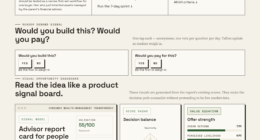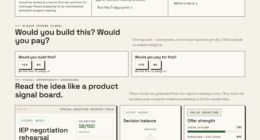

📊 Full opportunity report: Outcome-First Decisions: Keep, Change, or Kill on ThorstenMeyerAI.com — validation score, market gap, and execution plan.

Get hardware and tech essentials delivered free — and shop member deals
- Fast, free delivery on millions of items
- Access to Prime Big Deal Days deals on October 6–7
- Prime Video, Amazon Music and more included
TL;DR
Outcome-First Decisions is a framework that guides organizations to evaluate initiatives by their current outcomes, leading to decisions to keep, change, or kill. It emphasizes pruning to reclaim capacity and improve portfolio health.
The Outcome-First Decisions framework, built to help organizations evaluate and prune their project portfolios based solely on current outcomes, has gained attention as a method to improve operational efficiency and reduce resource drain.
This framework centers on a single question: given the current state of an initiative, is its outcome worth its ongoing cost? It introduces the Worth Filter, which prompts decision-makers to focus on future results rather than past investments or effort. The framework offers three verdicts: keep, change, or kill. It is open-source under the AGPL-3.0 license and designed to be provider-agnostic and local-first, allowing frequent and honest reviews without additional costs. Its primary goal is to address the common problem of long tail of ongoing but unproductive projects that drain resources and attention, often defended by sunk costs or emotional attachment.Outcome-First Decisions — keep, change, or kill
The hardest decision isn’t what to start — it’s what to stop. Judge every initiative by the outcome it produces now, not the effort already spent.
Independent commentary, produced with AI assistance under human editorial oversight. The views are the author’s own and may change. Outcome-First Decisions is open source under AGPL-3.0, provided “as is” without warranty; see the repository LICENSE. The framework’s verdicts are reasoning aids based on the inputs given and may be wrong — decision support, not decisions; verify independently before acting. Product and company names are trademarks of their respective owners; mention does not imply endorsement.
Why Outcome-First Decisions Reshape Portfolio Management
This approach encourages organizations to proactively prune underperforming initiatives, freeing capacity for new or more valuable efforts. By emphasizing outcomes over effort or past investment, it promotes a culture of disciplined decision-making, potentially reducing waste and increasing agility. The framework’s open-source nature and local-first design make it accessible and adaptable, fostering widespread adoption in various organizational contexts. Ultimately, it aims to prevent portfolio silting and improve overall strategic focus.project portfolio management software
As an affiliate, we earn on qualifying purchases.
As an affiliate, we earn on qualifying purchases.
The Challenge of Maintaining Healthy Portfolios
Organizations often accumulate a long tail of ongoing projects that neither succeed nor are formally terminated. These ‘zombie’ initiatives consume attention, capital, and focus, yet are rarely scrutinized. Traditional decision-making tends to be backward-looking, emphasizing past investments, which biases toward continuation. The Outcome-First framework addresses this by shifting focus to current outcomes, promoting regular pruning. Its development aligns with broader trends toward lean management and operational discipline, especially in environments where resource optimization is critical.“The hardest decision in any portfolio isn’t what to start. It’s what to stop. Outcome-First Decisions provides a disciplined way to make that choice based on current results.”
— Thorsten Meyer, creator of the framework
As an affiliate, we earn on qualifying purchases.
Limitations and Risks of Outcome-Based Judgments
It is not yet clear how accurately organizations can measure outcomes, especially for slow-start initiatives. There is a risk of misjudging or gaming metrics, which could lead to premature killing or unwarranted continuation. The framework relies heavily on honest and precise outcome measurement, which remains a challenge. Additionally, emotional resistance to stopping initiatives persists, and the framework cannot replace human courage or judgment in difficult decisions.As an affiliate, we earn on qualifying purchases.
Adoption, Testing, and Refinement of the Framework
Organizations are beginning to implement Outcome-First Decisions in pilot projects to evaluate its effectiveness. As adoption grows, further refinement and case studies are expected to emerge, demonstrating best practices and potential pitfalls. The open-source community may develop tools and integrations to support routine reviews, and organizations will need to develop cultural acceptance of disciplined pruning. The framework’s success hinges on honest outcome measurement and organizational willingness to make tough decisions.As an affiliate, we earn on qualifying purchases.
Key Questions
How does the Outcome-First framework differ from traditional project evaluation methods?
It emphasizes current outcomes and future results rather than past investments or effort, encouraging organizations to prune projects that no longer produce valuable results.
Can this framework be applied to all types of initiatives?
While designed to be provider-agnostic and flexible, its effectiveness depends on the ability to measure outcomes accurately. Some initiatives with slow or intangible results may pose challenges.
What are the main challenges in implementing Outcome-First Decisions?
Key challenges include establishing reliable outcome metrics, overcoming emotional resistance to stopping projects, and maintaining organizational discipline in regular reviews.
Is the framework suitable for large organizations with complex portfolios?
Yes, but it may require adaptation and dedicated processes to handle scale. Its local-first design allows frequent reviews without significant cost, making it feasible for large portfolios.
What happens if an organization kills a project that later proves valuable?
The framework encourages honest assessment; if outcomes change or new data emerges, organizations can revisit decisions and reallocate resources accordingly.
Source: ThorstenMeyerAI.com
Fall Picks
fall essentials
As an affiliate, we earn on qualifying purchases.