
📊 Full opportunity report: HBM Ate the Fab on ThorstenMeyerAI.com — validation score, market gap, and execution plan.
TL;DR
High Bandwidth Memory (HBM) has overtaken traditional RAM as the dominant memory component, causing shortages across the industry. Its complex manufacturing and soaring demand for AI and graphics applications are central to the supply squeeze.
Manufacturers of High Bandwidth Memory (HBM) have reached full capacity through 2026, leading to widespread shortages of memory components used in GPUs and AI accelerators. This development is confirmed by industry sources and is central to the ongoing memory crunch that is affecting the broader tech industry.
HBM has become the dominant form of high-performance memory for AI and graphics applications, replacing traditional DDR5 in many high-end components. Its complex manufacturing process, involving stacking multiple DRAM dies with vertical through-silicon vias (TSVs), makes it significantly more wafer- and yield-intensive than DDR5. As a result, every wafer dedicated to HBM consumes three to four times the silicon area of a comparable DDR5 wafer, drastically reducing overall supply.
Leading suppliers SK Hynix, Samsung, and Micron have all reported full capacity through 2026, with SK Hynix currently holding 50–62% of the HBM market. Nvidia, the primary customer for HBM, relies on these suppliers for nearly 90% of its HBM needs. Nvidia’s recent confirmation that all three suppliers are qualified and in production for the upcoming Rubin platform marks a significant milestone, but also underscores the tight supply situation.
Market projections show HBM’s revenue soaring from approximately $35 billion in 2025 to around $100 billion by 2028, accounting for over 40% of all DRAM revenue in 2026. This growth has led to a situation where HBM capacity is fully booked, leaving little room for other memory products, and causing ripple effects on GPU and server markets.
HBM ate the fab
The thing the factories make instead of your RAM is a tower of stacked memory bolted to every AI chip. In three years it went from niche part to the component that sets the price of nearly all the world’s memory — and now a chunk of its GPUs.
A tower, not a sheet
HBM stacks DRAM dies vertically, links them with thousands of through-silicon vias, and sits beside the GPU to deliver 5–10× the bandwidth of normal graphics memory. AI is bandwidth-bound — without it, the world’s most expensive silicon sits starved for data. But stacking is inefficient: one HBM bit eats 3–4× the wafer area of DDR5, and one defect can ruin a whole tower.
≈ 8 HBM stacks wrap every AI GPUThis isn’t artificial scarcity — AI really is bandwidth-bound, HBM really is the fix, and it really does eat 3–4× its weight in fab capacity. The discomfort is structural: one component, coupled to one customer’s demand, now sets the price of nearly all memory and a slice of GPUs. The market is now $35B → ~$100B by 2028, ~41% of all DRAM revenue (was 8% in 2023), and sold out through 2026. The one hope: with all three suppliers finally racing on HBM4, competition can add supply. The matching risk: if AI demand corrects, HBM is where it breaks first. Next: DDR5 now, DDR6 soon.
Impact of HBM Shortage on Industry Supply Chains
The dominance of HBM in high-performance computing and AI accelerators means that supply constraints directly affect the availability of cutting-edge GPUs and servers. As HBM accounts for nearly half of DRAM revenue and is prioritized by manufacturers, traditional RAM and consumer-grade memory products are increasingly sidelined, exacerbating shortages and price hikes across the industry. This shift signifies a fundamental change in the memory landscape, with HBM’s demand-driven growth reshaping supply dynamics and market priorities.
As an affiliate, we earn on qualifying purchases.
Evolution of HBM and Industry Shift
Historically, HBM’s manufacturing challenges kept it a niche product, but recent advances and the explosive growth of AI and high-end graphics have made it the core component for top-tier accelerators. SK Hynix led the early adoption with HBM3E, securing most of Nvidia’s supply, while Samsung and Micron have ramped up their capacities to compete. The industry’s focus on maximizing bandwidth for AI workloads has driven the relentless push for newer, denser, and faster HBM generations, with each step increasing wafer consumption and manufacturing complexity. The milestone in June 2026, when all three suppliers qualified for Nvidia’s Rubin platform, marks the beginning of a new phase where supply is tight but more diversified.
“All three major HBM suppliers are now qualified and in production for our upcoming Rubin platform, confirming the critical role HBM plays in our high-performance computing solutions.”
— Nvidia spokesperson
As an affiliate, we earn on qualifying purchases.
Remaining Uncertainties About Future Supply and Demand
It is not yet clear how quickly manufacturers can increase HBM wafer output or whether technological innovations might reduce manufacturing complexity. Additionally, the impact of potential new entrants or alternative memory technologies remains uncertain, as does the exact timeline for easing the current capacity constraints.
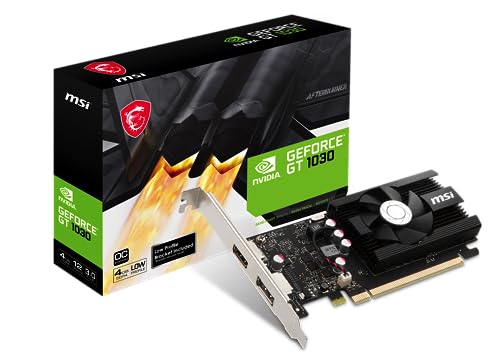
msi Gaming GeForce GT 1030 4GB DDR4 64-bit HDCP Support DirectX 12 DP/HDMI Single Fan OC Graphics Card (GT 1030 4GD4 LP OC)
- Chipset: NVIDIA GeForce GT 1030
- Video Memory: 4GB DDR4
- Boost Clock: 1430 MHz
As an affiliate, we earn on qualifying purchases.
As an affiliate, we earn on qualifying purchases.
Next Steps for Addressing HBM Supply Constraints
Manufacturers are expected to expand capacity through 2027, with HBM4E scheduled for release in 2027–2028. Industry analysts will monitor how supply-demand balances evolve, especially as AI and high-performance GPU markets continue to grow. Nvidia and other OEMs will also seek alternative solutions or supply chain adjustments to mitigate shortages in the near term.
As an affiliate, we earn on qualifying purchases.
Key Questions
Why is HBM more expensive and harder to produce than DDR5?
HBM involves stacking multiple DRAM dies with complex vertical interconnections (TSVs), which significantly increases manufacturing difficulty, wafer area, and defect rates, making it more costly and less yield-efficient than flat DDR5 memory.
How does the HBM shortage affect consumers and gamers?
The shortage primarily impacts high-end GPUs and AI hardware, leading to higher prices and limited availability for these components. Consumer-grade RAM is less affected but may see some indirect price increases due to overall supply constraints.
Will HBM supply improve after 2026?
Manufacturers plan to expand capacity through 2027–2028 with newer generations like HBM4E, but full relief from current shortages depends on technological advances and market demand stabilization.
Are there alternatives to HBM for high-performance memory needs?
While alternatives like GDDR6X and GDDR7 exist, they generally offer lower bandwidth and are less suitable for AI workloads. HBM remains the preferred choice for the most demanding applications due to its superior performance.
Source: ThorstenMeyerAI.com