📊 Full opportunity report: Streamlining Public Benefits: The Impact Of Benefit Check Bots on IdeaNavigator AI — validation score, market gap, and execution plan.
Open a free Amazon Business account
Business pricing, bulk buying and tax-exempt orders.
Create a free accountAs an affiliate, we earn on qualifying purchases.
TL;DR
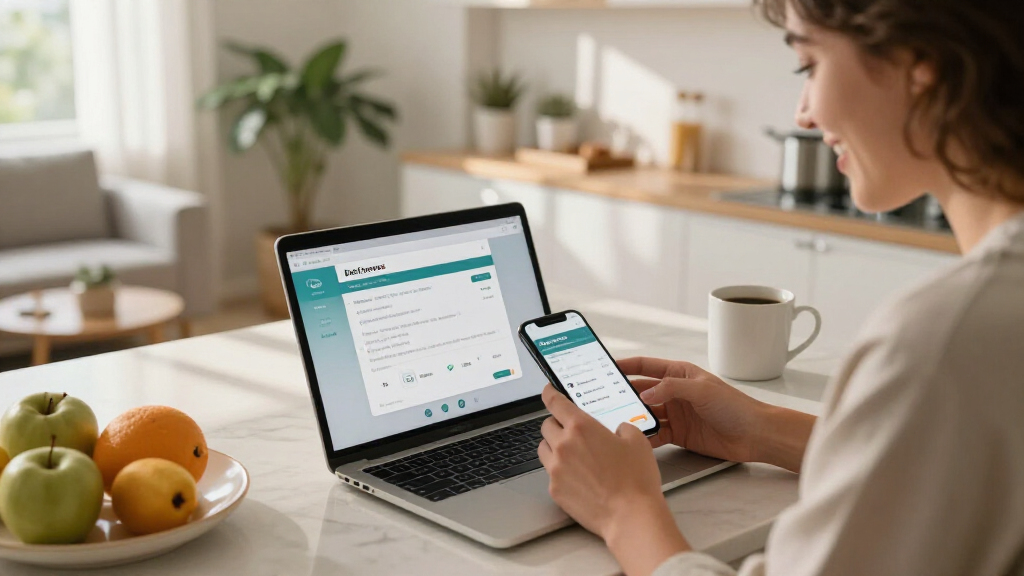
Benefit check bots are being tested to improve eligibility screening for public benefits. They target clinics, nonprofits, and government agencies, potentially reducing manual effort and increasing benefit uptake. The initiative follows the closure of a major nonprofit and post-pandemic redeterminations.
A new benefit check bot is being tested to assist clinics, nonprofits, and government agencies in rapidly screening low-income clients for eligibility across multiple public benefits programs. This development comes after the shutdown of a major benefits enrollment nonprofit in 2024, which had provided similar services in seven states. The tool aims to address a significant gap in benefits access, especially as post-pandemic Medicaid redeterminations increase the workload for frontline workers.
The benefit check bot is a white-label conversational AI tool designed for integration into healthcare and community organization websites or via SMS. It asks clients a series of yes/no and multiple-choice questions, then provides an estimated list of benefits they likely qualify for, including SNAP, Medicaid, EITC/CTC, WIC, and LIHEAP, with dollar estimates and next-step application links. The pilot focuses on 2-3 states, with participating organizations logging anonymized screening data to evaluate performance.
This initiative responds to the challenge that over $100 billion in benefits go unclaimed annually due to fragmented eligibility rules and lengthy, document-heavy applications. Frontline workers often screen clients manually, one program at a time, which is time-consuming and prone to errors. The bot aims to automate and accelerate this process, reducing screening time and increasing benefit uptake among eligible families.
The project is backed by the need to fill the capacity gap left by the closure of Benefits Data Trust, a nonprofit that had been a key partner for health systems and states. The rise of conversational AI, combined with the urgency of Medicaid redeterminations, makes this an opportune moment for deploying such tools. The model relies on a B2B2C SaaS approach, with subscription pricing for clinics and nonprofits, and potential outcome-based contracts with Medicaid managed care organizations.
Potential Impact on Benefits Access and Frontline Work
This initiative could significantly improve the efficiency of benefits screening, enabling frontline workers to serve more clients with greater accuracy. By automating eligibility checks, clinics and nonprofits can reduce administrative burdens and help families access critical support more quickly. The success of the pilot may lead to broader adoption, potentially transforming how public benefits are delivered and claimed, especially in safety-net settings.
Moreover, this approach could help recover billions of dollars in unclaimed benefits, alleviating poverty and reducing administrative costs for government programs. It also aligns with broader trends toward digital social care and data-driven social services, making benefits access more equitable and responsive to client needs.
As an affiliate, we earn on qualifying purchases.
Background on Benefits Access Challenges and Innovations
For years, low-income families have faced hurdles in accessing government benefits due to complex eligibility rules, lengthy application processes, and limited staffing at clinics and community organizations. Over $100 billion in benefits annually remains unclaimed, partly because manual screening is slow and error-prone. The shutdown of Benefits Data Trust in 2024 removed a key capacity for outsourced benefits enrollment, leaving health systems and states to find alternative solutions.
Recent advancements in conversational AI and the urgency created by Medicaid redeterminations—where millions are being reassessed for continued eligibility—have spurred interest in automated screening tools. These tools aim to streamline the process, reduce costs, and improve accuracy, especially as governments and organizations seek scalable solutions amidst staffing shortages and increased demand.
Early pilots in this space have shown promise, but widespread adoption remains in development. The current effort to test benefit check bots represents a significant step toward integrating AI-driven screening into routine benefits access workflows.
As an affiliate, we earn on qualifying purchases.
Uncertainties Around Pilot Outcomes and Broader Adoption
It is not yet clear how accurately the benefit check bot will perform across different states and programs, or how much it will improve screening efficiency in practice. The pilot results, including time savings and benefit recovery rates, are still being collected and analyzed. Additionally, questions remain about long-term adoption, integration challenges, and the willingness of organizations to pay for such tools at scale.
Further, the impact on frontline staffing and whether the technology can handle complex eligibility scenarios without human oversight are still under evaluation. The extent to which government agencies will endorse or fund widespread deployment remains uncertain.
As an affiliate, we earn on qualifying purchases.
Next Steps for Pilot Evaluation and Scaling Plans
Over the next 4-6 weeks, participating organizations will track key metrics such as screening time reduction, the share of clients identified as eligible for additional benefits, and navigator-rated accuracy. The pilot aims to confirm whether the tool can deliver measurable improvements before expanding to more states or programs.
If successful, developers plan to refine the bot’s capabilities, increase program coverage, and explore partnerships with Medicaid managed care organizations and government agencies. A broader rollout could follow, supported by outcome data and user feedback.
Further research will also assess the long-term impact on benefits uptake and administrative costs, shaping future policy and technology investments in social care delivery.
healthcare benefits eligibility software
As an affiliate, we earn on qualifying purchases.
As an affiliate, we earn on qualifying purchases.
Key Questions
How does the benefit check bot work?
The bot interacts with clients via a web widget or SMS, asking simple yes/no and multiple-choice questions to estimate eligibility for various benefits and provide application guidance.
Who is developing and funding this technology?
The initiative is driven by a coalition of healthcare providers, nonprofits, and technology developers, with funding and support from public and private sector partners interested in improving benefits access.
What benefits programs can the bot screen for?
The initial focus is on programs like SNAP, Medicaid, EITC/CTC, WIC, and LIHEAP, with plans to expand coverage based on pilot results and demand.
When will the results of the pilot be available?
Results are expected in the coming 4-6 weeks, after which decisions will be made about broader deployment and scaling.
Could this replace human benefits navigators?
The goal is to supplement, not replace, human workers by automating routine eligibility checks, allowing staff to focus on complex cases and personalized support.
Source: IdeaNavigator AI
Fall Picks
fall essentials
As an affiliate, we earn on qualifying purchases.