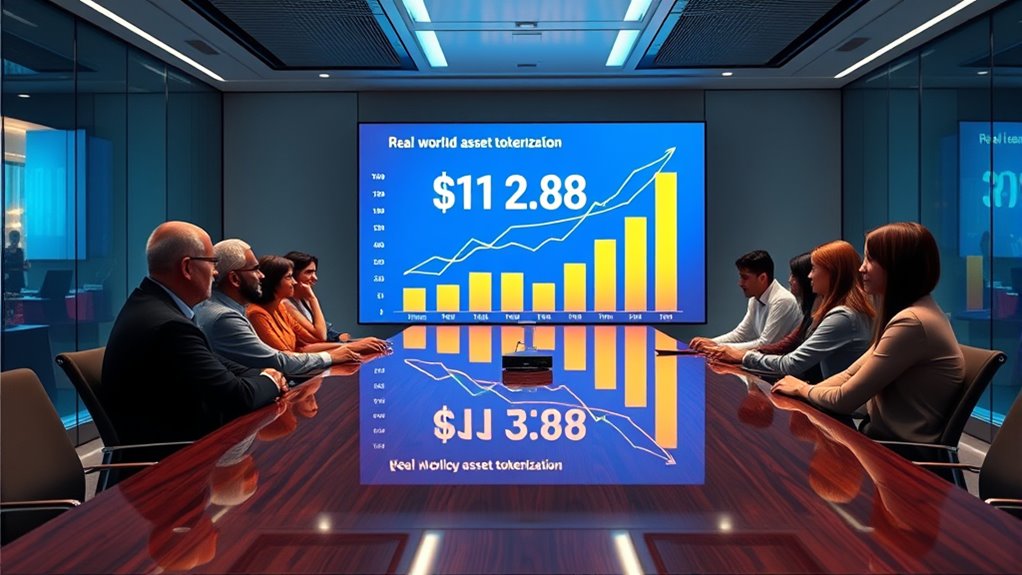

The real-world asset tokenization market is set to reach $12.8 billion by 2032, driven by advances in blockchain technology and rising investor interest. Tokenization improves liquidity, transparency, and accessibility for asset trading, offering new diversification opportunities. However, regulatory uncertainties and interoperability challenges remain. Keeping up with these developments can help you understand the risks and opportunities, and if you keep exploring, you’ll gain deeper insights into this evolving market.
Key Takeaways
- The real-world asset tokenization market is expected to reach $12.8 billion by 2032, driven by technological innovation and investor demand.
- Tokenization improves liquidity, transparency, and accessibility in physical asset trading through blockchain platforms.
- Growth is supported by advancements in blockchain, smart contracts, and DeFi integrations that streamline transactions.
- Regulatory uncertainties and varying legal frameworks pose challenges to widespread adoption and cross-border trading.
- Staying informed on evolving laws and technology is crucial for investors to navigate risks and capitalize on market opportunities.

The real-world asset tokenization market is rapidly transforming how investors access and trade physical assets by converting them into digital tokens on blockchain platforms. This shift offers unprecedented liquidity, transparency, and accessibility, allowing you to diversify your investment portfolio beyond traditional options. However, as promising as this technology is, it faces significant hurdles, especially around regulatory challenges. Governments and regulatory bodies worldwide are still grappling with how to classify and oversee tokenized assets, creating uncertainty for investors like you. Some jurisdictions treat tokens like securities, requiring compliance with complex regulations, while others lack clear frameworks altogether. This patchwork of rules can slow down adoption, restrict cross-border transactions, and increase compliance costs. Navigating these regulatory complexities requires you to stay informed about evolving laws and guarantee adherence to local and international standards, which can be daunting but essential for safe investment.
Despite these challenges, technological innovations are driving rapid progress in the market. Blockchain technology continues to evolve, offering more secure, scalable, and user-friendly platforms for asset tokenization. Smart contracts automate compliance and settlement processes, reducing transaction times and lowering costs. Advanced security protocols safeguard your digital assets from cyber threats, giving you confidence in the integrity of your investments. Additionally, innovations like decentralized finance (DeFi) integrations are expanding the use cases for tokenized assets, making it easier for you to leverage your holdings for loans or yield farming. These technological advancements are also improving transparency, as all transactions are recorded on an immutable ledger, allowing you to verify ownership and transaction history easily. As a result, you gain greater trust in the system and a clearer understanding of your asset’s provenance. Moreover, the integration of vertical storage solutions and other organization techniques can help you manage your digital assets more efficiently.
However, keep in mind that the pace of technological innovation also introduces risks. Rapid changes can lead to vulnerabilities, and the lack of standardized protocols across platforms may cause interoperability issues. You need to be vigilant about choosing reputable platforms and understanding the technological foundations behind your investments. The ongoing development of regulatory frameworks aims to strike a balance, fostering innovation while protecting investors like you. Overall, it’s an exciting time for the real-world asset tokenization market, but your success depends on staying informed about both the technological advances and the evolving regulatory landscape. By doing so, you can better navigate these complexities, capitalize on new opportunities, and contribute to shaping a more transparent, efficient market for physical assets in the digital age.

The Art of Tokenization: Monetizing Your Art and Collectibles in the Blockchain Era
As an affiliate, we earn on qualifying purchases.
As an affiliate, we earn on qualifying purchases.
Frequently Asked Questions
How Does Asset Tokenization Impact Traditional Investment Risks?
Asset tokenization impacts traditional investment risks by enhancing liquidity and promoting risk diversification. You can sell tokens more easily, reducing liquidity risk, and invest across various assets, spreading out your risk. This flexibility helps you respond quickly to market changes and manage your portfolio more effectively. Overall, tokenization offers a way to mitigate some risks associated with traditional investments while increasing your opportunities for growth.
What Are the Main Legal Challenges in Real-World Asset Tokenization?
You face legal challenges in real-world asset tokenization, mainly around property rights and jurisdictional issues. Ensuring clear property rights transfer is crucial, but regulations vary across regions, complicating compliance. Jurisdictional issues can delay or hinder token issuance and trading, as different legal frameworks may conflict. Managing these complexities requires thorough legal understanding to avoid disputes, protect assets, and guarantee smooth market operation.
How Secure Are the Blockchain Platforms Used for Tokenization?
You wonder how secure blockchain platforms are for tokenization. While cryptographic protocols protect data and transactions, platform vulnerabilities can still emerge, risking your assets. Imagine a breach exposing sensitive information or disrupting your investments. Although blockchain offers robust security, no system is invulnerable. Vigilance and continuous updates are essential; you must stay alert to evolving threats to keep your tokens safe and secure.
What Industries Are Most Likely to Adopt Asset Tokenization First?
You’ll likely see digital real estate and supply chain assets adopt tokenization first. Digital real estate offers a way to buy, sell, and manage property more efficiently, while supply chain assets benefit from increased transparency and liquidity. These industries are ready for innovation, and their existing digital infrastructure makes them prime candidates. As you explore, you’ll notice tokenization transforming ownership and investment opportunities in these sectors quickly.
How Does Regulation Vary Across Different Countries for Asset Tokens?
Think of regulation like a patchwork quilt—each country stitches its own rules for asset tokens. You’ll find cross-border compliance tricky, with some nations tightening controls while others stay loose. Regulatory harmonization aims to weave these differences into a seamless fabric, but it’s a work in progress. You need to stay informed on regional laws to navigate this landscape and avoid pitfalls in global tokenization efforts.

Web3 Programming and Smart Contracts: Build decentralized applications and blockchain projects with next-gen tools
As an affiliate, we earn on qualifying purchases.
As an affiliate, we earn on qualifying purchases.
Conclusion
As the real-world asset tokenization market soars toward $12.8 billion by 2032, you’re stepping into a future where assets shimmer like stars in a digital sky. Imagine your investments transforming into vibrant, tangible threads woven into this expanding tapestry. With each token, you’re carving a path through a landscape of endless possibilities, turning static assets into a living, breathing ecosystem. Embrace this evolution—you’re not just observing the future; you’re actively shaping its radiant horizon.

DEFI Investment Made Easy: A Beginner’s Guide to Investing in Decentralized Finance
As an affiliate, we earn on qualifying purchases.
As an affiliate, we earn on qualifying purchases.

Trezor Safe 3 – Passphrase & Secure Element Protected Crypto Hardware Wallet – Buy, Store, Manage Digital Assets Simply and Safely (Cosmic Black)
Unparalleled Security: Protect your assets NDA-free EAL 6+ Secure Element, offering robust defense and complete transparency
As an affiliate, we earn on qualifying purchases.
As an affiliate, we earn on qualifying purchases.