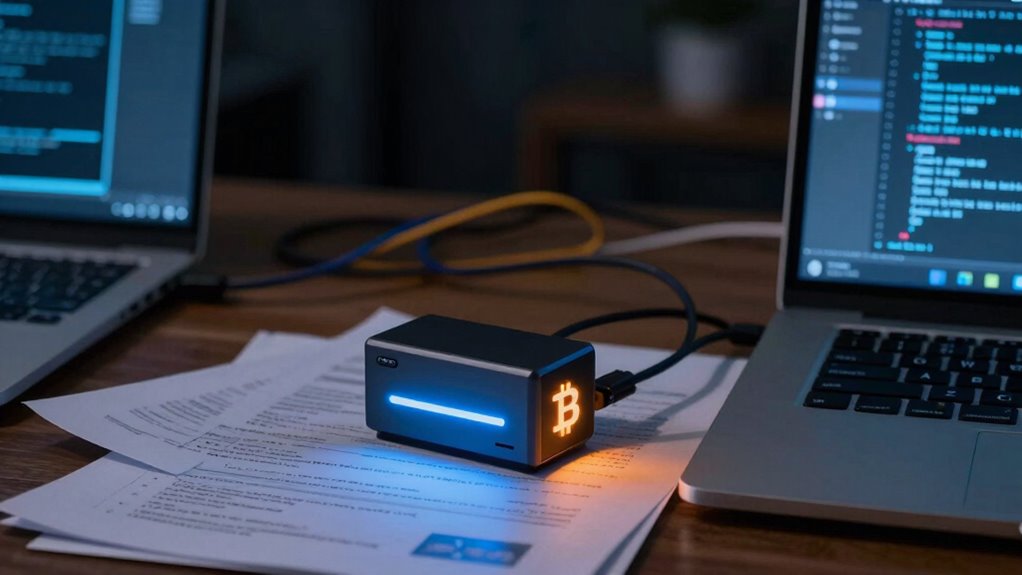

Many Bitcoin node operators overlook essential privacy measures, leaving their identities and network activities vulnerable to tracking. Focusing only on transaction verification and ignoring how node operations can reveal sensitive info puts your anonymity at risk. Default settings, lack of privacy tools like Tor or VPNs, and neglecting security best practices make it easier for others to monitor your activity. To avoid these common mistakes and better protect yourself, it’s important to explore effective privacy strategies.

Get hardware and tech essentials delivered free with Prime
- Fast, free delivery on millions of items
- Prime Video, Amazon Music and more included
- Member-only deals all year
Key Takeaways
- Relying solely on default node settings without implementing privacy tools exposes IP and activity data.
- Operating a node without using privacy tools like Tor or VPNs increases surveillance risk.
- Overlooking the importance of network privacy practices can link node activity to real identities.
- Failing to configure nodes securely allows malicious actors to analyze and compromise privacy.
- Assuming blockchain transparency ensures privacy, neglecting proactive privacy measures leaves users vulnerable.
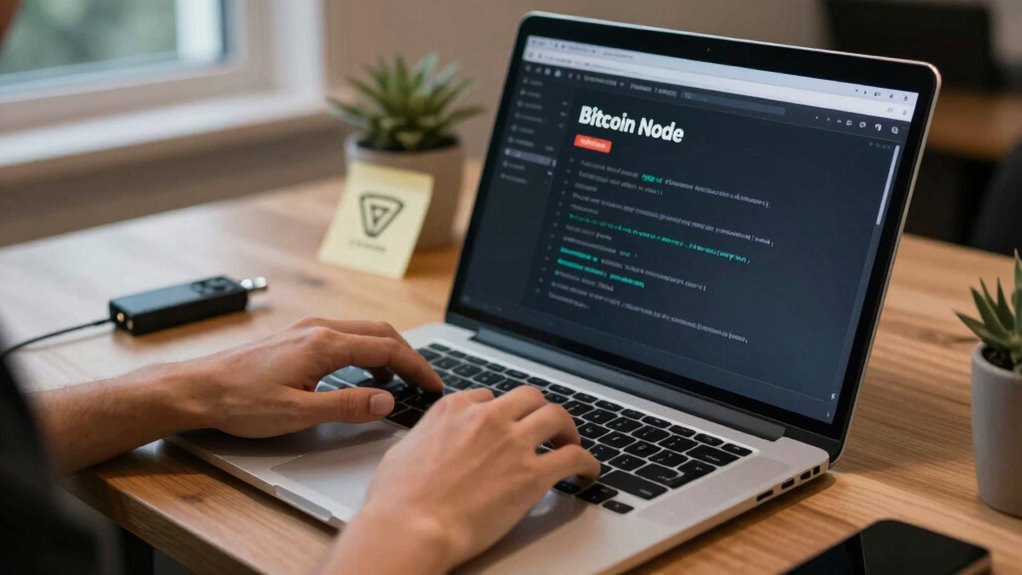
Many Bitcoin node operators unknowingly compromise their privacy by neglecting key security practices. When you run a Bitcoin node, it’s easy to focus on maintaining the network or verifying transactions without considering how your actions affect your privacy. One common mistake is overlooking how your node’s operations can reveal sensitive information about your identity and activity. This oversight directly impacts your cryptocurrency anonymity, which is essential for protecting your financial privacy in the digital age. While blockchain transparency is a core feature of Bitcoin, it’s a double-edged sword. Every transaction and node connection is recorded publicly, making it possible for anyone to trace activity back to you if you don’t take steps to anonymize your participation.
By neglecting security best practices, you might inadvertently expose details about your IP address, network patterns, or transaction history. For example, if you operate a node without hiding your IP address or using privacy-enhancing tools, others could link your node to your real-world identity. This exposure risks compromising your anonymity and could lead to targeted surveillance or even censorship. Many users assume that the blockchain’s transparency is enough to track activity, but they forget that network-level leaks can be just as revealing. Running a node without proper safeguards leaves a trail that can be exploited, especially if you don’t employ measures like Tor or VPNs to obscure your connection.
Furthermore, many node operators underestimate the importance of privacy-focused configurations. They may keep default settings or skip implementing additional security layers, inadvertently making it easier for malicious actors or government agencies to analyze their activity. This oversight can lead to a loss of privacy, undermining the very reason many people run a node in the first place. You might think that the open design of Bitcoin is enough to protect your privacy, but without proactive measures, your personal details can become linked to your transactions.
Additionally, understanding the importance of network privacy tools can significantly reduce your risk of exposure. In essence, the key mistake is not recognizing that running a Bitcoin node requires ongoing effort to safeguard your privacy. It’s not enough to just verify transactions or support decentralization—protecting your cryptocurrency anonymity demands deliberate actions. By understanding how blockchain transparency works and actively taking steps to shield your identity, you can avoid unnecessary privacy leaks. Also, being aware of privacy-enhancing technologies can help you implement effective strategies to secure your node’s activity. Remember, safeguarding your privacy is about controlling the information you share and ensuring your node’s activity remains as anonymous as possible. Neglecting these practices puts your financial privacy at risk, making it essential to stay vigilant and informed.
As an affiliate, we earn on qualifying purchases.
Frequently Asked Questions
How Can I Identify if My Node Is Leaking Privacy?
You can identify if your node leaks privacy by checking for leaks in node encryption and network obfuscation. Use tools to monitor your network traffic for unusual patterns or connections exposing your IP address. Make certain your node employs proper encryption protocols, and consider implementing network obfuscation techniques like Tor or VPNs. Regularly review your node’s configuration to prevent potential leaks and maintain your privacy.
Are There Specific Tools to Test Node Privacy Vulnerabilities?
Think of testing your node’s privacy like inspecting a fortress’s defenses. You can use tools like Wireshark to analyze traffic for leaks, ensuring your node encryption is solid and your network segmentation isolates sensitive info. Specialized privacy testing tools, such as Tor’s network analysis or privacy-focused audits, reveal vulnerabilities before attackers strike. Regular checks help you shore up defenses, keeping your Bitcoin node private and secure against prying eyes.
Does Running a Node on a VPN Improve Privacy?
Running a node on a VPN can improve your privacy by enhancing VPN anonymity and hiding your IP address from network observers. However, it doesn’t automatically guarantee node encryption or complete privacy. To truly protect your data, you should combine VPN use with proper node configurations and additional privacy tools. This layered approach helps minimize the risk of exposing your identity or transaction details while maintaining node security.
What Are Common Misconceptions About Bitcoin Node Privacy?
Many users believe running a Bitcoin node guarantees complete privacy, but that’s a misconception. Node privacy mainly involves protecting your IP address and transaction data, while network security hinges on your setup’s robustness. Relying solely on a VPN or not properly masking your node’s identity can lead to leaks. To enhance node privacy, you need to understand these distinctions and implement thorough measures, rather than assuming your node alone ensures full anonymity.
Can Privacy Issues Affect My Node’s Performance or Reliability?
Privacy issues are like cracks in a dam, risking the entire node network’s stability. If you don’t protect your privacy, your node might reveal your IP address during transaction broadcasting, making it vulnerable to network attacks or deanonymization. This can lead to unreliable connections or even shutdowns. Ensuring your node’s privacy keeps the network robust and your transaction broadcasting secure, maintaining both performance and peace of mind.
As an affiliate, we earn on qualifying purchases.
Conclusion
By neglecting your node’s privacy, you leave yourself exposed like an open window on a windy night, inviting unwanted attention. Protecting your Bitcoin node is essential to maintaining your financial privacy and security. Think of your node as a fortress—every careless mistake weakens its walls. Stay vigilant, use privacy tools, and don’t make the common mistake of overlooking your privacy. In doing so, you keep your digital wealth safer than a treasure chest buried deep underground.
As an affiliate, we earn on qualifying purchases.
As an affiliate, we earn on qualifying purchases.
Halloween Picks
halloween
As an affiliate, we earn on qualifying purchases.