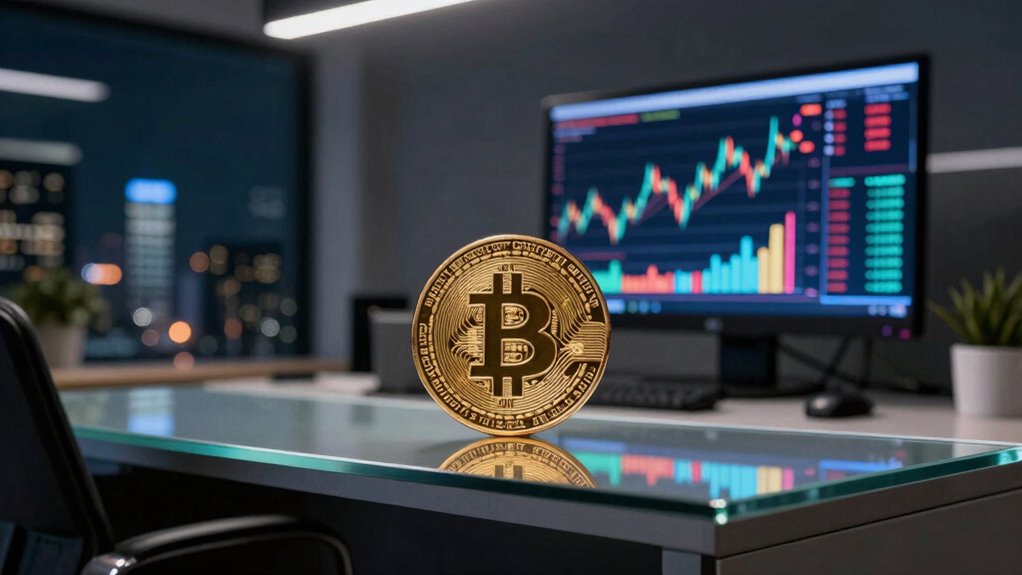

You should see Bitcoin as a reserve asset because its fixed supply of 21 million creates inherent scarcity, protecting you from inflation. Unlike fiat currencies that central banks can print endlessly, Bitcoin stays resistant to devaluation and political risks. Its decentralized nature offers stability during economic crises, making it a reliable store of value. As a borderless, portable asset, Bitcoin strengthens your financial resilience. Keep exploring to understand how Bitcoin’s unique features can secure your wealth long-term.

Get hardware and tech essentials delivered free with Prime
- Fast, free delivery on millions of items
- Prime Video, Amazon Music and more included
- Member-only deals all year
Key Takeaways
- Bitcoin’s capped supply ensures scarcity, preventing inflation and preserving long-term value, making it a reliable store of wealth.
- Its independence from central banks and government policies offers stability amidst economic and political uncertainties.
- As a digital, portable asset, Bitcoin facilitates seamless cross-border transfers without traditional financial restrictions.
- Recognized as digital gold, Bitcoin provides a resilient hedge against fiat currency devaluation and inflation.
- Its transparent supply schedule and decentralized nature enhance trust and confidence as a stable reserve asset.
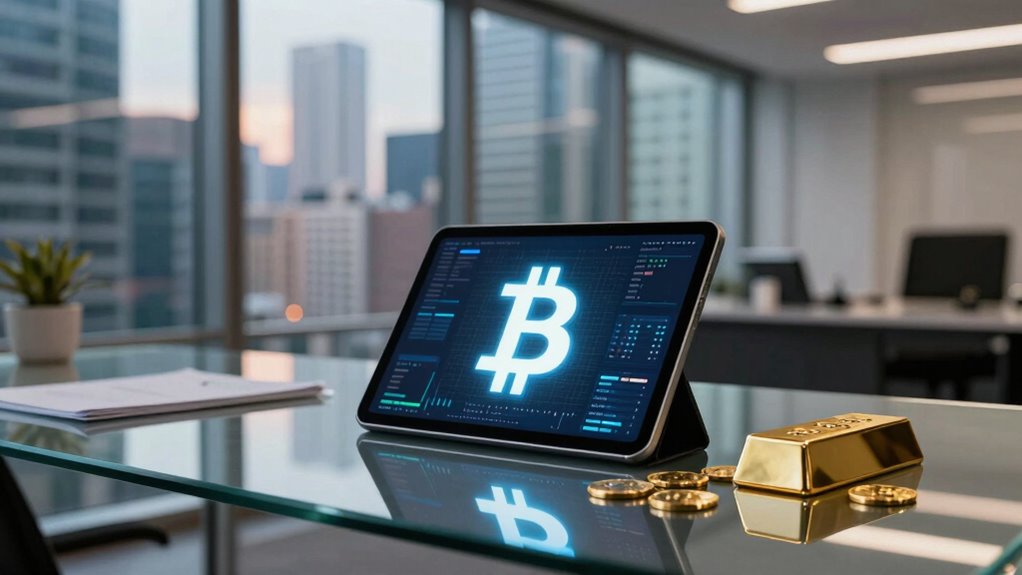
In recent years, Bitcoin has emerged as a compelling contender for the role of a global reserve asset, challenging traditional monetary systems. Its appeal largely stems from the concept of digital scarcity—an attribute that sets it apart from fiat currencies. Unlike government-issued money, which can be printed endlessly, Bitcoin’s supply is capped at 21 million coins. This built-in scarcity ensures that no central authority can inflate its supply at will, making Bitcoin inherently resistant to the kind of inflationary pressures that erode the value of traditional reserves. As a reserve asset, this digital scarcity provides confidence that Bitcoin’s value won’t be devalued by reckless monetary expansion.
You also recognize how central bank policies influence traditional reserve assets. Central banks frequently adjust interest rates, engage in quantitative easing, or implement other measures that can weaken fiat currencies over time. These policies, aimed at stimulating economic growth or controlling inflation, often lead to currency depreciation. In contrast, Bitcoin operates independently of any single nation’s monetary policy. Its decentralized nature means it isn’t subject to the whims of central banks, giving it a unique advantage. When traditional currencies lose value due to expansive policies, Bitcoin’s scarcity can serve as a hedge, preserving your wealth against inflation and currency devaluation.
You understand that in times of economic turmoil or currency crises, Bitcoin’s decentralized and scarce nature makes it an attractive alternative. It’s not tied to any government or financial institution, so you don’t have to worry about political instability or monetary mismanagement affecting its value. Instead, Bitcoin’s supply schedule remains transparent and predictable, allowing you to plan and hedge with greater certainty. As more institutions and individuals recognize Bitcoin’s potential, its role as a reserve asset becomes more solidified. You see it as a digital form of gold—one that is portable, divisible, and easy to store securely.
Moreover, the borderless nature of Bitcoin means you can hold and transfer it across countries without the restrictions that often come with traditional reserves. This flexibility enhances its utility as a reserve asset, especially in a globalized economy. As central banks continue to navigate complex monetary landscapes, Bitcoin’s fixed supply and independence from central bank policies position it as a resilient store of value. Its digital scarcity ensures that, unlike fiat money, its worth isn’t eroded by inflation or political decisions—making it an increasingly strong choice for safeguarding your wealth in uncertain times.
As an affiliate, we earn on qualifying purchases.
Frequently Asked Questions
How Does Bitcoin Compare to Traditional Reserve Assets Historically?
You’ll see that Bitcoin’s historical performance has been highly volatile compared to traditional reserve assets like gold or foreign currencies. Unlike these stable assets, Bitcoin’s value has experienced rapid increases and sharp declines, making it riskier. However, some argue that its limited supply and growing adoption could position it as a compelling reserve asset in the future. The reserve asset comparison highlights Bitcoin’s potential but also its inherent risks.
What Are the Environmental Impacts of Bitcoin Mining?
You should know that environmental concerns around Bitcoin mining stem mainly from its high energy consumption. Miners use vast amounts of electricity, often from non-renewable sources, which contributes to carbon emissions and climate change. While innovations are emerging in sustainable mining practices, the current environmental impact remains significant. Reducing energy consumption and increasing renewable energy use are essential steps toward making Bitcoin mining more eco-friendly.
How Secure Is Bitcoin From Cyber Threats?
You can trust Bitcoin’s security because its decentralized blockchain makes it highly resistant to cyber threats. Although cryptocurrency volatility can pose challenges, the network’s robust encryption and continuous updates help prevent cyber attacks. You should implement additional security measures like hardware wallets and two-factor authentication to further protect your assets. Overall, Bitcoin’s design and active community efforts make it a secure option against cyber threats.
Can Bitcoin’s Value Be Manipulated Easily?
Yes, Bitcoin’s value can be manipulated easily due to market volatility and supply control issues. Traders often exploit price swings, which can lead to sudden spikes or drops. While the supply is capped, large holders, or “whales,” can influence the market by controlling significant amounts. This makes it easier for manipulation to occur, especially in less regulated environments, impacting Bitcoin’s stability as a reserve asset.
What Are the Regulatory Challenges Facing Bitcoin Adoption?
Imagine steering through a maze with shifting walls—that’s what regulatory challenges feel like for Bitcoin adoption. You face regulatory uncertainty, where laws vary wildly and can change unexpectedly, and compliance hurdles that demand constant adjustments. This unpredictable landscape makes it tough for you to trust in a stable environment, slowing mainstream acceptance. Until clearer regulations emerge, these hurdles remain major barriers, but your persistence could help shape a more predictable future.
As an affiliate, we earn on qualifying purchases.
Conclusion
Think of Bitcoin as the lighthouse guiding your financial ship through stormy seas. Its scarcity, decentralization, and growing acceptance make it a beacon of stability amid chaos. By holding Bitcoin as a reserve asset, you’re anchoring yourself to a resilient foundation that can weather economic tempests. Embrace this digital lighthouse, and you’ll navigate toward a future where your wealth remains secure and shining bright, no matter how turbulent the waters become.
cryptocurrency cold storage device
As an affiliate, we earn on qualifying purchases.
As an affiliate, we earn on qualifying purchases.
As an affiliate, we earn on qualifying purchases.
Halloween Picks
halloween
As an affiliate, we earn on qualifying purchases.