

After the Trump tariffs, large investors, or whales, played a key role in shaping Bitcoin markets by adjusting their holdings based on geopolitical uncertainty. They often buy or sell in big volumes during such times, causing sharp price swings and increased volatility. Their moves are driven by strategic goals to hedge risks or capitalize on market shifts. If you want to understand how their actions keep impacting Bitcoin, you’ll find more insights below.
Key Takeaways
- Large investors may adjust Bitcoin holdings in response to geopolitical uncertainties caused by tariffs.
- Whales’ trading activity during tariff disputes can amplify Bitcoin’s price volatility.
- Institutional traders often view Bitcoin as a hedge amid trade tensions, influencing their market strategies.
- Regulatory signals related to tariffs and trade policies can prompt large investors to buy or sell Bitcoin.
- Heavy trading by big players post-tariffs impacts overall market sentiment and accelerates price swings.
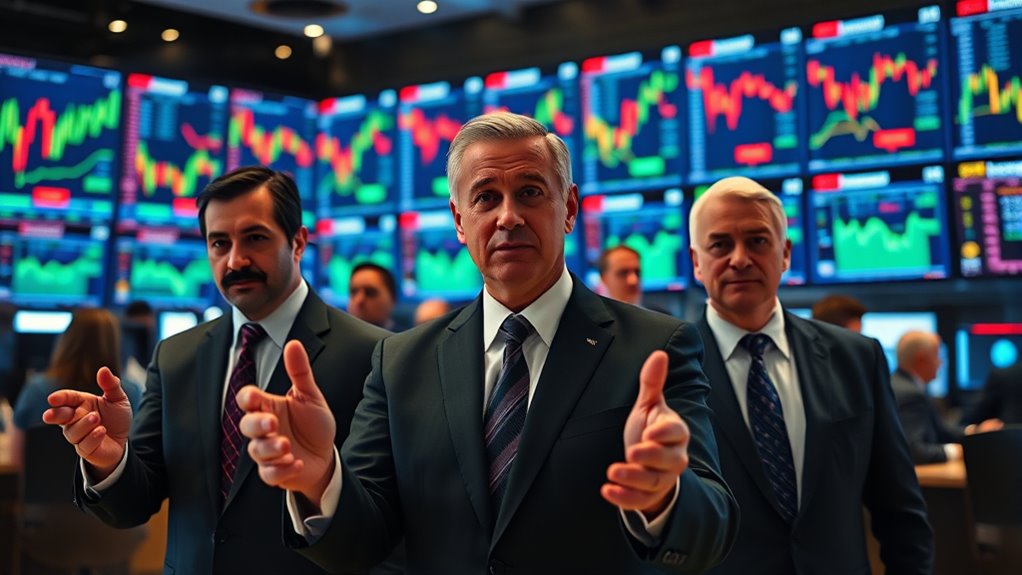
Large investors, often referred to as whales, are increasingly shaping Bitcoin markets through their significant buy and sell activities. Their actions can cause sharp price swings and influence overall market sentiment, especially in an environment where institutional trading has become more prominent. As these big players enter or exit positions, they send signals that can spark a cascade of trading activity among smaller investors. Since institutions typically operate with larger funds and more sophisticated strategies, their involvement adds a new layer of complexity to Bitcoin’s price dynamics. You might notice that periods of heavy institutional trading often coincide with heightened volatility, which can be both an opportunity and a risk for individual traders.
The impact of these large investors is particularly felt after major geopolitical events, such as the Trump tariffs, which introduced new uncertainties into global markets. These tariffs created a ripple effect, prompting institutional traders to reassess their positions in Bitcoin as a hedge against traditional financial risks. Their moves, whether accumulating or divesting, are often driven by strategic considerations that aim to navigate the changing regulatory landscape. The regulatory impact plays a critical role here, as governments around the world are increasingly scrutinizing cryptocurrencies. When new regulations are announced or anticipated, you might see whales adjusting their holdings to capitalize on or hedge against potential restrictions. Their trades can influence Bitcoin’s price trend, either reinforcing bullish momentum or deepening downward moves.
You should also pay attention to how regulatory developments influence institutional trading behavior. In some cases, clearer regulations can boost confidence, encouraging more institutions to enter the market and drive prices upward. Conversely, the announcement of stricter rules or bans can trigger mass sell-offs by whales, leading to sudden drops in Bitcoin’s value. This dance between regulatory clarity and uncertainty shapes how large investors position themselves and, in turn, affects the broader market. As an individual trader, understanding this relationship helps you anticipate potential price movements based on news and regulatory shifts.
FOREX TRADING: The Basics Explained in Simple Terms (Forex, Forex Trading System, Forex Trading Strategy, Oil, Precious metals, Commodities, Stocks, Currency Trading, Bitcoin)
As an affiliate, we earn on qualifying purchases.
As an affiliate, we earn on qualifying purchases.
Frequently Asked Questions
How Do Small Investors Respond to Large Investors’ Market Moves?
When large investors move, you often see retail sentiment shift quickly, impacting your decisions. Small investors tend to follow the trading volume, buying or selling based on big players’ actions. This can cause sharp price swings, as retail traders react to market cues. By tracking these movements, you can better understand how large investors influence overall market trends and adjust your strategies accordingly, avoiding impulsive decisions driven by fear or greed.
What Specific Strategies Do Large Investors Use to Sway Bitcoin Prices?
Large investors use strategic positioning and market manipulation to sway Bitcoin prices. They might buy or sell significant amounts to create a false sense of demand or supply, influencing market sentiment. By timing their trades carefully, they can amplify price movements, encouraging other traders to follow suit. This strategic approach allows them to manipulate prices subtly, maximizing their gains while impacting overall market trends.
Are Regulatory Bodies Monitoring Large Investor Activities in Cryptocurrency Markets?
Regulatory bodies do monitor large investor activities in cryptocurrency markets through active market surveillance and regulatory oversight. They track suspicious trading patterns, sudden price movements, and large transactions to prevent market manipulation and guarantee transparency. By scrutinizing large investors’ activities, regulators aim to protect investors and maintain market integrity, especially as the crypto space grows more complex. Your awareness of these oversight efforts helps you understand the evolving safeguards in place.
How Do Geopolitical Tensions Impact Large Investor Involvement in Bitcoin?
Imagine geopolitical tensions escalate, like during a trade war, causing market manipulation fears. You see large investors often step in, buying or selling Bitcoin to hedge against geopolitical risk. Their actions can amplify price swings, increasing volatility. You should watch how these investors respond to global conflicts, as their involvement can either stabilize or destabilize the market, revealing the deep connection between geopolitical tensions and large investor activities in Bitcoin.
What Role Do Institutional Investors Play Compared to Individual Investors?
Institutional investors play a bigger role than individual investors in shaping Bitcoin markets. You’ll notice their large trades and strategic moves often set the tone, reducing retail influence and tempering emotional trading. While individuals tend to react emotionally, institutions base decisions on data and long-term outlooks, stabilizing the market. Their involvement can lead to greater liquidity and confidence, but also introduces power that can sway prices profoundly.

Cryptocurrency QuickStart Guide: The Simplified Beginner’s Guide to Digital Currencies, Bitcoin, and the Future of Decentralized Finance (Trading & Investing – QuickStart Guides)
As an affiliate, we earn on qualifying purchases.
As an affiliate, we earn on qualifying purchases.
Conclusion
You can see how large investors move markets, especially after the Trump tariffs, with their actions often swaying Bitcoin’s value. Did you know that the top 10 crypto whales control over 20% of Bitcoin’s supply? That kind of influence means their trades can trigger significant price swings. As you watch the markets, remember that these powerful players shape Bitcoin’s future more than many realize, making it essential to stay informed about their moves.
Bitcoin price alert notifications
As an affiliate, we earn on qualifying purchases.
As an affiliate, we earn on qualifying purchases.

The Profitable Algorithmic Trading Manual with AI/ML and Python for Beginners to Advanced: Retail & Institutional. Stocks, ETFs, Forex, Crypto, Options, More. Developing, Deploying & Scaling
As an affiliate, we earn on qualifying purchases.
As an affiliate, we earn on qualifying purchases.