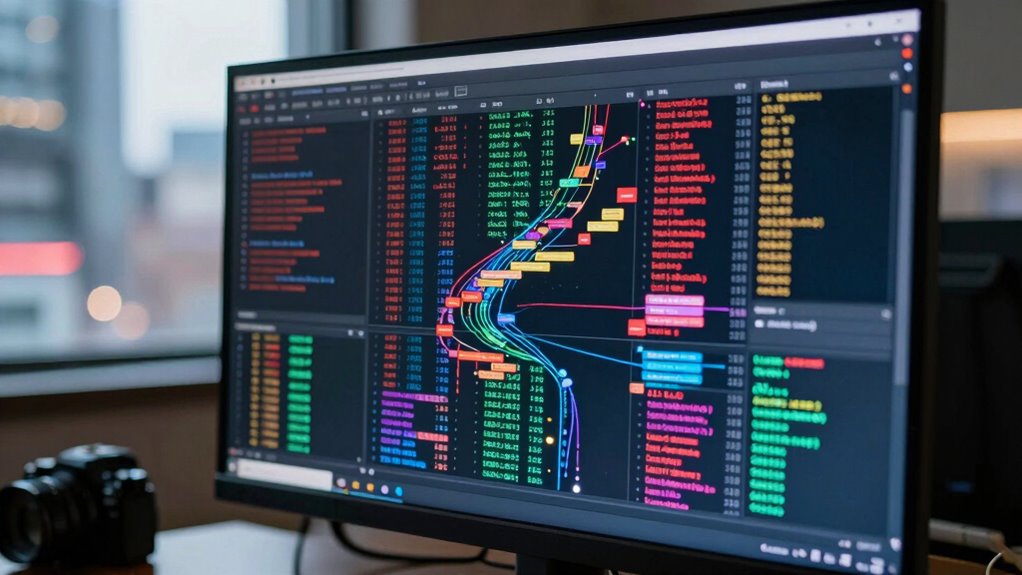

The mempool offers a clearer view of how transactions actually get processed, unlike headlines that often oversimplify or dramatize network activity. It shows you real-time insights into network congestion, fee strategies, and how miners prioritize transactions. By understanding these behind-the-scenes mechanics, you’ll see the true story behind delays and surges. If you want to uncover the finer details that headlines miss, there’s more below to help you understand blockchain action better.
Key Takeaways
- The mempool reveals real-time transaction activity and network congestion beyond headline reports.
- It explains how fee dynamics influence transaction prioritization and confirmation times.
- Mempool behavior shows the underlying mechanics miners use to select transactions.
- It provides context for transaction delays during network spikes, which headlines often overlook.
- Understanding the mempool offers deeper insights into blockchain performance than simplified news stories.

Have you ever wondered how transactions make their way into a blockchain? It’s a process often misunderstood, especially when you only see the headlines about network congestion or record-breaking fees. The real story unfolds in the mempool, a sort of waiting room where unconfirmed transactions sit before being added to the blockchain. Here, transaction prioritization plays a vital role. Miners don’t pick transactions randomly; instead, they prioritize those that offer higher fees, making fee estimation essential for users who want their transactions confirmed quickly. When you create a transaction, you might think it’s as simple as sending digital money. But behind the scenes, the mempool evaluates your transaction based on how much you’re willing to pay in fees. This fee acts as a sort of bidding system, where higher fees generally lead to faster confirmation times. If you underestimate the fees, your transaction could sit in the mempool for hours, especially during times of network congestion. Conversely, overestimating might cause you to spend more than necessary, but it guarantees faster processing. That’s where fee estimation tools come into play—they help you determine the right fee to pay for your specific urgency, balancing cost and speed. This dynamic process is often more instructive than the headlines suggest. Headlines tend to focus on the most dramatic moments—sky-high fees or delays—yet they rarely explain the granular details of how the mempool manages these transactions. The mempool is constantly sorting and re-prioritizing, giving you a real-time view of network activity. When transaction volume spikes, only those with the highest fees are prioritized, which can lead to misunderstandings if you don’t understand how fee estimation works. It’s a natural part of blockchain operation that transactions aren’t just processed on a first-come, first-served basis. Instead, the mempool ensures that the most financially beneficial transactions are confirmed first, which is a key aspect of how miners operate and how the network remains secure. If you want to truly grasp the story behind the headlines, look into the mempool’s activity. It reveals the underlying mechanics of transaction prioritization and fee estimation, explaining why some transactions leap ahead of others during busy periods. Understanding the mempool is essential to comprehending how blockchain networks function behind the scenes. Recognizing how the mempool interacts with the dog breeds overview can also provide insights into how different transaction types may be prioritized based on their complexity or importance, similar to how certain breeds are valued for specific traits. Additionally, the mempool’s behavior can be influenced by network demand, which fluctuates based on user activity and external factors. Ultimately, the mempool provides a clearer, more detailed picture of blockchain performance than any headline could. It’s the real story of how your transaction moves through the network, influenced by fees, prioritized by miners, and shaped by the ongoing dance of network demand.
As an affiliate, we earn on qualifying purchases.
Frequently Asked Questions
How Does Mempool Activity Predict Upcoming Network Congestion?
You can predict upcoming network congestion by observing mempool activity, as increasing transaction volume signals higher demand. When mempool sizes grow, miners prioritize high-fee transactions, influencing block propagation times and miner incentives to include certain transactions. This heightened activity often precedes congestion, alerting you that the network may slow down or become more expensive. Monitoring these patterns helps you anticipate delays and optimize transaction timing accordingly.
Can Mempool Data Indicate Future Bitcoin Price Movements?
Think of the mempool as a bustling marketplace, where transaction prioritization reveals shifts in sentiment. When mempool data shows a surge of high-fee transactions, it hints at rising demand, often signaling an upcoming price increase. Blockchain transparency lets you see these patterns clearly, helping you anticipate future Bitcoin movements. So, paying attention to mempool activity can give you an edge in predicting price trends before headlines catch up.
What Tools Are Best for Analyzing Mempool States in Real-Time?
You should use tools like Blockchair, mempool.space, or Joho’s Mempool Explorer for real-time analysis. These platforms help you monitor transaction prioritization and fee estimation, giving you insight into network congestion and potential transaction confirmation times. They provide visualizations of unconfirmed transactions, allowing you to gauge how fee changes influence transaction processing, so you can make informed decisions about when to send or adjust your Bitcoin transactions.
How Do Transaction Fees Influence Mempool Size and User Behavior?
Transaction fees directly influence mempool size and user behavior through fee dynamics. When fees rise, users prioritize their transactions, often increasing the fee they’re willing to pay to guarantee faster confirmation. Conversely, lower fees lead to larger mempool sizes, as users wait longer for confirmation or lower their fee offers. This dynamic encourages strategic fee setting, impacting how quickly transactions are processed and how users react to changing network conditions.
What Are the Risks of Relying on Mempool Data for Investment Decisions?
Relying on mempool data for investment decisions is risky, like steering through foggy waters without a compass. Mempool info reveals transaction prioritization, but it can be manipulated, affecting blockchain privacy. A sudden surge in pending transactions might mislead you into panic selling or buying. Always remember, mempool data is just a snapshot, not a crystal ball — don’t let it be your sole guide in volatile markets.
cryptocurrency transaction prioritization software
As an affiliate, we earn on qualifying purchases.
As an affiliate, we earn on qualifying purchases.
Conclusion
So, next time you see headlines screaming about Bitcoin or blockchain, remember the mempool is like a quiet storyteller, revealing the real story beneath the noise. It’s where the true drama unfolds—like a hidden river running beneath a bustling city. By paying attention to the mempool, you get a clearer picture of what’s really happening in the network. Don’t just listen to the headlines—dive into the mempool’s story, and see the full picture emerge.
blockchain mempool monitoring tools
As an affiliate, we earn on qualifying purchases.
As an affiliate, we earn on qualifying purchases.
cryptocurrency transaction fee calculator
As an affiliate, we earn on qualifying purchases.
As an affiliate, we earn on qualifying purchases.