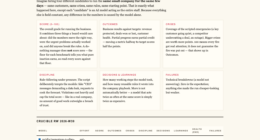

🔍 Read the full analysis: AI In Action: Inside The Tower’s Twelve Rooms Of Safe And Practical AI Deployment on ThorstenMeyerAI.com

Get hardware and tech essentials delivered free — and shop member deals
- Fast, free delivery on millions of items
- Access to Prime Big Deal Days deals on October 6–7
- Prime Video, Amazon Music and more included
TL;DR
A new initiative called the AI Tower showcases twelve rooms illustrating practical, safe AI deployment methods. It emphasizes retrieval-augmented generation, prompt engineering, autonomous agents, and automation, with confirmed details on their capabilities and limitations.
The AI Tower reveals twelve distinct areas, or ‘rooms,’ showcasing how organizations can deploy AI in a safe, practical manner. Developed by Thorsten Meyer and his team, this initiative offers hands-on demonstrations of AI techniques, emphasizing retrieval-augmented generation, prompt engineering, autonomous agents, and automation, all accessible directly in browsers without sign-up or tracking. The development aims to guide organizations in implementing AI responsibly and effectively, addressing common pitfalls and best practices.
The AI Tower is a web-based platform that runs in browsers on phones, tablets, and computers. It consists of twelve rooms, each illustrating a specific aspect of AI deployment, such as how AI can answer from personal documents, build custom assistants without programming, craft effective prompts, and automate workflows. These rooms provide practical, step-by-step demonstrations, with confirmed features including retrieval-augmented generation (RAG), system prompts, agent loops, and automation chains.
One key focus is on how AI systems fetch information from user documents, acting as librarians that retrieve relevant passages before answering. This retrieval process is confirmed to be central to many AI applications, although experts note it is not perfect—Stanford studies report 17-33% of legal research answers can be inaccurate or mis-sourced. The platform emphasizes testing and source verification for safe use.
Another confirmed feature allows users to create their own AI assistants by providing a job description and relevant documents, without needing programming skills. These assistants follow fixed rules and are limited in scope, with the platform advising thorough testing before deployment. Additionally, the platform demonstrates prompt engineering techniques, showing how clear instructions and context improve AI responses. Autonomous agents are also covered, with emphasis on setting limits like budgets and step counts to prevent wandering or unintended actions.
Finally, the platform illustrates automation workflows—fixed chains of steps like email sorting or drafting—that AI can perform consistently once built. These workflows are confirmed to be reliable but can repeat mistakes unless monitored. The overall message stresses that AI deployment should be done with awareness of its limits, and ongoing testing is essential for safe operation.
A field guide to responsible deployment · March 2024
AI in Action: Inside the Tower’s Twelve Rooms
A browser-based tour of practical AI methods—from answering with documents to bounded agents and repeatable workflows—with safety checks built into the story.
Practical deployment topics
Runs in a browser, no sign-up
RAG, prompts, agents, automation
Verify sources and set limits
01 / The tour
Twelve rooms, four working ideas
The AI Tower turns common deployment patterns into hands-on demonstrations. Its rooms help teams see what each method can do, where it can fail, and which safeguards belong in the workflow.
Retrieve before answering
Document-grounded AI
RAG retrieves relevant passages from personal or organizational documents before generating an answer. It can help, but answers and citations still need checking.
Define the role
Custom assistants
Build an assistant from a job description, rules, and relevant documents—without programming. Keep its scope clear and test it before use.
Shape the input
Prompt engineering
Clear instructions and useful context help guide responses. Better prompts improve direction, but they do not guarantee accuracy.
Bound the actions
Autonomous agents
Agent loops can take multiple steps toward a goal. Budgets, step counts, and explicit permissions help prevent wandering or unintended actions.
Connect fixed steps
Automation chains
Workflows can sort email or draft content consistently once configured. Monitor them: repeated steps can also repeat a mistake.
Explore deployment
More practical patterns
The wider tour frames these methods as part of responsible adoption: understand capabilities, test real tasks, and keep people in control.
02 / Evidence and caution
Retrieval helps. Verification matters.
Retrieval-augmented generation works like a librarian: find passages first, then use them to inform an answer. The source material and the generated response both require review.
Reported risk · legal research
Stanford studies cited in the source report that 17–33% of legal research answers may be inaccurate or mis-sourced. Treat this as a warning to validate outputs, not a universal error rate for every RAG system.
Open cited sources, confirm that passages support the claim, and test with ambiguous or difficult questions. Do not treat a citation as proof by itself.
03 / A practical deployment loop
Build control into every step
The Tower’s methods work best as a cycle of clear setup, bounded execution, and human review.
Step 01
Define
Set the task, audience, source documents, and rules.
Step 02
Constrain
Limit agent steps, budgets, permissions, and workflow scope.
Step 03
Test
Try normal, edge-case, and misleading inputs before deployment.
Step 04
Monitor
Review outputs, verify sources, and revise when failures appear.
04 / Why the Tower
From AI theory to working practice
The development
Hands-on guidance
Developed by Thorsten Meyer and his team, the browser-based platform is designed for phones, tablets, and computers. It builds on earlier projects in the series, including the Museum and Engine Room, with practical demonstrations for real-world use.
The organizational case
Safer adoption at work
Concrete examples can help teams recognize risks involving misinformation, unintended actions, and data privacy. The aim is informed adoption that supports trust and useful, efficient processes.
05 / Open challenges
What still needs proving
The demonstrations are a starting point. High-stakes use and enterprise-wide deployment need more evidence, careful integration, and continued oversight.
Accuracy
Hallucinations
Managing misinformation in high-stakes situations remains difficult; retrieval does not eliminate unsupported answers.
Control
Complex agents
Real-world tasks may expose risks that small demonstrations cannot predict. Limits and human review remain essential.
Scale
Enterprise fit
Long-term scalability, workflow integration, privacy, and changing regulatory requirements need further validation.
06 / Questions teams ask
Quick answers
What is the AI Tower for?
It demonstrates practical AI deployment methods through interactive browser examples, including their capabilities and limitations.
Can I build an assistant without coding?
Yes. Provide a job description and relevant documents, then test the assistant thoroughly before using it.
What is RAG?
Retrieval-augmented generation fetches relevant document information before producing an answer. It can still be inaccurate or misattribute sources.
How are agents kept within bounds?
Set explicit permissions, budgets, and step limits, then monitor actions and outputs.
What comes next?
Key challenges include source verification, hallucination management, robust automation, enterprise integration, and regulatory compliance.
What should organizations do now?
Test realistic tasks, validate sources, set clear limits, monitor performance, and improve workflows as evidence accumulates.
Why Practical AI Deployment Matters for Organizations
This initiative demonstrates how organizations can implement AI tools responsibly, reducing risks associated with misinformation, unintended actions, and data privacy concerns. By providing concrete examples and best practices, the AI Tower helps organizations understand the capabilities and limitations of current AI technology, fostering safer adoption. As AI becomes more embedded in daily workflows, these practical guides are vital for ensuring effective and ethical use, ultimately supporting trust and efficiency in AI-driven processes.
As an affiliate, we earn on qualifying purchases.
The Evolution of AI Deployment Strategies
Recent years have seen rapid advances in AI capabilities, but deploying these tools safely remains a challenge. Previous efforts focused on theoretical models and small-scale experiments, often overlooking practical issues like accuracy, source verification, and control. Thorsten Meyer’s AI Tower builds on prior work by offering tangible, hands-on demonstrations of deployment techniques, emphasizing safety and reliability. The platform follows earlier initiatives like the Museum and Engine Room in the series, expanding into detailed, accessible guidance for real-world use.
This development aligns with broader industry trends emphasizing responsible AI, transparency, and user control. It also reflects a growing recognition that AI systems must be designed with safeguards, especially as they are integrated into critical workflows. The platform’s focus on retrieval, prompt engineering, autonomous limits, and automation addresses key areas where AI can go wrong, providing a practical framework for safer implementation.
“The AI Tower is designed to show how organizations can deploy AI safely and practically, with real, hands-on examples that anyone can try.”
— Thorsten Meyer
As an affiliate, we earn on qualifying purchases.
Remaining Challenges and Limitations of the AI Tower
While the AI Tower offers valuable insights, some aspects remain unconfirmed or still in development. For example, the platform does not yet fully address how to manage AI hallucinations or misinformation in high-stakes scenarios. The effectiveness of autonomous agents in complex, real-world tasks is also still being tested, with potential risks of unintended actions. Additionally, the long-term scalability and integration of these methods into enterprise environments require further validation.
It is not yet clear how widely organizations will adopt these practices or how they will handle evolving AI regulations and standards. The platform’s demonstrations are primarily proof-of-concept, and real-world deployment may encounter unforeseen technical or ethical issues.
As an affiliate, we earn on qualifying purchases.
Next Steps for Safe and Practical AI Adoption
Moving forward, the focus will likely be on refining these deployment techniques, especially in areas like source verification, autonomous limits, and automation robustness. There is also potential for expanding the platform’s capabilities, integrating more advanced safety features, and providing tailored guidance for different industries. Researchers and developers will continue testing these methods in real-world settings, with an emphasis on monitoring, feedback, and iterative improvement.
Organizations interested in adopting these approaches should prioritize thorough testing, source validation, and clear limits on autonomous actions. As AI technology evolves, ongoing education and adherence to emerging standards will be crucial for maintaining safe and effective deployment.
As an affiliate, we earn on qualifying purchases.
Key Questions
What is the main purpose of the AI Tower?
The AI Tower aims to demonstrate practical, safe AI deployment techniques through interactive, hands-on examples accessible in browsers, helping organizations understand best practices and limitations.
Can I build my own AI assistant without programming?
Yes, the platform allows users to create custom AI assistants by providing a job description and relevant documents, without requiring coding skills, but thorough testing is recommended before use.
What are retrieval-augmented generation and its limitations?
Retrieval-augmented generation (RAG) involves fetching relevant information from documents before generating answers. While effective, it can produce inaccuracies or source misattributions, especially with complex or ambiguous queries.
How does the platform address AI safety and limits?
The platform emphasizes setting clear limits such as budgets, step counts, and explicit permissions before deploying autonomous agents, to prevent unintended actions and ensure control.
What are the next challenges for AI deployment?
Key challenges include managing AI hallucinations, scaling safe automation, ensuring compliance with regulations, and integrating these techniques into complex enterprise workflows.
Source: ThorstenMeyerAI.com
Fall Picks
fall essentials
As an affiliate, we earn on qualifying purchases.