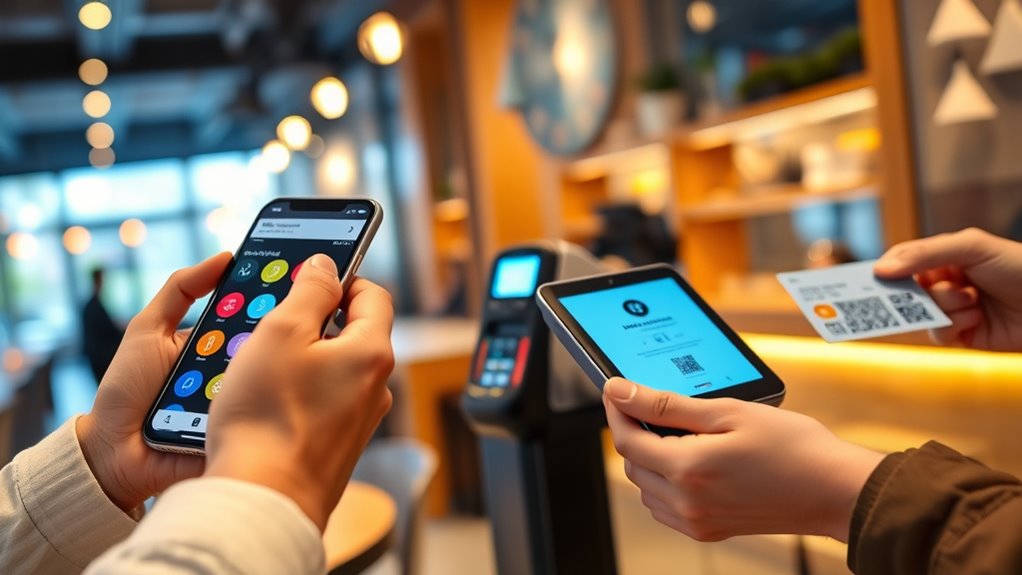

To use stablecoins for everyday payments, start by setting up a digital wallet linked to your bank or credit account, which many cryptocurrency exchanges offer. Then, you can pay by scanning QR codes, sending coins to wallet addresses, or using point-of-sale terminals that accept stablecoins. Transactions are fast, secure, and usually cheaper than traditional methods. If you want to discover more about seamlessly integrating stablecoins into your daily routine, there’s plenty more to explore.
Key Takeaways
- Set up a digital wallet compatible with stablecoins, linking it to your bank or credit account.
- Fund your wallet with stablecoins through an exchange or transfer from other crypto holdings.
- Use QR codes, wallet addresses, or point-of-sale systems to make payments directly from your wallet.
- Confirm transactions on the blockchain for secure, transparent, and faster payment processing.
- Ensure merchants accept stablecoins and have compatible payment systems for seamless transactions.
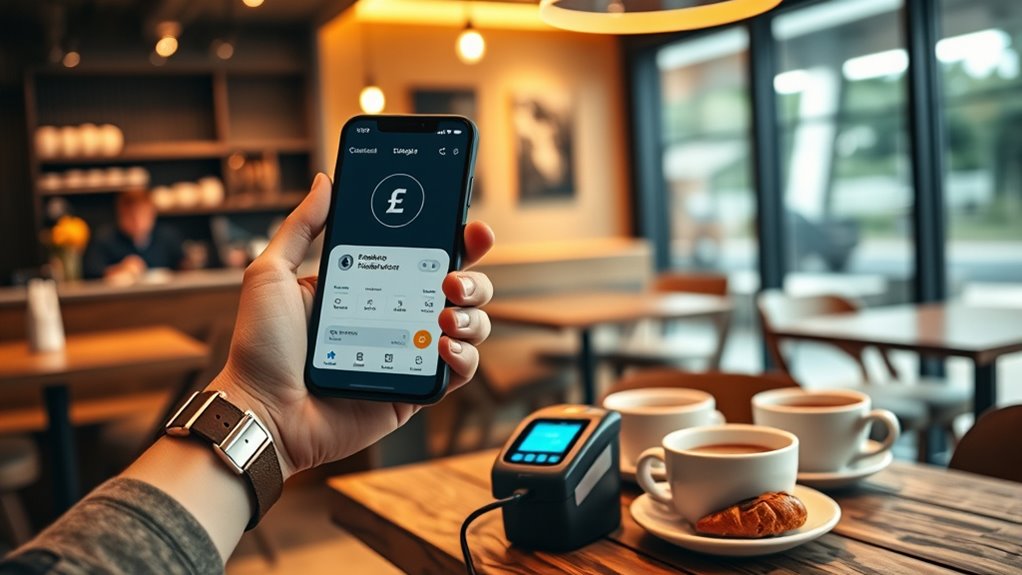
Have you considered how stablecoins are transforming the way we make payments? These digital assets, pegged to traditional currencies like the US dollar or euro, offer a seamless way to transfer value instantly and with minimal fees. Unlike volatile cryptocurrencies, stablecoins provide the stability needed for everyday transactions, making them an appealing alternative to cash or credit cards. As you start to explore their use, you’ll notice that the broader ecosystem is evolving rapidly, influenced heavily by ongoing discussions around cryptocurrency regulation. Governments and regulators are working to establish frameworks that guarantee stablecoins are safe and transparent, which helps build trust and encourages wider adoption. This regulatory environment aims to prevent issues like fraud or money laundering, giving you confidence that your transactions are secure. Additionally, blockchain scalability is a key factor enabling stablecoins to support everyday payments efficiently. As blockchain networks improve their capacity to handle numerous transactions quickly, stablecoins can be used for small, frequent payments without the delays or high fees associated with older systems. These technological enhancements ensure that your transactions are processed in real time, making stablecoins viable for daily use, whether you’re paying for coffee or splitting bills with friends.
When it comes to actually using stablecoins for your payments, the process is straightforward. You’ll want to set up a digital wallet compatible with stablecoins, which can often be linked to your bank account or credit card. Many popular cryptocurrency exchanges now offer wallet services with user-friendly interfaces, making it easy to buy, store, and send stablecoins. Once your wallet is funded, you can make payments by scanning QR codes, entering wallet addresses, or through point-of-sale systems that accept stablecoin payments directly. Because stablecoins operate on blockchain technology, your transactions are recorded securely and transparently, giving you a clear record of your spending. As blockchain scalability improves, transaction times decrease and costs drop, making it even more practical for everyday use. This means you won’t experience frustrating delays or high fees that used to hinder crypto-based payments. Moreover, understanding the affiliate disclosure and privacy policies related to these platforms can help you make informed decisions and protect your data.
Using stablecoins for daily transactions also benefits merchants. They can receive payments instantly without the need for costly conversions or waiting periods. Plus, with increasing regulation, businesses can rely on stablecoins being legally compliant and less susceptible to sudden value fluctuations. This creates a more stable environment for both consumers and vendors, encouraging wider acceptance. As you incorporate stablecoins into your routine, you’ll find that they not only simplify your payments but also integrate seamlessly into the broader digital economy, which continues to evolve with advancements in blockchain scalability and evolving regulatory landscapes. Ultimately, stablecoins are poised to redefine how we think about and conduct everyday transactions—more efficient, more secure, and more accessible than ever before.
Frequently Asked Questions
Are Stablecoins Accepted Everywhere for Daily Transactions?
Stablecoins aren’t accepted everywhere for daily transactions. Merchant acceptance varies widely, with some businesses embracing them and others not. Regional limitations also play a role, as certain countries or areas have stricter regulations or lack infrastructure for stablecoin payments. Before using stablecoins daily, check if local merchants support them and be aware of regional restrictions that might affect your ability to pay seamlessly.
How Do Transaction Fees Compare to Traditional Payment Methods?
Imagine paying a tiny toll on a quiet country road—peaceful and cheap. That’s how stablecoin transaction fees typically compare to traditional payment methods. You usually face lower transaction costs with stablecoins because they have a simpler fee structure and fewer intermediaries. Unlike credit cards or bank transfers, which can feel like paying for a rollercoaster ride, stablecoins often offer a more affordable, straightforward experience—making your daily payments smoother and less costly.
What Are the Risks of Using Stablecoins for Payments?
Using stablecoins for payments involves some risks. You face volatility risks if the stablecoin isn’t fully backed or if its value fluctuates unexpectedly. Regulatory concerns also pose a threat, as governments may impose restrictions or new rules, impacting your ability to use or convert stablecoins easily. Stay informed about the regulatory landscape and choose stablecoins with transparent backing to minimize these risks.
Can Stablecoins Be Used for International Purchases Easily?
While it’s easier to use stablecoins for international purchases than traditional currencies, you might face hurdles due to cryptocurrency regulation and stablecoin liquidity. You can often transfer stablecoins across borders quickly, but fluctuating regulations could complicate conversions or access. To guarantee smooth transactions, stay updated on local laws and choose stablecoins with high liquidity. This way, you can take advantage of fast, low-cost global payments without unexpected delays.
Do Stablecoins Require a Digital Wallet or Bank Account?
You don’t necessarily need a bank account to use stablecoins, but a digital wallet is essential. Digital wallet requirements vary, but most are easy to set up and store your stablecoins securely. While some platforms might ask for a bank account for transactions or conversions, many stablecoins operate independently of traditional banking. So, having a digital wallet is your primary requirement, and a bank account isn’t always necessary.
Conclusion
Think of stablecoins as your digital bridge—connecting the familiar world of cash to the innovative future of finance. With them, you hold a steady anchor amid the shifting tides of cryptocurrency volatility. By embracing stablecoins, you’re not just making payments; you’re planting a seed of financial freedom and stability. Let this digital coin be the lighthouse guiding you through the storm, illuminating a path toward seamless, secure, and everyday transactions.