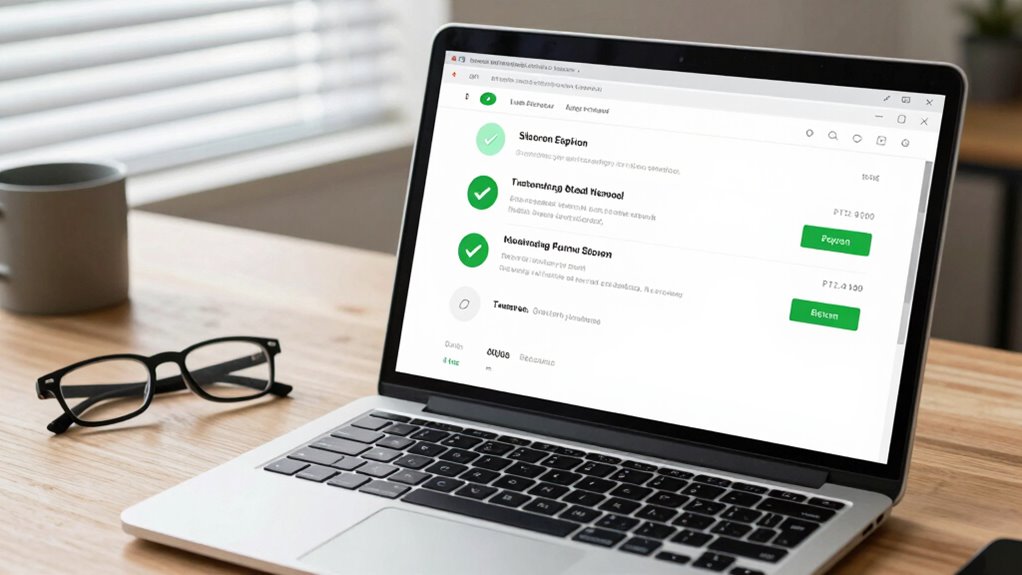

To verify a Bitcoin transaction on your own, start by locating the transaction ID in your wallet’s transaction history. Then, enter this ID into a blockchain explorer like Blockstream or Blockchain.com. Check the number of confirmations to see if your transaction is secure; more confirmations mean a completed process. If you’d like to understand how to interpret the details further and stay updated, continue exploring these steps for a complete overview.
Key Takeaways
- Locate the transaction ID in your wallet’s transaction history.
- Use a blockchain explorer (e.g., Blockstream, Blockchain.com) to search the transaction ID.
- Check the number of confirmations to verify transaction security and validity.
- Review the transaction details, including fees and network congestion, for confirmation status.
- Ensure the transaction has enough confirmations to be considered securely settled.
Verifying a Bitcoin transaction might seem complicated at first, but with the right approach, it becomes quite straightforward. When you’re dealing with cryptocurrency wallets, you want to make certain your transaction has been successfully processed before considering it final. This process involves checking the blockchain, understanding transaction details, and guaranteeing no issues like high transaction fees or delays have occurred. Your cryptocurrency wallet is your gateway to this information, providing tools that help you track and verify transactions easily.
Start by locating your transaction ID, also known as a hash. When you send Bitcoin, your wallet usually generates this unique identifier, which you can find in the transaction history section. With this ID, you can access blockchain explorers—websites like Blockstream, Blockchain.com, or Blockchair—that let you view detailed transaction data. Entering your transaction ID into one of these explorers pulls up the transaction details, including the number of confirmations it has received. Confirmations are vital because they indicate how many blocks have been added to the blockchain after your transaction, confirming its validity and security.
As you verify the transaction, pay attention to transaction fees. These fees are what incentivize miners to include your transaction in a block. If the fees are too low, your transaction might take longer to confirm or get stuck pending. Conversely, if you see a very high fee, it might mean you’re overpaying. Blockchain explorers often display recommended fee levels based on current network congestion, helping you understand whether your fee is appropriate. If your transaction has zero confirmations or is stuck, check the fee you paid; adjusting future transactions by including a higher fee can speed up confirmation times. Being aware of network congestion can help you determine the optimal fee to pay for faster confirmation. Additionally, understanding the blockchain structure and how transactions are added can help you better interpret confirmation times and network activity, ensuring your transaction is securely recorded. This helps you track the progress and confirms whether the transaction has been successfully added to the blockchain. Recognizing transaction confirmation patterns can also assist in predicting when your transaction will be fully settled.

Crypto Seed Cold Storage Wallet with Engraver Pen Kit – Metal Plate and Etching Tool for Cryptocurrency Password Phrase Backup and Recovery
All Inclusive Kit for Crypto Seed Key Storage – Comes a Stainless Steel Plate & Tungsten Steel Engraving…
As an affiliate, we earn on qualifying purchases.
As an affiliate, we earn on qualifying purchases.
Frequently Asked Questions
How Long Does It Typically Take to Verify a Bitcoin Transaction?
Typically, verifying a Bitcoin transaction takes about 10 minutes, but it can vary depending on network traffic and transaction fees. The transaction speed is influenced by the confirmation process, where miners validate the transaction by adding it to a block. If you pay higher fees, your transaction usually confirms faster. However, during busy times, it might take longer, so patience is essential for ensuring your transaction completes securely.
Do I Need Any Special Software to Verify Transactions Manually?
You don’t need special software to verify transactions manually; just basic tools like a blockchain explorer. This keeps cryptocurrency security tight and guarantees blockchain transparency, making the process straightforward. With a little patience, you can confirm transactions yourself without complex programs. Think of it as peering behind the curtains of the blockchain, gaining confidence in your transaction’s status and safeguarding your digital assets effortlessly.
Can I Verify Transactions on a Mobile Device Easily?
Yes, you can verify Bitcoin transactions on a mobile device easily. Just guarantee your device has good mobile security to protect your data. Use reputable apps or wallets that offer transaction verification features. Keep your private keys secure and avoid public Wi-Fi to maintain transaction privacy. With the right tools and precautions, verifying transactions on your phone becomes quick, safe, and straightforward, giving you greater control over your Bitcoin holdings.
What Are Common Errors to Watch for During Verification?
You should watch out for common errors like misreading transaction details or overlooking confirmation counts, which can cause issues like transaction delays or double spending risks. Always double-check the transaction ID, recipient address, and confirmation status before considering it verified. Rushing can lead to errors, so take your time to verify each detail carefully. Staying attentive helps prevent mistakes that could compromise your transaction’s security or lead to delays.
Is It Possible to Verify Transactions Without a Full Node?
Yes, you can verify transactions without a full node by using lightweight wallets or SPV (Simplified Payment Verification) clients. These tools check transaction confirmation status through blockchain security by querying trusted nodes or APIs, giving you confidence in transaction validity. While they don’t verify the entire blockchain, they still provide reliable confirmation status, making them convenient options for quick verification without the need for maintaining a full node.

Blockchain Technology Explained: The Ultimate Beginner’s Guide About Blockchain Wallet, Mining, Bitcoin, Ethereum, Litecoin, Zcash, Monero, Ripple, Dash, IOTA And Smart Contracts
As an affiliate, we earn on qualifying purchases.
As an affiliate, we earn on qualifying purchases.
Conclusion
Just like checking off items on a to-do list keeps you organized, confirming a Bitcoin transaction ensures your digital money is secure. When I first started, I felt like a detective piecing clues together—each step revealing more clarity. Remember, mastering this method puts you in control, making you less vulnerable to scams. With patience and practice, you’ll trust your own eyes more than third-party promises, turning you into a true crypto sleuth.

Cryptnox Crypto Wallet Pack Of 2 – Secure Crypto Wallet Cold Storage for Bitcoin, Ethereum, Nfts & More Coins – Biometric Pairing – Encrypted NFC Tap to Sign – Bonus FIDO2 Security Key Functionality
💼 COLD STORAGE YOU CAN TRUST: Cryptnox cold wallet crypto featuring a EAL6+ certified secure elements, encrypted NFC,…
As an affiliate, we earn on qualifying purchases.
As an affiliate, we earn on qualifying purchases.

Theft of The Black Gods: The Superheroes
As an affiliate, we earn on qualifying purchases.
As an affiliate, we earn on qualifying purchases.