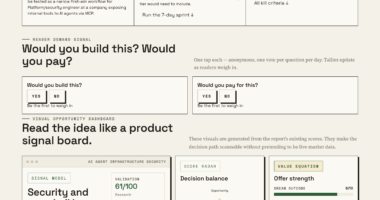
📊 Full opportunity report: AI Regulation: Navigating Uncharted Intellectual Waters on ThorstenMeyerAI.com — validation score, market gap, and execution plan.

Get hardware and tech essentials delivered free — and shop member deals
- Fast, free delivery on millions of items
- Access to Prime Big Deal Days deals on October 6–7
- Prime Video, Amazon Music and more included
TL;DR
European AI regulation is advanced, but the continent lags in AI development, creating potential security vulnerabilities amid hybrid threats exemplified by recent drone and cyber incidents at a German military hub.
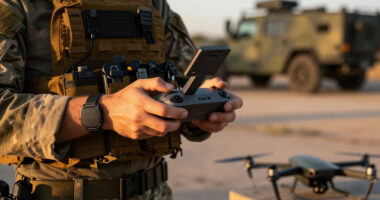
Overnight on Tuesday, a drone carrying explosives was spotted near Leipzig/Halle airport’s south runway, prompting police to defuse and destroy it. Simultaneously, a DHL cargo aircraft collided with an unknown object mid-air and diverted to Hanover. Germany has launched a counterterrorism investigation, with officials describing the threat as a professional hybrid attack targeting a key European military and logistics hub.
The drone was found in the cargo zone of one of Europe’s largest freight hubs, which is also a NATO and German military logistics node, linked to Ukraine’s Antonov fleet. The incident is viewed as part of a broader hybrid threat pattern, involving sabotage, cyber intrusion, and disinformation, aimed at infrastructure critical to both military and economic interests.
Germany’s interior minister, Alexander Dobrindt, characterized the attack as ‘not amateurish’ and a ‘new level of danger,’ though no official attribution to Russia has been confirmed. The incident underscores the evolving nature of hybrid warfare, which operates below the threshold of open conflict and relies on deniable, multi-domain operations.
Meanwhile, the incident raises concerns about Europe’s preparedness and technological capabilities, especially as the continent’s AI development lags behind the US and China, despite having the most comprehensive AI regulation—the EU AI Act—already in place.
An explosive drone on a military cargo hub’s runway. A “professional hybrid threat,” said the interior minister — “a new level of danger.” It’s a moment to say something uncomfortable about how Europe is meeting the era it has entered.
▲ Opinion · strategic argument is the author’s ownEurope’s reflex to a new technology is to regulate it — and it’s genuinely good at it. The AI Act is the most comprehensive AI law on Earth. The discomfort is what sits underneath.
The sloppy version of this argument is wrong, and I won’t make it. The real connection runs one level deeper — through the word “hybrid.”
The rebuttal: just use American AI. For many things, today, Europe can. But defense is the specific case where you can’t.
The strongest version of the other side, because parts of it are right and it deserves to be heard.
- Regulation and capability aren’t zero-sum — Europe is investing (InvestAI, gigawatt data centers)
- Drone defense is mostly physical security and intelligence, not frontier LLMs — I overweight my own field
- Sovereign defense AI may need a smaller controllable model, not a leaderboard chase
- Setting global norms has real value, capability or not
Only capability does that — and it’s the thing we’ve been legislating around instead of building.
Implications of AI Development Gaps for European Security
This incident highlights a critical security gap: Europe’s advanced AI regulations have not translated into leadership in AI development. As hybrid threats evolve, the ability to deploy autonomous defense systems, threat detection, and cyber resilience depends on AI capabilities that Europe currently does not possess at the frontier level.
The disparity between Europe's regulated AI landscape and its lagging development means that, in a crisis, European security systems may rely on foreign AI tools, increasing dependency and vulnerability. This gap could undermine Europe's ability to respond swiftly and effectively to complex, multi-domain hybrid attacks.
As an affiliate, we earn on qualifying purchases.
European AI Policy and Development Trajectory
Europe has established the AI Act, a comprehensive legal framework aimed at regulating AI technology to ensure safety and ethical standards. However, recent assessments, such as the Artificial Analysis Intelligence Index, show Europe's top AI models score only around 30 out of a possible 56–61, placing it behind US and Chinese labs.
Despite regulatory leadership, Europe's AI development trajectory is flat, with its frontier AI capabilities not keeping pace with global competitors. This divergence has widened over the past year, leaving Europe with a significant capability gap in deploying AI for defense and security purposes.
This situation is compounded by the fact that AI-driven defense systems—such as threat fusion centers and autonomous counter-drone systems—are essential for modern hybrid warfare, yet Europe's AI ecosystem remains underdeveloped relative to its regulatory framework.
"This is not amateurish; it is a professional hybrid threat, a new level of danger."
— Alexander Dobrindt
As an affiliate, we earn on qualifying purchases.
Unclear Attribution and Future Capabilities
It remains unconfirmed who was behind the drone incident, with no official attribution to Russia or other actors. Additionally, Europe's AI development trajectory is uncertain, with no clear timeline for catching up to US and Chinese capabilities. The effectiveness of future European counter-hybrid systems depends on whether the AI gap can be closed in time.
cybersecurity threat detection tools
As an affiliate, we earn on qualifying purchases.
As an affiliate, we earn on qualifying purchases.
Next Steps for European AI and Security Readiness
European authorities are likely to prioritize accelerating AI development, especially in defense applications, to close the capability gap. This may involve increased investment, policy adjustments, and international cooperation. Simultaneously, investigations into the recent hybrid attack incidents will inform security protocols and technological upgrades to better defend critical infrastructure.
Monitoring developments in AI research and deployment, along with ongoing security assessments, will determine Europe's ability to respond effectively to future hybrid threats.
hybrid threat monitoring equipment
As an affiliate, we earn on qualifying purchases.
As an affiliate, we earn on qualifying purchases.
Key Questions
Why does Europe's AI lag matter for security?
Because AI capabilities are crucial for detecting, responding to, and defending against hybrid threats like cyberattacks, sabotage, and autonomous drones. Lagging development creates dependency on foreign AI, which can compromise security resilience.
Could the recent drone incident have been prevented with better AI?
Physical security measures like radar and human vigilance played a key role; better AI could enhance threat detection and response speed but would not replace physical security systems entirely.
What is the EU AI Act, and why is it significant?
The EU AI Act is a comprehensive regulation designed to govern AI development and deployment ethically and safely. It establishes Europe's regulatory leadership but does not address capability gaps in AI development itself.
Will Europe be able to catch up in AI development?
The current trajectory suggests it will be challenging without increased investment and strategic focus on AI research. Closing the gap requires balancing regulation with active development efforts.
Source: ThorstenMeyerAI.com
Fall Picks
fall essentials
As an affiliate, we earn on qualifying purchases.