

📊 Full opportunity report: Kill-Switch-Proof: How to Build So Washington Can’t Take Your AI Stack Down on ThorstenMeyerAI.com — validation score, market gap, and execution plan.
TL;DR
Following recent US government shutdowns of top AI models, organizations are adopting architectural strategies to prevent complete outages. This includes dependency mapping, model abstraction layers, fallback plans, and self-hosted open-weight models.
In June 2026, the US government ordered shutdowns of the most advanced AI models, including Anthropic’s Fable 5 and a limited release of OpenAI’s GPT-5.6, exposing vulnerabilities in AI infrastructure reliance on vendor-controlled models. Experts say organizations can mitigate this risk by adopting specific architectural strategies, making their AI stacks resistant to government shutdowns.
Recent actions by the US government, including a Commerce directive, resulted in the global shutdown of Anthropic’s Fable 5 within 90 minutes and a restricted release of GPT-5.6 to select government partners. These events revealed that model access is now subject to government decisions, which can happen without warning or SLA. This has significant implications for organizations relying on proprietary models, especially those with international or mixed-nationality teams, as export controls and government mandates can effectively cut off access worldwide.
Experts emphasize that the key to resilience lies in architectural design. The core principle is to treat models as configurable dependencies rather than code dependencies, enabling quick swaps in response to shutdowns. Building a comprehensive dependency map, deploying a model abstraction gateway, and establishing fallback tiers—such as open-weight models or self-hosted solutions—are critical steps. Open-weight models, like Qwen3-Coder-480B or Kimi K2, are gaining attention as potential kill-switch-proof options, provided they are hosted on infrastructure under the organization’s control.
Kill-switch-proof: build so Washington can’t take your AI stack down
In June, the US government switched off the market’s most capable model — twice, in three weeks. You can’t stop the gate. You can decide whether it takes you down. The difference is entirely architectural — and buildable.
You can’t control the gate — Washington will keep deciding which frontier models ship, and both labs are pushing to make review permanent. What you control is your exposure to it. Kill-switch-proofing isn’t predicting the next directive — it’s making the next one a config change instead of an outage, a routing rule that fails over to a model no one can pull while your users notice nothing. The question stops being “will they take my model away?” and becomes the boring one you can answer: “which one do I route to next?”
Why Resilient AI Infrastructure Is Critical Post-June 2026
The recent shutdowns underscore the risk of dependency on vendor-controlled models, especially in sensitive or international contexts. Organizations that adopt resilient architectures can maintain operational continuity despite government bans or outages, protecting their investments and compliance posture. This shift also signals a broader move toward sovereignty in AI infrastructure, reducing reliance on external providers and mitigating geopolitical risks.
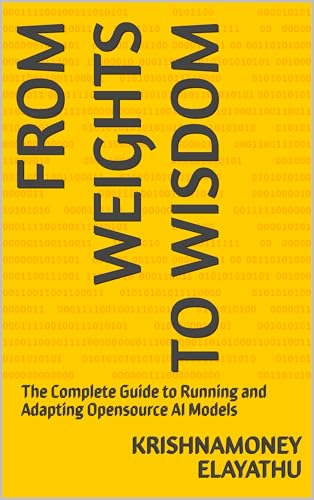
From Weights to Wisdom: The Complete Guide to Running and Adapting Opensource AI Models
As an affiliate, we earn on qualifying purchases.
As an affiliate, we earn on qualifying purchases.
Recent Government Actions and Industry Response
In June 2026, the US Commerce Department issued directives that led to the sudden shutdown of Anthropic’s Fable 5 and limited access to GPT-5.6, affecting a wide range of users and organizations globally. These actions revealed that model access is now a geopolitical lever, and organizations relying on external providers face potential outages at short notice. The industry response has been to develop architectural playbooks emphasizing dependency management, abstraction layers, fallback strategies, and self-hosting of open-weight models to avoid future disruptions.
“The recent shutdowns highlight the importance of architectural resilience — organizations must treat models as configurable dependencies, not fixed code, to maintain control.”
— Thorsten Meyer, AI infrastructure expert
As an affiliate, we earn on qualifying purchases.
Unclear Aspects of Future Government Interventions
It remains uncertain how widespread future shutdowns will be, whether new legal or regulatory measures will further restrict model access, and how quickly organizations can implement resilient architectures at scale. Additionally, the evolving landscape of open-weight models and self-hosting solutions is still developing, with performance and compliance considerations ongoing.
As an affiliate, we earn on qualifying purchases.
Next Steps for Building Resilient AI Systems
Organizations are expected to conduct dependency audits, implement abstraction gateways, and establish fallback tiers, including self-hosted open-weight models. Industry groups and vendors are also likely to develop standardized tools and best practices for rapid model swapping and resilient deployment. Monitoring regulatory developments will be crucial to adapt infrastructure strategies proactively.
fallback AI infrastructure solutions
As an affiliate, we earn on qualifying purchases.
As an affiliate, we earn on qualifying purchases.
Key Questions
What is a kill-switch-proof AI stack?
A kill-switch-proof AI stack is an architecture designed to prevent total outage by enabling quick swapping of models, dependencies, and infrastructure, reducing reliance on external vendors or government-controlled models.
How can organizations implement these strategies?
Key steps include mapping dependencies, deploying abstraction gateways, establishing fallback tiers with open-weight or self-hosted models, and continuously testing these fallback mechanisms under real conditions.
Are open-weight models ready for production use?
Many open-weight models have reached performance parity with closed models on certain tasks, but they may still lag on complex reasoning. Hosting them on infrastructure under the organization’s control enhances sovereignty and resilience.
What legal or regulatory risks should organizations consider?
Export controls, deemed exports, and international sanctions can restrict model sharing and hosting. Organizations should review licensing and compliance requirements for open-weight models and self-hosted solutions.
What happens if a government bans a major AI provider?
Organizations relying solely on vendor-controlled models risk outages. The recommended approach is to diversify dependencies, implement flexible architecture, and maintain open-weight options to ensure operational continuity.
Source: ThorstenMeyerAI.com