
TL;DR

Get hardware and tech essentials delivered free — and shop member deals
- Fast, free delivery on millions of items
- Access to Prime Big Deal Days deals on October 6–7
- Prime Video, Amazon Music and more included
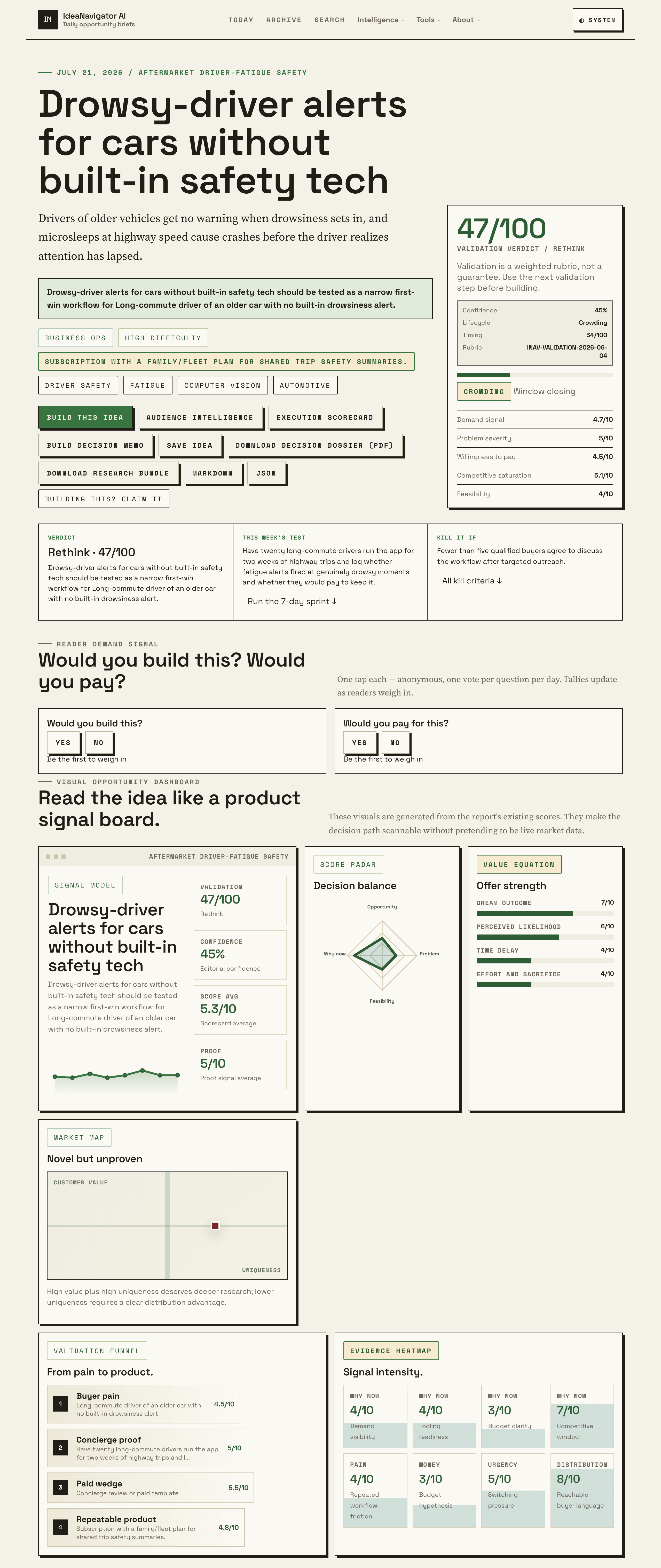
A prototype phone-mounted app detects driver drowsiness by monitoring eye closure and head nods, providing alerts to prevent microsleeps. This innovation targets older vehicles without built-in safety tech and could improve highway safety.
Researchers and developers are testing a new aftermarket app designed to detect driver fatigue in older vehicles lacking built-in safety features. The app uses face-landmark technology via smartphones mounted on dashboards to monitor eye-closure and head-nod patterns, sounding alerts when signs of drowsiness are detected. This development addresses a critical safety gap for long-commute drivers in vehicles without advanced driver-assistance systems, potentially reducing microsleeps and highway crashes.
The app is intended for drivers of older cars who do not have existing drowsiness alert systems. It leverages affordable technology—such as dashboard phone mounts combined with face-landmark models—to estimate eye closure and head movement patterns that indicate fatigue. During pilot testing, twenty long-commute drivers will use the app over two weeks, with the goal of validating whether alerts are triggered during genuinely drowsy moments and whether drivers find value in paying for continued use.
Developers suggest that this approach could serve as a first step in aftermarket driver safety, providing a low-cost, scalable solution for a large segment of drivers. Revenue models include subscriptions with family or fleet plans, offering safety summaries and alerts to multiple users. The project is still in the validation phase, with results expected to influence broader adoption if successful.
Potential Impact of Aftermarket Drowsiness Detection
This innovation could significantly improve road safety by addressing a critical gap for drivers with older vehicles that lack built-in safety systems. Microsleeps and driver fatigue are leading causes of highway accidents, especially among long-commute drivers. An effective aftermarket solution could reduce crash rates, save lives, and lower insurance costs. Moreover, it demonstrates how emerging face-landmark technology can be repurposed for safety applications outside high-end vehicles, broadening access to driver-assistance tools.
As an affiliate, we earn on qualifying purchases.
Growing Need for Drowsiness Detection in Older Vehicles
While newer cars increasingly include integrated driver monitoring systems, many vehicles on the road still lack such features. According to traffic safety data, driver fatigue accounts for a significant share of highway crashes, especially during long commutes. Existing solutions are often embedded in premium vehicles, leaving a large market of older car owners unprotected. Recent advances in face-landmark detection, driven by smartphone sensors and affordable AI models, open the door for aftermarket safety tech. Pilot programs are now testing these solutions for real-world effectiveness, with the potential to expand their reach.
“Using face-landmark analysis on smartphones mounted in older vehicles offers a promising way to detect driver drowsiness without expensive built-in sensors.”
— an anonymous researcher
As an affiliate, we earn on qualifying purchases.
Uncertainties Around Effectiveness and Adoption
It is not yet confirmed how accurately the app detects genuine drowsiness and whether drivers will consistently respond to alerts. The pilot program’s results will determine its real-world effectiveness. Additionally, questions remain about user acceptance, privacy concerns related to face monitoring, and regulatory hurdles for aftermarket safety devices. The scalability of this solution across diverse vehicle types and driver populations is still under evaluation.
As an affiliate, we earn on qualifying purchases.
Next Steps for Validation and Broader Deployment
Developers plan to complete the two-week pilot with 20 drivers, analyzing alert accuracy and user feedback. If results are positive, they will refine the app and seek broader testing in diverse driving conditions. Success could lead to commercial availability, with subscription plans targeting individual drivers, fleets, and insurance companies interested in safety data. Further research may also explore integrating additional sensors or machine learning models to enhance detection accuracy.
aftermarket driver drowsiness alert
As an affiliate, we earn on qualifying purchases.
As an affiliate, we earn on qualifying purchases.
Key Questions
How does the app detect driver fatigue?
The app uses a smartphone mounted on the dashboard to monitor facial landmarks, focusing on eye-closure and head-nod patterns that indicate drowsiness.
Is this technology safe and privacy-conscious?
The app processes facial data locally on the device to minimize privacy risks, but user acceptance and privacy policies will need to be addressed before broader deployment.
Will this work with any smartphone or vehicle?
The current prototype relies on standard smartphones with front-facing cameras and a dashboard mount, making it compatible with most vehicles lacking built-in safety tech.
When might this technology become commercially available?
If pilot testing confirms effectiveness, developers aim to bring the app to market within the next year, initially through subscription models.
Could this technology be integrated into newer vehicles?
Yes, face-landmark detection could complement existing driver-monitoring systems in newer cars, but the current focus is on aftermarket solutions for older vehicles.
Source: IdeaNavigator AI
Fall Picks
fall essentials
As an affiliate, we earn on qualifying purchases.