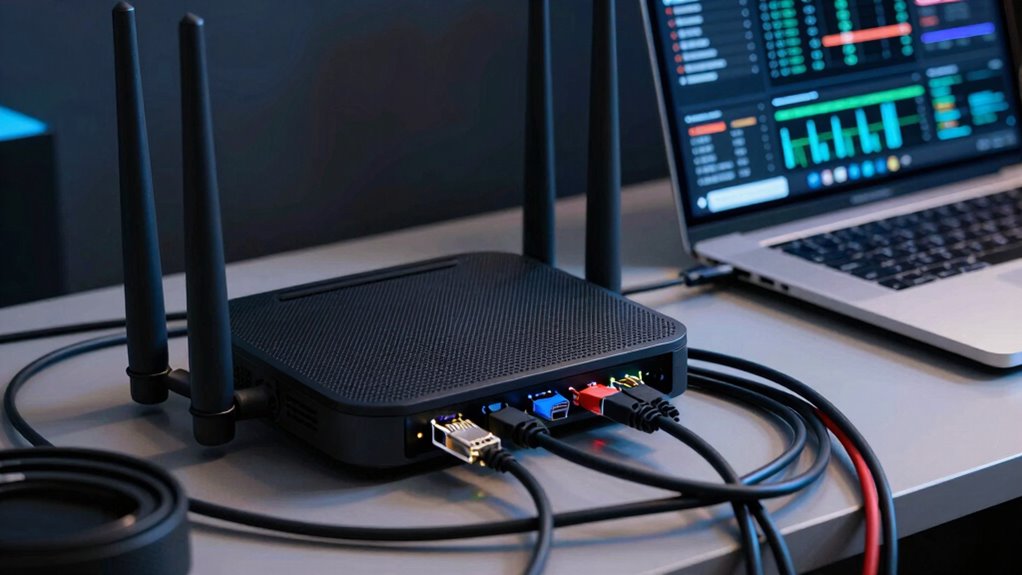

Using mesh Wi-Fi in crypto setups can hurt more than help because it introduces potential signal interference and connection instability, risking delays or failures during critical transactions. Compatibility issues with specialized hardware, like wallets or mining rigs, can also cause disruptions. Additionally, the complexity of configuring mesh systems may lead to security gaps, making your assets more vulnerable. To better understand how these factors impact your crypto activities, keep exploring the details ahead.
Key Takeaways
- Mesh Wi-Fi’s signal interference and stability issues can cause critical connection disruptions during time-sensitive crypto transactions.
- Compatibility problems with specialized crypto hardware may lead to disconnections or limited device functionality.
- Complex setup and management increase security risks if misconfigured, jeopardizing digital asset safety.
- Firmware updates and troubleshooting are more challenging, potentially weakening network security for sensitive crypto activities.
- The overall instability and management complexity of mesh systems often outweigh their coverage benefits in high-stakes crypto environments.
As more people turn to cryptocurrency for investments and transactions, ensuring a secure and reliable internet connection becomes essential. When you’re dealing with sensitive financial data, any disruption or lag can have serious consequences. That’s where mesh Wi-Fi systems often come into play, promising seamless coverage across your home or office. But, despite their advantages, mesh setups can sometimes hurt more than help, especially in crypto environments.
One major concern is signal interference. Crypto transactions require a stable, fast connection to avoid delays or interruptions. Mesh Wi-Fi networks rely on multiple nodes communicating wirelessly, which can introduce interference from other electronic devices, thick walls, or even neighboring Wi-Fi networks. This interference can cause fluctuations in signal strength, leading to dropped connections or slow data transfer. In high-stakes crypto setups, even a momentary disruption can prevent you from executing trades or accessing wallets precisely when you need to. This unpredictability makes mesh systems less reliable than traditional, well-placed routers for certain crypto activities. Additionally, wireless communication protocols can vary significantly between devices, contributing further to potential connectivity issues. It’s also important to consider that network management can be more complicated with mesh systems, requiring more effort to maintain optimal performance.
Device compatibility is another critical factor. Not all mesh systems are created equal; some may not work smoothly with all your devices, especially specialized hardware like hardware wallets or dedicated mining rigs. If your crypto setup involves multiple devices, ensuring they’re compatible with your mesh network is crucial. Compatibility issues might force you to disconnect certain devices or limit their functionality, which isn’t ideal when every second counts in trading situations. Additionally, some mesh systems use proprietary software or firmware that can complicate security configurations, making it more challenging to implement robust protections for your crypto assets. Security protocols play a vital role in safeguarding your digital investments, and certain mesh systems may not support all necessary features out of the box. It’s also important to consider that network stability can be compromised if your mesh system isn’t configured correctly or if firmware updates aren’t managed properly. Properly configuring and maintaining your network is essential to prevent vulnerabilities that could threaten your assets.
Furthermore, mesh Wi-Fi systems tend to be more complex to configure properly. When you’re safeguarding valuable digital assets, you need a setup that’s straightforward and secure. In some cases, the added complexity of managing multiple nodes can introduce vulnerabilities, especially if firmware updates aren’t handled promptly. This complexity can also lead to misconfigurations that weaken your network’s security, exposing your crypto information to potential threats. Moreover, high-quality, single-router setups often provide more consistent performance, especially for sensitive transactions where stability is paramount. Properly optimized routers can also be easier to troubleshoot and update, reducing potential points of failure. It’s worth noting that technical expertise may be required to ensure your network is secure and reliable, which can be a barrier for less tech-savvy users.
In the end, while mesh Wi-Fi systems offer broad coverage and flexibility, they aren’t always the best choice for crypto setups. The potential for increased signal interference, device compatibility issues, and configuration challenges can outweigh their benefits. If you’re serious about the security and stability of your crypto transactions, sticking with a high-quality, single-router setup optimized for your environment might be the smarter move. That way, you can minimize disruptions and keep your digital assets safe and accessible when you need them most.
best mesh Wi-Fi router for crypto setup
As an affiliate, we earn on qualifying purchases.
As an affiliate, we earn on qualifying purchases.
Frequently Asked Questions
How Does Mesh Wi-Fi Impact Network Latency in Crypto Mining?
Mesh Wi-Fi can increase network latency in crypto mining by causing signal interference and bandwidth sharing issues. As multiple nodes communicate, delays happen, slowing down data transfer between your mining hardware and the blockchain network. This added latency can reduce mining efficiency and profitability. You might notice slower transaction processing, and inconsistent connection quality, especially if your mesh system isn’t optimized for high-speed, low-latency operations essential for crypto mining.
Can Mesh Wi-Fi Cause Security Vulnerabilities for Crypto Transactions?
Yes, mesh Wi-Fi can cause security vulnerabilities for crypto transactions. Wireless interference and signal degradation may lead to weaker encryption or lapses in network security, making it easier for hackers to intercept sensitive data. When your network experiences these issues, your crypto transactions could be exposed to malicious attacks. To avoid this, guarantee your mesh network is properly secured, with strong passwords and updated firmware, minimizing potential vulnerabilities.
What Are the Best Alternatives to Mesh Wi-Fi for Crypto Setups?
Think of your crypto setup as a delicate dance—alternatives like wired Ethernet connections offer a steady rhythm, free from wireless interference. To guarantee secure, reliable transactions, skip mesh Wi-Fi and instead focus on routers with strong device compatibility and minimal interference. Using dedicated, wired connections minimizes potential vulnerabilities, giving you peace of mind that your crypto activities stay safe and stable, just like a well-choreographed performance.
Does Mesh Wi-Fi Interfere With Blockchain Synchronization?
Mesh Wi-Fi can interfere with blockchain synchronization, especially in smart home setups, by causing device interference and network instability. You might notice slower sync times or dropped connections, which can affect your crypto devices or nodes. This interference happens because mesh systems sometimes prioritize connections unevenly or create signal overlaps, disrupting the steady data flow needed for blockchain consistency. To avoid this, consider dedicated or wired connections for your crypto hardware.
How Does Mesh Wi-Fi Affect Network Stability During High Crypto Activity?
During high crypto activity, mesh Wi-Fi can reduce network stability due to wireless interference and signal duplication. As multiple nodes communicate, interference may cause intermittent disconnections or slow speeds, disrupting your crypto setup. Signal duplication from overlapping nodes can lead to inconsistent data transmission, making it harder to maintain a stable connection. To guarantee smooth operations, you might need to optimize your mesh network or consider a more dedicated connection.
high stability Wi-Fi router for cryptocurrency transactions
As an affiliate, we earn on qualifying purchases.
As an affiliate, we earn on qualifying purchases.
Conclusion
While mesh Wi-Fi can seem like the perfect solution, it’s not always your best friend in crypto setups. Think of it as a busy highway—sometimes, adding more lanes creates traffic jams instead of easing them. In the world of crypto, stability and speed matter more than coverage. So, before you plunge into mesh, weigh its benefits against potential pitfalls. Sometimes, sticking to a reliable, straightforward network is your smartest move.
wireless network security for crypto wallets
As an affiliate, we earn on qualifying purchases.
As an affiliate, we earn on qualifying purchases.
mesh Wi-Fi system compatible with mining rigs
As an affiliate, we earn on qualifying purchases.
As an affiliate, we earn on qualifying purchases.