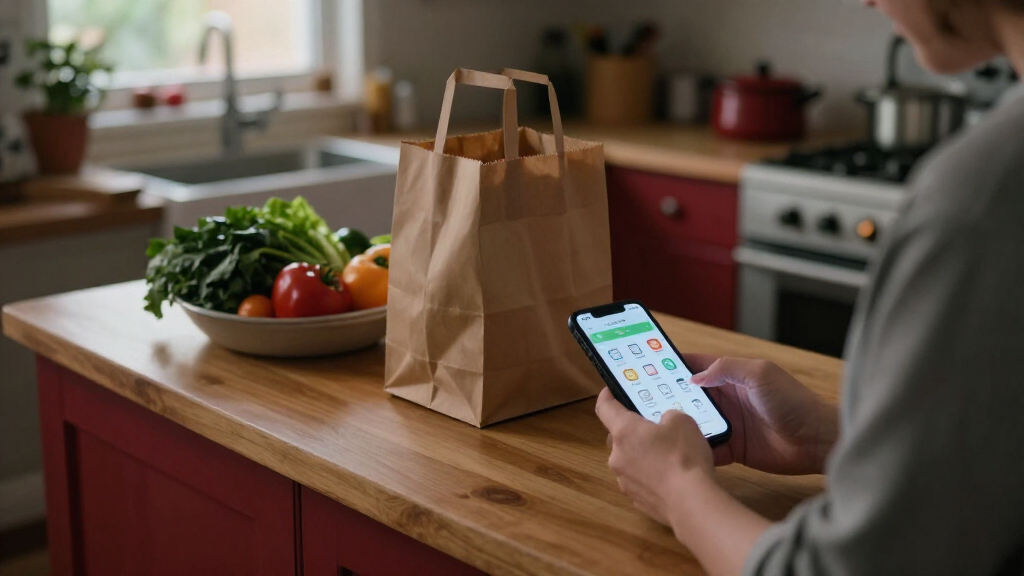

🔍 Read the full analysis: AI Agents And Online Shopping: A Reality Check From DoorDash on ThorstenMeyerAI.com

Get hardware and tech essentials delivered free with Prime
- Fast, free delivery on millions of items
- Prime Video, Amazon Music and more included
- Member-only deals all year
TL;DR
DoorDash CEO Tony Xu said third-party AI agents have generated “maybe several hundred orders in total” since they began operating. DoorDash handled 993 million orders in the third quarter of 2026, putting the CEO’s rounded figure in sharp context, although the time periods do not match. Xu described agent ordering as a low-use case, while executives at Amazon and Visa also said agent-driven shopping remains limited.
DoorDash CEO Tony Xu told analysts on October 29 that third-party AI agents have generated “maybe several hundred orders in total” since they began operating, describing agent ordering as a “fairly low use case.” The comments came as DoorDash reported 993 million orders in the third quarter of 2026, offering a reality check on claims that AI agents are already changing how people shop online.
Xu gave the figure in response to questions on DoorDash’s quarterly earnings call about whether the company would support orders placed through general-purpose agents, including Meta’s Muse, or build its own tools. He said the area is “still a very dynamic” one, but added that for a relatively simple task such as ordering food, the predominant use case remains DoorDash’s own app.
Xu repeated the estimate later in the call, saying the agents had generated several hundred orders “across the time that they’ve been up and running.” That wording matters: it describes a cumulative, rounded total, not a quarterly count. DoorDash’s 993 million orders were recorded in the third quarter alone, up 28% from a year earlier. The figures show a large difference in scale, but they cover different periods and do not support a precise like-for-like market share.
Asked whether agents might affect DoorDash’s advertising business or share revenue with the platform, Xu said advertising opportunities could exist inside agents. With current volumes low, however, he said “there isn’t yet that value.” DoorDash published its third-quarter results on October 29 and held the analyst call that morning. The company’s comments were reported by TechCrunch on October 30.
Infographic 01 · The number
993 million orders. “Several hundred” from AI agents.
What DoorDash’s CEO said about orders placed by outside AI agents, next to the company’s own order count.
Drawn to scale
Q3 2026 orders vs. a generous upper bound for agent orders
The second bar is not missing. At this scale it is about one ten-thousandth of one percent wide.
“You never want to fight gravity. But at the same time, you don’t want to be delusional … we’re seeing maybe several hundred orders in total from some of these third-party agents.”Tony Xu, CEO of DoorDash · Q3 2026 earnings call, 29 Oct 2026
Sources: DoorDash Q3 2026 results (29 Oct 2026); DoorDash earnings call (29 Oct). Ratio and per-day figure: my calculation. “Several hundred” is a spoken, rounded figure.
Powered by Thorsten Meyer AI
Why Agent Orders Matter to DoorDash
The comments suggest that, for DoorDash at least, the near-term question is not yet how to divide substantial agent-driven sales. It is whether consumers will use outside agents to place routine orders at all. Xu’s description points to a practical hurdle: ordering food through the existing app is already a familiar, direct process, leaving a new interface with little obvious advantage for many customers.
The low reported volume also limits the immediate commercial stakes around advertising and revenue sharing. Xu said those opportunities could emerge, but not at current usage levels. That does not establish that agents will remain marginal; it indicates that DoorDash has not described meaningful order volume from third-party agents so far.
For shoppers, the distinction is between an agent that can recommend or research products and one that reliably completes a transaction. A purchase requires permission to act, payment details, delivery information and confidence that the agent has selected the right item. Visa CEO Ryan McInerney identified trust as a major barrier to scaling agent transactions. These concerns affect whether a conversational tool can become a practical checkout channel, not just whether it can produce suggestions.
Products Worth Considering

Logitech MX Vertical Wireless Ergonomic Mouse – Graphite

Ledger Flex Crypto Wallet with 2.8-Inch E Ink Touchscreen

LG UltraGear 32GX850A-B 32-Inch 4K UHD Glossy OLED Gaming Monitor
As an affiliate, we earn on qualifying purchases.
Other Companies Report Early Usage
DoorDash’s remarks came amid competing signals from companies promoting or evaluating AI-assisted shopping. Meta CEO Mark Zuckerberg said on October 21 that more than 10 million people in the United States and Canada had set up Muse in roughly six weeks. Zuckerberg described shopping as the agent’s most common use and said more than a quarter of users engaged with it. Meta also reported an average purchase above $200. Those are Meta’s own figures; the source material says the company did not provide total sales value, so the user count and reported purchase size do not establish how many orders were completed.
Visa’s McInerney said on October 27 that the number of agentic transactions remained limited and represented a very small amount of Visa’s overall business. On October 29, Amazon CEO Andy Jassy said few customers were doing much shopping through outside, general-purpose agents, adding that the experience was not yet better or more convenient than shopping directly with a retailer. These comments are executives’ assessments of their businesses, rather than a shared industry-wide measurement.
DoorDash has also described a broader strategy that extends beyond software. The source material characterizes its approach as “atoms vs bits,” with investment in physical operations such as warehouses and autonomous delivery, as well as a reported $17 billion deal to acquire Instacart. That strategy puts the agent-order figure alongside the company’s efforts to manage the real-world logistics behind delivery. The supplied material does not provide further deal terms or its regulatory status.
““We’re seeing maybe several hundred orders in total from some of these third-party agents.””
— DoorDash CEO Tony Xu, on the company’s October 29 earnings call
Limits of the Order Comparison
DoorDash did not provide an exact count, a start date for the measurement, or a breakdown by agent, order type or customer. Xu’s phrase “several hundred” is approximate, and he said it covered the time the agents had been operating. The 993 million figure, by contrast, covers one three-month quarter. Any comparison that treats all agent orders as if they occurred in that quarter would be illustrative, not a verified rate.
It is also unclear how DoorDash defines an order “from” a third-party agent, whether the estimate includes attempts that failed before checkout, or which agents are included. Meta’s reported user activity and purchase-size figure likewise do not provide a directly comparable total of completed shopping orders. There is no common measurement across the companies in the information provided, and the comments do not establish how quickly usage might change.
What DoorDash Will Track Next
DoorDash has not announced a target date for broader third-party agent support or forecast when agent orders might become material. Xu’s comments indicate that the company is watching the technology while prioritizing its existing ordering experience; his answer does not amount to a commitment to open the platform or to reject outside agents.
The next useful evidence will be whether DoorDash gives a more specific agent-order count, defines the agents and period it covers, or reports that the volume has changed in a later earnings update. For the wider market, comparable data on completed transactions, repeat use and customer trust would help distinguish interest in shopping assistants from sustained use at checkout. Until companies provide those details, the figures are early signals rather than a full measure of agent-led commerce.
Key Questions
How many orders have third-party AI agents placed through DoorDash?
CEO Tony Xu said they had generated “maybe several hundred orders in total” over the time they had been operating. DoorDash did not give an exact count or a precise measurement period.
How does that compare with DoorDash’s total orders?
DoorDash reported 993 million orders in the third quarter of 2026, up 28% from a year earlier. The agent figure is cumulative and rounded, so the two numbers do not cover the same period and should not be treated as a precise share.
Did DoorDash say it would stop supporting AI agents?
No. Xu called the area dynamic and said companies should neither fight technological change nor be unrealistic about its current use. He did not announce a new agent policy or a timetable for expanded support.
Are other companies seeing more agent-driven shopping?
Executives at Amazon and Visa also described current activity as limited. Meta has reported substantial Muse setup numbers and shopping activity, but those company-reported figures do not provide a comparable total of completed orders.
Source: ThorstenMeyerAI.com