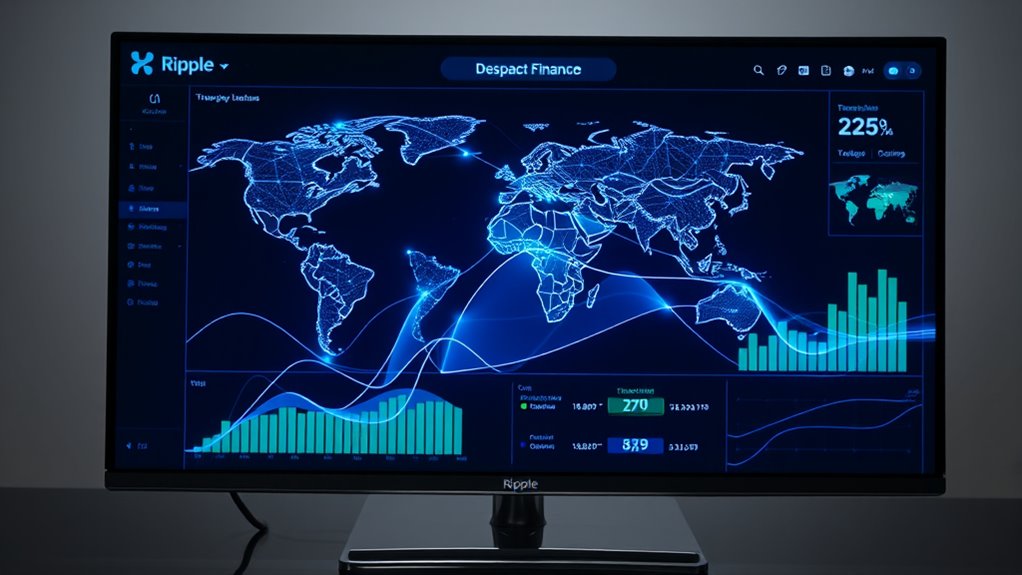

Ripple’s XRP has transformed from a tool for quick, low-cost cross-border payments into a key player in the DeFi ecosystem. It now supports asset trading, liquidity pools, and cross-chain swaps on decentralized exchanges, thanks to its speed, low fees, and interoperability. This evolution helps boost liquidity and trading efficiency across platforms, making XRP essential beyond international transfers. Keep exploring to discover how XRP continues to shape innovative financial services and decentralized markets.
Key Takeaways
- XRP was initially created for fast, low-cost cross-border payments, streamlining international transactions.
- It now plays a vital role in DeFi, supporting liquidity pools, exchanges, and innovative financial services.
- XRP enhances market liquidity and reduces slippage by enabling seamless asset swaps on decentralized platforms.
- As a bridge asset, XRP facilitates cross-chain swaps and interoperability across various blockchain networks.
- Its speed, low fees, and transparency make XRP a valuable asset in DeFi ecosystems beyond traditional payments.

Ripple’s XRP has evolved from a solution for faster, cheaper cross-border payments to a key player in the growing decentralized finance (DeFi) ecosystem. Originally designed to streamline international transactions by providing liquidity and reducing costs, XRP’s utility now extends into DeFi platforms where it supports innovative financial services. As DeFi continues to gain momentum, XRP’s role in liquidity pools and decentralized exchanges becomes increasingly essential.
In DeFi, liquidity pools are fundamental. They enable users to trade assets directly from their wallets without relying on traditional intermediaries. You can contribute XRP to these pools, earning a share of transaction fees in return. These pools often include other tokens, creating a network of liquidity that facilitates seamless swaps with minimal slippage. XRP’s fast transaction speeds and low fees make it an attractive asset for liquidity providers, helping to boost overall market liquidity. When you add XRP to liquidity pools, you’re not just earning passive income; you’re actively supporting the infrastructure that allows decentralized exchanges (DEXs) to operate efficiently. DEXs rely heavily on liquidity pools to provide continuous trading options, and XRP’s integration into these platforms enhances their capacity to handle large trading volumes swiftly.
Decentralized exchanges, unlike their centralized counterparts, operate without a central authority, giving you more control over your funds. As XRP becomes more integrated into DEXs, it enables quicker, cost-effective trades across multiple tokens. You benefit from reduced transaction times and lower fees, which is essential when navigating volatile markets. XRP’s presence in DEX ecosystems also promotes greater transparency and security, aligning with the core principles of decentralization. Furthermore, XRP’s interoperability with various blockchain platforms allows it to serve as a bridge asset, facilitating cross-chain swaps on decentralized exchanges. This interoperability expands your options for holding and trading digital assets, making XRP a versatile tool within the DeFi landscape. Additionally, the high contrast ratio of XRP-powered projects ensures clearer visibility of transaction details, fostering trust and efficiency in the ecosystem.

Ballet XRP Cold Storage Coin 2-Pack Physical Ripple Wallets, Stainless Steel, No Electronics, No Seed Phrase, No PIN or Password, Works Crypto App
2 XRP COLD STORAGE COINS FOR FLEXIBLE STORAGE – This 2-pack includes two physical XRP cold storage coins,…
As an affiliate, we earn on qualifying purchases.
As an affiliate, we earn on qualifying purchases.
Frequently Asked Questions
How Does XRP Compare to Other Cryptocurrencies in Transaction Speed?
You’ll find XRP offers faster transaction speeds compared to many cryptocurrencies, thanks to its high transaction throughput and network scalability. It can process around 1,500 transactions per second, making it one of the quickest options for transfers. Unlike Bitcoin or Ethereum, XRP’s design focuses on efficiency, ensuring quick settlements and reduced fees, which is ideal for cross-border payments and real-time transactions.
What Are the Main Challenges Ripple Faces in Mainstream Adoption?
You face significant challenges in mainstream adoption, with over 60 countries implementing varying regulations. Regulatory hurdles and adoption barriers slow down XRP’s widespread use. Concerns around legal clarity and compliance create uncertainty for institutions and users. To overcome these issues, Ripple must navigate complex financial laws and build trust with regulators. Addressing these challenges is essential for XRP to move from niche use to mainstream financial integration effectively.
How Does Xrp’s Energy Consumption Impact Its Sustainability?
XRP’s energy consumption impacts its sustainability by raising concerns about environmental impact. Since it uses a consensus mechanism that’s more energy-efficient than proof-of-work, you’ll find it consumes less power, especially when powered by renewable energy sources. This lower energy use helps reduce its carbon footprint, making XRP a more environmentally friendly option in the blockchain space, aligning with global sustainability goals and appealing to eco-conscious users and investors.
Can XRP Be Integrated With Existing Financial Institutions Easily?
You can integrate XRP with existing financial institutions, but it’s not always straightforward. Bank integration requires technical adjustments and collaboration with Ripple’s network, which can streamline cross-border payments. However, regulatory challenges might slow down adoption, as laws vary across regions. You’ll need to navigate these hurdles carefully, ensuring compliance while leveraging XRP’s fast settlement times and low fees to enhance your financial services.
What Future Developments Are Planned for Ripple’s Defi Ecosystem?
You can expect Ripple’s DeFi ecosystem to expand with new decentralized lending platforms, making borrowing and lending more accessible. Developers are working on integrating regulatory frameworks to guarantee compliance and security, which will boost trust and adoption. Future developments aim to enhance interoperability with existing financial systems, making it easier for you to engage with DeFi services seamlessly while maintaining regulatory standards.

Inside Defi and Crypto: A beginners guide to liquidity pools, tokens, networks, decentralized lending, Initial Decentralized/DAO Offerings, and various cryptos
As an affiliate, we earn on qualifying purchases.
As an affiliate, we earn on qualifying purchases.
Conclusion
As Ripple continues to evolve, XRP’s journey from cross-border payments to DeFi isn’t just a story—it’s a future unfolding before your eyes. Will it redefine how you think about finance? With innovations on the horizon and new use cases emerging, one thing’s certain: XRP’s next move could change everything. Stay tuned, because what’s coming next might just be the most exciting chapter yet—are you ready to see what’s next?

DECENTRALIZED TRADING FOR BEGINNERS : A Friendly Guide to Trading on Decentralized Platforms Like MetaMask, PancakeSwap, SushiSwap, and Uniswap
As an affiliate, we earn on qualifying purchases.
As an affiliate, we earn on qualifying purchases.

LinerLink Conversion Kit (Insert+Chain) for Chanel Card Holder Wallet On Chain. Gold, 100cm.
– Included: Insert + Metal-Leather Chain
As an affiliate, we earn on qualifying purchases.
As an affiliate, we earn on qualifying purchases.