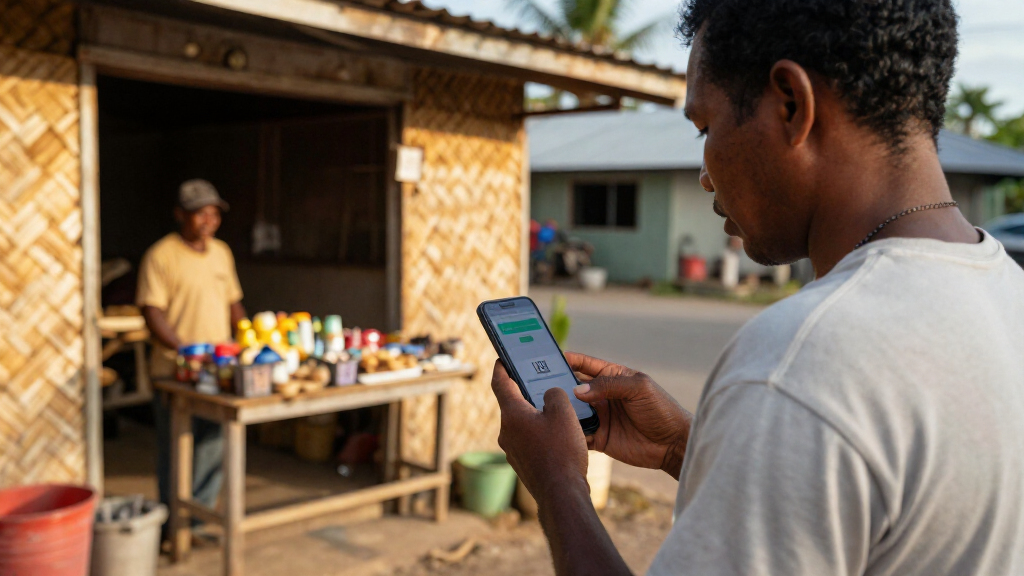

🔍 Read the full analysis: A Year Of Nationwide UBI In The Marshall Islands: Lessons For AI on ThorstenMeyerAI.com

Get hardware and tech essentials delivered free with Prime
- Fast, free delivery on millions of items
- Prime Video, Amazon Music and more included
- Member-only deals all year
TL;DR
The Marshall Islands completed the first year of Enra, its quarterly income payment for resident citizens, with the August 2026 installment reaching 40,714 people. Lawmakers approved $32.5 million for year two, alongside a separate $3.2 million top-up, but no published evaluation yet shows how the payments affect households or employment.
Enra’s official name is the Individual Support Distribution. It covers Marshallese citizens who live in the country, including children, without a means test or work requirement. Citizens living abroad are ineligible. The first payment was made on November 26, 2025; four quarterly installments followed through August 2026.
The program distributes a fixed annual pot, so the amount per person can change as enrollment changes. The first payment was $201.92 for more than 33,000 people. As registrations increased, the March payment fell to about $160. A $3.2 million World Bank grant helped raise the third and fourth payments to around $200; the August installment was $215.85. MISSA’s administrator told the Marshall Islands Journal that 40,714 people received it. President Hilda Heine has said the figure represents more than 95% of the resident population.
The government’s September budget provides $32.5 million for Enra in year two, compared with a $27.6 million program allocation the prior year. Parliament passed the budget on September 18, after the US–Marshall Islands trust fund committee approved the $32.5 million allocation on September 2. The budget also includes a distinct $3.2 million “Enra Top Up”.
Infographic 01 · Enra, the first year
Four payments, one fixed pot
How the Marshall Islands paid a basic income to almost every resident citizen between November 2025 and August 2026.
- Nov 2025First payment: $201.92 to more than 33,000 people. MISSA had enrolled 33,119 by 30 Sep 2025.Launch ceremony in Majuro, 26 Nov
- End Mar 2026About $160. Delayed a month to vet new registrations and residence. More than 37,000 registered, same fixed budget.Citizens away more than 3 months are removed from the list, with exceptions
- End May 2026About $200 again, thanks to a $3.2 million World Bank grant ($1.6 million per quarter). More than 41,000 on the eligible list.Pushed by the president over fuel and food prices
- Aug 2026$215.85 to 40,714 people. Fewer paper checks than in earlier rounds.MISSA administrator to the Marshall Islands Journal
Payment per person, year one
US dollars per quarter · March and May rounded as reported
Why the amount moves
- Enra is a fixed annual budget shared equally among everyone eligible that quarter.
- More registrations mean a smaller share unless the budget grows.
- Roughly $780 per person in year one, about 12% of GDP per person (IMF: $6,417, FY2023). My arithmetic.
Sources: Marshall Islands Journal (27 Nov 2025, 26 Feb, 22 May, 6 Aug, 27 Aug 2026) · IMF, 10 Sep 2025. March and May amounts as reported (“about”).
Powered by Thorsten Meyer AI
A National Test With Limited Evidence
Enra offers a rare real-world case of a government making regular, broadly available payments at national scale rather than running a time-limited pilot. That makes its reach and administrative experience relevant to debates about income support as automation and AI change work. But its first year establishes delivery, not outcomes: the reported payment totals show who received money, not whether it reduced hardship, changed work choices or affected prices.
The program also illustrates a funding question that matters to other governments. Enra is financed from a trust fund built under the Compact of Free Association with the United States, rather than being presented as a recurring tax-funded entitlement. The fund was valued at about $1.77 billion at the end of July 2026, according to the source material. Its investment returns and long-term obligations shape how far the country can sustain payments; the allocation alone does not establish that the current level is permanent.
For readers following AI policy, the lesson is not that Enra proves universal basic income will work elsewhere. The country’s eligibility rules, population, funding source and geography differ from those of larger economies. Its experience can inform questions about payment systems and coverage, while the absence of a published impact study limits conclusions about economic effects.
Products Worth Considering

Apple MacBook Pro 14.2-inch with M5 Max, 18-core CPU, 32-core GPU, 36GB Memory, 2TB SSD, Wi-Fi 7, Silver

LG UltraGear 32GX870A-B 32-inch 4K OLED Gaming Monitor

Logitech MX Keypad Programmable Macro Pad, Graphite
As an affiliate, we earn on qualifying purchases.
How Enra Reached Outer Islands
Enra’s payment methods are checks, bank deposits and the Lomalo phone wallet. The wallet attracted international attention because it can deliver a digital token called USDM1 on a public blockchain. The finance ministry describes USDM1 as a US-dollar sovereign bond backed one-to-one by short-dated U.S. Treasury securities, and says it is not a cryptocurrency, central bank digital currency or stablecoin. Those descriptions are the ministry’s position; they should not be treated as interchangeable labels.
The payment options address practical barriers in an island nation where major bank branches are concentrated on Majuro and Ebeye, the two most populated atolls, while mailed checks can take weeks to reach outer islands. The number of recipients using the Lomalo wallet has not been published, so the available information does not show how widely that channel has been adopted.
Enrollment rose from 33,119 people registered by September 30, 2025, to more than 37,000 by the second payment period and over 41,000 on the eligible list by May 2026, according to the source account. The government checked residency; the finance minister said people away for more than three months are removed, with exceptions for diplomats, students and patients sent abroad for treatment. With the annual pot fixed, the larger list reduced the payment until outside funding supplemented it.
Impact and Long-Term Funding Unknowns
No evaluation of Enra’s effects has been published, according to the source material. It is not yet clear how payments have affected household spending, poverty, employment, migration or local prices. The number of people using the phone wallet also remains undisclosed.
The program’s longer-term financing is another open question. The IMF estimated Enra’s cost at 8.1% of GDP in fiscal 2026 and urged the government to replace it with targeted support at the first feasible opportunity. The source material does not provide a government response resolving that disagreement, nor does it establish how future trust-fund performance will affect the size of payments. Since the benefit is divided among eligible recipients from a set allocation, the per-person amount may change as enrollment or funding changes.
Second-Year Payments and Evaluation
The approved second-year allocation sets the immediate budget framework, but the source material does not specify the dates or per-person amounts for the next installments. Those figures will depend on the program’s available funds and eligible population. The government has not announced a published evaluation or a schedule for one in the information provided.
The next useful developments to watch are payment amounts and recipient totals, the share of recipients using each delivery method, and any assessment of effects on households. Further detail on the trust fund’s capacity to support recurring payments would also clarify whether the larger year-two budget can be sustained. Until such evidence is available, Enra’s first year shows broad reach, but not a measured result that other countries can directly apply to AI-related income policy.
Key Questions
Who qualifies for Enra?
Marshallese citizens living in the Marshall Islands qualify, including children. Citizens who live abroad are not eligible, and residency checks apply.
How much did recipients receive in the first year?
The per-person payments varied because Enra divides a fixed annual allocation among eligible recipients. The August 2026 payment was $215.85; the source account estimates roughly $780 across the first year.
How many people received the final first-year payment?
MISSA’s administrator told the Marshall Islands Journal that 40,714 people received the August 2026 payment. President Hilda Heine said this represented more than 95% of the resident population.
Has Enra’s effect on poverty or work been measured?
No published evaluation is cited in the source material. The payment figures document program reach, but do not establish effects on poverty, employment or household finances.
Where does the program’s funding come from?
Enra is funded through a trust fund established under the Compact of Free Association with the United States, with a World Bank grant supplementing payments during the first year. The source material does not establish how future fund performance will affect payment levels.
Source: ThorstenMeyerAI.com