

🔍 Read the full analysis: Which Wi-Fi 7 Router Fits Your Home Network? 9 Best Picks For 2027 on ThorstenMeyerAI.com

Get hardware and tech essentials delivered free with Prime
- Fast, free delivery on millions of items
- Prime Video, Amazon Music and more included
- Member-only deals all year
TL;DR
A comparison from ThorstenMeyerAI.com names the TP-Link Archer BE550 its best overall Wi-Fi 7 router, while recommending models such as the ASUS ROG Rapture GT-BE98 Pro for more specialized needs. The nine picks span dual-, tri- and quad-band designs; actual benefits depend on compatible devices, wired equipment, internet service and home layout.
ThorstenMeyerAI.com’s 2027 comparison names the TP-Link Archer BE550 its best overall pick among nine Wi-Fi 7 routers, citing its tri-band design and mix of wired connections. The list also includes a quad-band gaming-focused model and several dual-band alternatives, with the comparison stressing that a router’s fit depends on the home’s devices, layout and wired gear—not just its Wi-Fi 7 label.
The guide compares routers by band configuration, wired connectivity and features, rather than treating advertised throughput as a guarantee of performance. It gives the BE550 the overall lead for balancing tri-band capacity with practical connections. The ASUS ROG Rapture GT-BE98 Pro is positioned as a premium, gaming-oriented option, while the TP-Link Archer BE230 is presented as a simpler choice for smaller networks.
The other models named are the NETGEAR BE9300 and RS90 and RS140, the TP-Link Archer BE400 and BE600, and the ASUS RT-BE82U. The source groups the BE9300 and BE600 among tri-band alternatives and describes the BE230, BE400, RT-BE82U, RS90 and RS140 as dual-band models. It does not provide a full specification table, prices, testing results or a detailed ranking for every model.
The comparison’s selection method weighs whether a router’s bands and ports suit common household needs, as well as the complexity of setup and network planning, considerations also relevant when choosing among mesh WiFi systems for home coverage. It cautions that results depend on home construction, router placement, client hardware and internet-service speed. Advertised capabilities are best treated as selection details, not promises about a particular home’s real-world performance.
The 9 picks
- 1
 ASUS ROG Rapture GT-BE98 Pro Quad-Band WiFi 7 Gaming RouterView on Amazon →
- 2
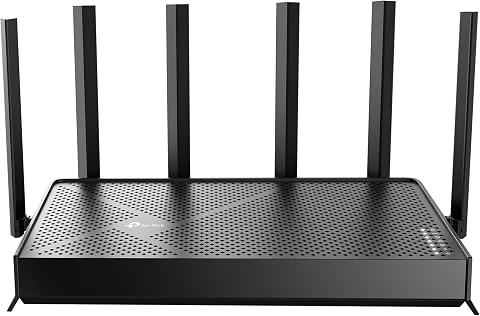 TP-Link Archer BE600 Tri-Band Wi-Fi 7 RouterView on Amazon →
- 3
 NETGEAR Nighthawk BE9300 Tri-Band WiFi 7 RouterView on Amazon →
- 4
 TP-Link Archer BE550 Tri-Band Wi-Fi 7 RouterView on Amazon →
- 5
 NETGEAR Nighthawk RS140 Dual-Band WiFi 7 RouterView on Amazon →
- 6
 ASUS RT-BE82U Dual-Band Wi-Fi 7 RouterView on Amazon →
- 7
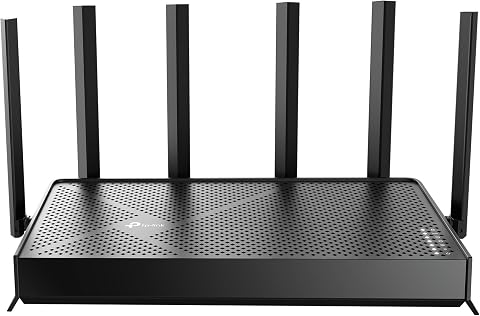 TP-Link Archer BE400 BE6500 Dual-Band Wi-Fi 7 RouterView on Amazon →
- 8
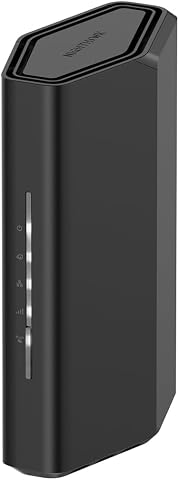 NETGEAR Nighthawk RS90 WiFi 7 Dual-Band RouterView on Amazon →
- 9
 TP-Link Archer BE230 Dual-Band Wi-Fi 7 RouterView on Amazon →
Match Router Capacity to Your Home
The list matters to households considering an upgrade because it frames Wi-Fi 7 as a network-planning decision, not a simple race for the highest headline specification. A tri-band router may offer more flexibility for a busy home, while a dual-band option may be sufficient for a smaller network. A quad-band design may add capacity and controls that some demanding users want, but the source says many homes will not need that scale.
Compatibility also affects the value of upgrading. Older Wi-Fi devices can connect to a Wi-Fi 7 router, but they do not gain every Wi-Fi 7 feature by doing so. Similarly, wireless capacity cannot fix a bottleneck in an internet plan or a wired connection. Buyers should compare the router’s ports with their modem, computer, storage and other gear, and consider coverage limitations caused by walls or distance.
These are editorial recommendations from the source, not independent proof that one model will outperform another in every home. The source material gives no prices or controlled test results, so readers cannot use it alone to compare value or quantify performance differences.
Products Worth Considering

Apple MacBook Pro 2023 with M2 Pro Chip, 14‑inch, 16 GB RAM, 512 GB SSD – Space Gray

LG UltraGear 27GX704A-B 27-inch QHD OLED Gaming Monitor

Apple MacBook Pro 14 2021 with M1 Max, 64GB RAM, 2TB SSD, Silver
As an affiliate, we earn on qualifying purchases.
How the Nine Picks Differ
The comparison’s central distinction is between dual-, tri- and quad-band designs. Band count describes how wireless capacity is organized; it does not mean each connection automatically becomes faster. The source presents the BE550, BE9300 and BE600 as tri-band options, and the GT-BE98 Pro as the quad-band specialist. Its dual-band group includes the BE230, BE400, RT-BE82U, RS90 and RS140.
The guide says its ranking favors balance for a broad range of homes, which puts the BE550 first. It treats the GT-BE98 Pro as a narrower fit for demanding setups and the BE230 as an entry point for simpler networks. Its broader advice is to check which devices support Wi-Fi 7, map the wired connections that matter, and plan for coverage before paying for extra capacity.
“The central tradeoff is whether you need extra bands and ports for busy households or can save space and complexity with a dual-band router.”
— ThorstenMeyerAI.com’s comparison
What the Comparison Does Not Establish
The supplied source does not state the comparison’s publication date, product prices, firmware versions, test environment or measured speeds. It also does not give a complete ranked order or detailed specifications for all nine models. Those omissions mean readers cannot tell from this material alone how the routers compare on current street price, coverage, latency or performance under matched conditions.
The source’s recommendations are described as editorial picks, but the supplied material does not document independent testing or explain how each model was tested. Actual results remain dependent on client compatibility, interference, home layout and service limits. The source also does not specify whether all listed configurations or features are available in every market.
Check Your Network Before Buying
The next step for readers is to compare the router options with their own network: identify active Wi-Fi devices and their standards, count wired connections, check internet-service and port speeds, and note where coverage is weak. If a distant room is the main problem, compare support for mesh or access-point expansion instead of assuming a higher-capacity single router will solve it.
Before purchase, verify current specifications, compatibility and local pricing with the manufacturer or retailer, since those details are not included in the source material. The comparison offers a shortlist and selection framework; it does not establish which router will deliver the best result in an individual home.
Key Questions
Which Wi-Fi 7 router does the comparison rank first?
ThorstenMeyerAI.com names the TP-Link Archer BE550 its best overall pick, citing its tri-band configuration and mix of wired connections.
Does a tri-band router guarantee faster Wi-Fi?
No. The comparison says more bands can offer flexibility for sharing wireless capacity, but do not automatically make each connection faster. Results depend on devices, network traffic, placement and other conditions.
Will older devices benefit from a Wi-Fi 7 router?
Older Wi-Fi devices can connect, but they will not use every Wi-Fi 7 feature. The immediate benefit depends on the capabilities of the devices that use the network.
Which router is the specialist option for gaming?
The source presents the ASUS ROG Rapture GT-BE98 Pro as its premium, gaming-focused pick, with quad-band capacity and gaming-oriented controls. It says many homes may not need that level of capacity or complexity.
Does this comparison provide prices or test results?
The supplied comparison material does not include prices, measured speeds or a documented test setup. Check current listings and product specifications before comparing value or expected performance.
Source: ThorstenMeyerAI.com