🔍 Read the full analysis: The AI Boom’s Role In China’s Trade Surplus Passing $1 Trillion Again on ThorstenMeyerAI.com

Get hardware and tech essentials delivered free with Prime
- Fast, free delivery on millions of items
- Prime Video, Amazon Music and more included
- Member-only deals all year
TL;DR
China’s preliminary customs figures show a $1.0426 trillion goods trade surplus for January through October 2026, exceeding $1 trillion a month earlier than in 2025. Integrated-circuit exports more than doubled in value and computer exports rose 60.6%, while imports of chips and computer equipment also increased sharply. Customs data do not establish how much of the export growth was caused by AI demand or explain changes in bilateral balances.
China recorded a goods trade surplus of $1.0426 trillion in the first ten months of 2026, according to preliminary figures published November 10 by the General Administration of Customs. The total passed $1 trillion a month earlier than it did in 2025, as exports of integrated circuits and computers grew rapidly amid a global build-out of AI infrastructure, though the customs data do not isolate AI-related trade.
The customs office’s January-to-October table lists an export-import balance of 10,425.9 in units of 100 million U.S. dollars, equal to $1,042.6 billion. China’s exports over the period totaled $3,782.8 billion, while imports totaled $2,740.2 billion. The export total was already above China’s full-year 2025 figure of $3,771.9 billion, based on comparisons of customs tables.
In the export categories associated with computing hardware, integrated circuits rose in value from $161.6 billion to $341.1 billion, an increase of 111.1%. Computers and parts, a category that includes servers, climbed 60.6% to $266.5 billion. The customs table put all high-tech product exports at $1,132.9 billion, up 47.9%. These are product classifications, not a separate customs measure of AI goods.
The increase in chip export value was much larger than the reported increase in quantity: the number of integrated circuits exported rose 3.2%. The customs figures do not say whether that difference reflects higher prices, a shift toward more expensive products, or other factors. China also imported $566.5 billion of integrated circuits, up 65.1%, and imports of computers and parts rose 136.7%. October exports increased 35.2% year over year to $412.3 billion, while imports rose 41.6% to $307.1 billion. October’s $105.3 billion surplus was below September’s $133.5 billion.
China’s trade surplus tops $1 trillion as AI hardware exports surge
Preliminary customs figures show a record-scale goods surplus through October 2026, alongside rapid growth in chip and computer exports. The data show the trend, but do not isolate AI’s contribution.
Hardware exports are expanding
Computing-related categories grew rapidly, but customs classifications do not identify which goods serve AI infrastructure.
$341.1B exported
Integrated-circuit export value more than doubled, while export quantity rose 3.2%.
$266.5B exported
Computers and parts, including servers, rose 60.6% in value.
$1,132.9B exported
All high-tech product exports increased 47.9%; this is not a separate measure of AI goods.
Imports reveal supply-chain links
China exported large volumes of hardware while also importing chips and computer equipment.
- Integrated circuits: $341.1B
- Computers and parts: $266.5B
- Chip export quantity rose 3.2%
- Integrated circuits: $566.5B
- Chip imports rose 65.1%
- Computer and parts imports rose 136.7%
The monthly picture was mixed
The cumulative surplus crossed $1 trillion earlier than in 2025, even as October’s monthly surplus narrowed.
What businesses and readers should watch
The scale matters for suppliers and trading partners, but the figures do not settle questions about AI demand or future policy.
| What the data show | What they do not establish |
|---|---|
| Rapid growth in chip and computer exports | How much growth came from AI demand |
| A $225.4B chip trade deficit | Which imported parts were used in exported goods |
| Larger reported surpluses with major partners | The causes of bilateral balance changes |
| Preliminary figures through October | Future revisions or specific tariff actions |
AI Hardware and Trade Exposure
The figures point to the scale of China’s role in supplying goods used in the expansion of computing and data-center capacity. Reuters reported that a global push to expand AI infrastructure has fueled much of the strength in Chinese exports this year; CNBC also reported strong demand for Chinese chips and other AI-related hardware. Those reports offer an explanation for the trend, but the customs categories do not identify which products were bought for AI systems or measure AI’s contribution to the surplus.
The pattern also shows why export growth does not mean China makes every component itself. China imported $566.5 billion of chips even as it exported $341.1 billion. Calculations from the customs figures put its chip trade deficit at $225.4 billion, compared with $181.5 billion a year earlier. The numbers suggest substantial cross-border flows through the hardware supply chain, but they do not show which specific imported parts were incorporated into exported products.
For trading partners and businesses, the scale of the surplus matters because it can sharpen scrutiny of trade balances and market access. The source report, citing Reuters, said the surplus was likely to increase friction with trading partners, especially the European Union. Companies sourcing servers, components or devices from China may also face policy uncertainty: tariffs and trade restrictions remain a risk, but these figures do not establish what any government will do next.
Products Worth Considering
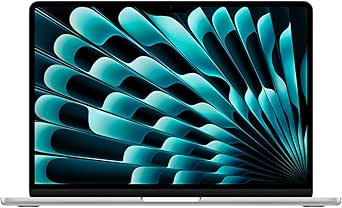
Apple MacBook Air 13-inch Laptop with M5 Chip, 16GB Memory, 512GB SSD, Liquid Retina Display, and 12MP Center Stage Camera (2026, Silver)

Apple MacBook Pro 14-inch (2021) – M1 Pro Chip, 10-Core CPU, 16-Core GPU, 16GB RAM, 1TB SSD, Space Gray

Ledger Flex + Folio Crypto Hardware Wallet
As an affiliate, we earn on qualifying purchases.
How the Surplus Reached October
China’s customs office published preliminary January-to-October figures on November 10, 2026. The $1.0426 trillion balance means the country exported that much more in goods than it imported during those ten months; it is not a measure of services trade or a full account of other economic flows. According to the same customs tables, China’s surplus passed $1 trillion in November 2025 and reached $1.189 trillion for that full year.
Reuters, as carried by The Straits Times, described the 2026 milestone as China topping $1 trillion for a second consecutive year and reaching it a month earlier than in 2025. Reuters also reported that October exports exceeded economists’ forecast of a 33.5% annual increase, while imports outpaced a forecast of 32% growth. The monthly surplus nevertheless narrowed from September, underlining that a record cumulative balance does not mean the surplus rose every month.
The country-level customs table shows larger reported surpluses with several major trading partners. China’s surplus with the European Union rose to $310.7 billion from $241.6 billion a year earlier, and its surplus with the United States rose to $266.5 billion from $233.4 billion. Its surplus with the ten ASEAN countries increased to $293.1 billion from $219.4 billion. The figures describe bilateral goods balances; they do not by themselves explain the causes or establish where goods shipped through trading hubs ultimately go.
“China was “topping US$1 trillion for a second consecutive year and reaching the milestone a month earlier than in 2025.””
— Reuters, as reported by The Straits Times
What the Customs Figures Cannot Show
The figures do not separate AI-related products from other chips, computers or servers, so AI’s precise contribution to the surplus remains unknown. Nor do they explain why the value of chip exports rose 111.1% while export quantity increased 3.2%. Price changes, product mix and other causes cannot be distinguished from the supplied data.
Customs country tables also do not break bilateral trade down by product. China’s reported deficit with South Korea grew from $32.9 billion to $100.5 billion, while its deficit with Taiwan increased from $120.6 billion to $148.5 billion. Imports from South Korea rose 79.1% and imports from Taiwan rose 29.2%, but the tables alone do not prove that chip purchases caused the changes. The destination of goods routed through Hong Kong is also not shown in the reported balance.
The figures are preliminary, and the supplied material does not specify how they may be revised. The scale of any future tariff response or other policy action is also unclear. China and the United States extended their trade truce by two months, according to Reuters, but the material does not provide further terms or establish what will follow that extension.
Trade Policy and Final Data
Readers will be able to compare the preliminary figures with later customs releases as more monthly and full-year data become available. Those updates can show whether strong growth in chip and computer exports continued beyond October and whether the cumulative surplus changed after revisions.
Businesses and trading partners will also be watching for developments in the China-U.S. trade truce and for any response to China’s growing trade balances, particularly in its relationship with the European Union. No specific new tariff measure is confirmed in the supplied material. For now, the clearest confirmed development is the scale of the January-to-October surplus and the sharp growth in several hardware export categories, alongside a substantial rise in related imports.
Key Questions
How large was China’s trade surplus through October 2026?
China’s preliminary customs figures put its goods trade surplus at $1.0426 trillion for January through October 2026. The balance is the value of goods exports minus goods imports.
How did AI-related hardware exports change?
Customs data show integrated-circuit exports rose 111.1% in value to $341.1 billion, while computers and parts increased 60.6% to $266.5 billion. These categories include goods used in computing, but the customs data do not label them as AI products.
Does the data prove AI caused the surplus to pass $1 trillion?
No. Reuters and CNBC linked export strength to demand for AI-related hardware and infrastructure, but the customs figures do not isolate AI sales or quantify their contribution to the overall trade balance.
Why did China import so many chips while exporting them?
China imported $566.5 billion of integrated circuits and exported $341.1 billion during the first ten months of 2026. The figures show trade moving in both directions, but the available customs tables do not identify the specific uses of imports or the components in exported goods.
What could change after these figures?
Later customs releases may update the preliminary totals, while businesses and governments will watch trade-policy developments and the extended U.S.-China trade truce. The supplied material does not confirm a new tariff action or other specific policy response.
Source: ThorstenMeyerAI.com