🔍 Read the full analysis: AI And Historical Reconstruction: The Case Of La Citadelle’s 1693 Siege on ThorstenMeyerAI.com
TL;DR
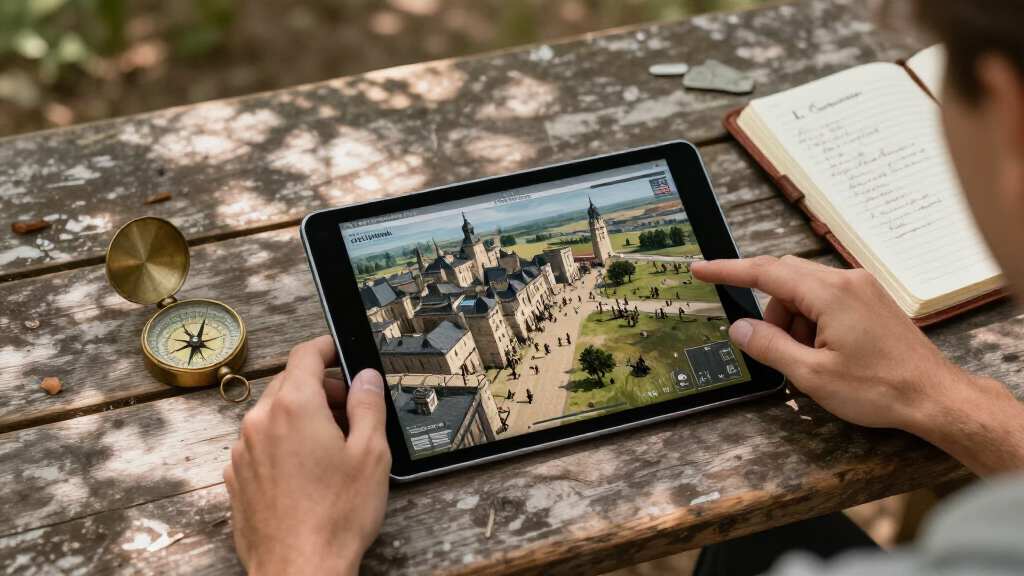
An AI-powered digital reconstruction of the 1693 siege of La Citadelle has been launched as an interactive exhibit. It uses layered SVGs, CSS, and canvas to simulate military movements and terrain, offering a detailed, cinematic view of the historic event. The project aims to enhance historical understanding through innovative technology.
An AI-generated interactive exhibition has been unveiled, simulating the 1693 siege of La Citadelle with remarkable digital precision. For a detailed analysis, see the original analysis. The project employs layered SVGs, CSS, and canvas elements to produce a cinematic, explorable experience that balances historical fidelity with artistic storytelling. This approach is discussed in detail in the original analysis. This development marks a significant step in using artificial intelligence to reconstruct and visualize complex historical events for educational and preservation purposes.
The exhibit, titled “La Citadelle — An Anatomy of Siege, 1693,” is hosted online and allows users to navigate a detailed, scroll-driven diagram of the siege. It dynamically displays military movements, terrain features, and fortifications, all built entirely with code—no static images are used. The visualization is driven by AI-guided workflows that refine the visual coherence, responsiveness, and historical plausibility of the simulation through iterative critique and expert approval.
According to Thorsten Meyer, the project follows a three-stage pipeline: initial construction with layered SVGs and CSS, an AI-led critique process to enhance visual and historical accuracy, and final approval by an art director. The site employs a restrained color palette reminiscent of archival materials, with fonts and interactions carefully designed to evoke the period. The layered SVG siege map animates earthworks, trenches, and artillery trajectories, creating a cinematic portrayal of the siege’s progression. Insights into the digital reconstruction process can be found in the original analysis.
Developers emphasize that every visual element is generated through code—without external assets—ensuring scalability and high fidelity across devices. The exhibit also features a hero film loop of the fortress at dusk, setting an atmospheric tone for the interactive experience.
Impact of AI-Driven Historical Reconstruction
This project demonstrates how artificial intelligence can be harnessed to produce detailed, interactive reconstructions of historical events, offering new educational tools and preservation methods. By translating complex military campaigns into explorable digital models, it enhances public engagement with history and provides a template for future digital archaeology initiatives. Such technology could revolutionize how museums, educators, and researchers visualize and interpret the past, making history more accessible and immersive.
interactive digital history exhibit
As an affiliate, we earn on qualifying purchases.
As an affiliate, we earn on qualifying purchases.
Historical and Technological Background of the Siege
The siege of La Citadelle in 1693 was a pivotal event in regional military history, involving complex fortifications and strategic movements. Traditional reconstructions relied on static maps, engravings, and written accounts, which limited detailed visualization. Recent advances in AI and web technologies have enabled the creation of dynamic, layered digital models. This project builds on prior efforts to digitize historical terrain but distinguishes itself through its use of AI-guided critique and code-based visualizations, allowing for a more accurate and cinematic depiction of the siege.
Thorsten Meyer notes that the project is part of a broader movement toward digital history, where AI tools assist in both the creation and validation of visual reconstructions. The approach aims to balance artistic storytelling with factual accuracy, ensuring the digital exhibit serves both educational and aesthetic purposes.
“Using layered SVGs and AI critique, we can produce highly responsive, historically plausible reconstructions that engage users in a new way.”
— Thorsten Meyer
AI-powered historical reconstruction software
As an affiliate, we earn on qualifying purchases.
As an affiliate, we earn on qualifying purchases.
Unconfirmed Aspects of the AI Reconstruction Process
While the exhibit claims high fidelity and responsiveness, it is not yet clear how accurately the AI critique process models the complexities of historical military tactics or terrain. The extent of expert validation beyond the initial design critique remains unspecified. Additionally, the long-term accuracy of AI-driven visualizations for complex events like sieges is still under evaluation, and some details may be simplified or stylized for visual clarity.
As an affiliate, we earn on qualifying purchases.
Future Developments in AI-Generated Historical Visualizations
Developers plan to expand this approach to other historical events and periods, integrating more detailed datasets and user feedback. Further refinement of AI critique algorithms may improve accuracy, and collaborations with historians could enhance the authenticity of future reconstructions. The project also aims to incorporate interactive features allowing users to modify scenarios or explore alternative strategies within the siege simulation.
As an affiliate, we earn on qualifying purchases.
Key Questions
How does the AI create the visualizations?
The AI guides the construction of layered SVG maps, animations, and terrain features based on historical data and design principles, iteratively critiquing and refining each element for coherence and plausibility.
Can I trust the historical accuracy of the reconstruction?
The project aims for high fidelity, guided by expert approval and AI critique, but some stylization and simplification are possible. It is best viewed as a visual approximation rather than a definitive reconstruction.
Will this technology be used for other historical events?
Yes, developers plan to apply similar AI-driven visualization techniques to other periods and events, enhancing digital history and education tools.
Is the exhibit accessible on all devices?
Yes, the visualization is designed to be scalable and responsive, providing high-quality experiences across desktops, tablets, and smartphones.
What are the limitations of AI in historical reconstruction?
AI models depend on available data and algorithms, which may oversimplify or stylize complex events. Ongoing validation and expert input are necessary to ensure accuracy.
Source: ThorstenMeyerAI.com