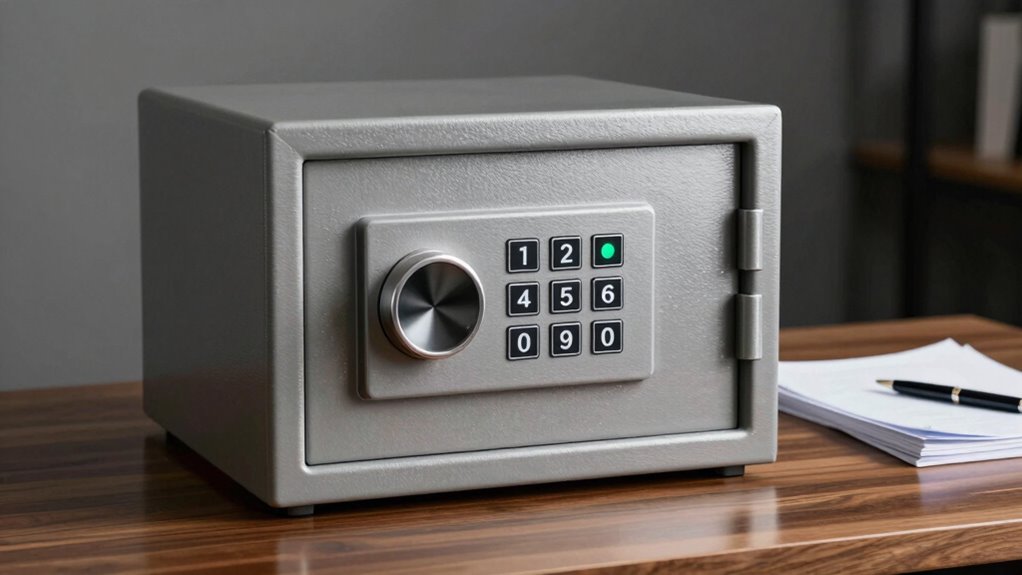

A fireproof safe alone won’t protect your crypto private keys from digital threats like hacking, malware, or phishing. While it can shield physical items from fire damage, it offers no defense against cyberattacks or digital theft. Your private keys need encryption and offline storage, like cold wallets, for real security. Relying solely on a fireproof safe gives you a false sense of safety—there’s much more to secure your digital assets effectively. If you want to discover what’s truly essential, keep going.

Get hardware and tech essentials delivered free — and shop member deals
- Fast, free delivery on millions of items
- Access to Prime Big Deal Days deals on October 6–7
- Prime Video, Amazon Music and more included
Key Takeaways
- Fireproof safes do not protect private keys stored digitally from hacking or malware threats.
- Relying solely on physical safes leaves digital assets vulnerable to cyberattacks.
- Digital encryption and cold storage are essential for safeguarding private keys effectively.
- Physical safes do not prevent cyber threats like phishing, ransomware, or remote hacking.
- Combining physical security with digital safeguards creates a more comprehensive crypto security strategy.
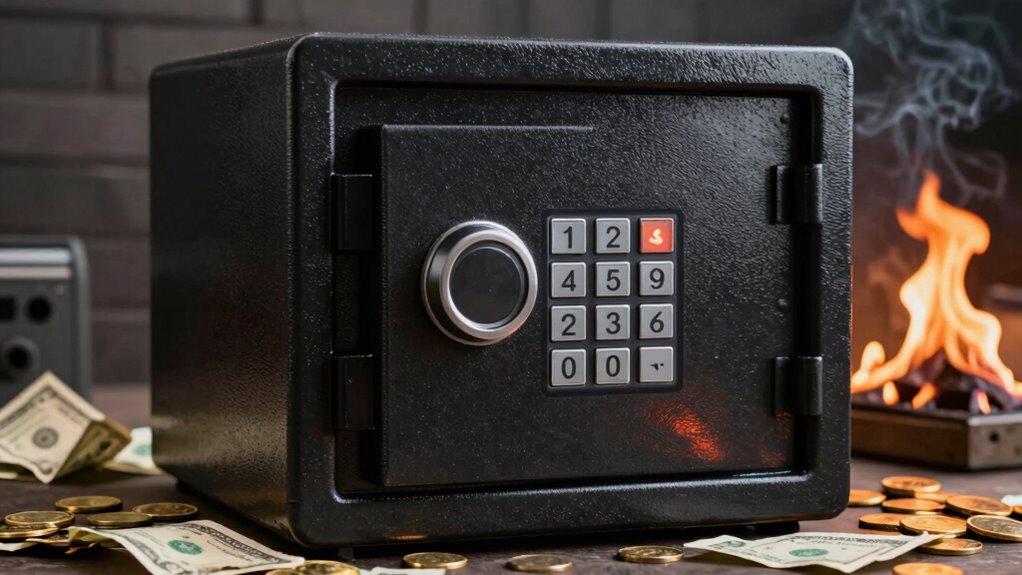
Many crypto holders believe that storing their digital assets in a fireproof safe guarantees complete security from theft or loss, but this is a dangerous misconception. While a fireproof safe might protect physical items, it doesn’t address the core vulnerabilities associated with digital assets. The real security lies in how you manage and safeguard your private keys, not just in physical safety measures. Digital encryption and cold storage are critical components of a robust security strategy, and relying solely on a fireproof safe leaves you exposed.
Digital encryption plays a crucial role in protecting your private keys from unauthorized access. Even if someone gains physical access to your safe, if your private keys are encrypted, they won’t be able to access your crypto assets without the decryption key. Encryption adds an extra layer of security, ensuring that your private data remains confidential, even if someone tries to steal or tamper with physical devices or backups stored in the safe. It’s essential to use strong, up-to-date encryption methods to prevent hacking or data breaches. Additionally, understanding the digital threat landscape is vital to staying ahead of potential attacks, especially as hackers become more sophisticated. Keeping up with emerging cybersecurity measures is essential for maintaining your crypto safety.
Cold storage, on the other hand, refers to keeping your private keys offline, disconnected from the internet. This method drastically reduces the risk of cyberattacks, malware, or phishing attempts that target online wallets or exchanges. When you use cold storage, your private keys are stored on hardware wallets or offline devices that never connect directly to the internet. This approach ensures that hacking attempts can’t reach your private keys remotely, making it one of the safest ways to hold significant crypto holdings. Moreover, many reputable hardware wallets incorporate additional security features, like PIN codes and biometric authentication, to further protect your assets. Understanding the digital infrastructure supporting these storage solutions helps in choosing the most secure options for your needs.
Thinking that a fireproof safe alone suffices ignores the digital threat landscape. Thieves and hackers are more sophisticated now, and physical security measures alone don’t protect your private keys stored on digital devices or online accounts. Instead, you should combine physical security with digital encryption and cold storage solutions. For example, keep your hardware wallet in a fireproof safe, but also ensure it’s encrypted and stored in a secure location. Never rely solely on physical safes to safeguard your private keys, because the real battle for crypto security happens in the digital domain.
In essence, the myth of the fireproof safe as a comprehensive security measure is dangerous. To truly protect your digital assets, prioritize digital encryption, and use cold storage solutions that keep your private keys offline. Combining these strategies provides a layered defense, which is far more effective than just trusting in physical safes alone. Your crypto security depends on understanding that digital threats require digital safeguards—nothing less will do.
As an affiliate, we earn on qualifying purchases.
Frequently Asked Questions
Can Fireproof Safes Protect Against Digital Hacking?
Fireproof safes can’t protect against digital hacking because they focus on physical security and fire resistance. They don’t provide digital encryption or cybersecurity measures, which are essential to defend your crypto from hackers. To secure your digital assets, you need strong passwords, two-factor authentication, and encrypted storage solutions. Relying solely on a fireproof safe leaves your crypto vulnerable to cyber threats, so combine physical and digital security for all-encompassing protection.
Are Fireproof Safes Completely Waterproof?
Fireproof safes are not completely waterproof, but many use fire-resistant materials that also provide some water resistance. However, their effectiveness depends on proper safe installation—ensuring seals are intact and the safe is positioned away from potential water sources. If you need full waterproof protection, look for safes specifically rated for water resistance, and always verify the product specifications before purchase to safeguard your valuables from both fire and water damage.
How Long Can a Fireproof Safe Withstand High Temperatures?
A stitch in time saves nine, so it’s vital to understand fire resistance. Most fireproof safes can withstand high temperatures for about 30 minutes to two hours, depending on material durability. When exposed to extreme heat, they protect contents from melting or burning, but prolonged exposure will eventually compromise their fire resistance. Always choose a safe rated for the specific fire risk you face to guarantee your assets stay protected.
Do Fireproof Safes Prevent Theft or Only Fire Damage?
Fireproof safes mainly protect against fire damage, not theft. They provide physical security by resisting heat and flames, but determined thieves can still access them unless they’re bolted down or stored securely. For all-encompassing protection, consider safes with enhanced security features and check your insurance coverage. While a fireproof safe helps preserve your crypto and valuables from fire, it’s essential to also implement additional theft prevention measures.
Are Fireproof Safes Suitable for Securing Cryptocurrencies?
Imagine your crypto holdings as a precious jewel, requiring more than just a sturdy lock. Fireproof safes aren’t ideal for securing cryptocurrencies because they focus on fire resistance, not physical security or safe durability. Crypto wallets are digital and need secure storage like hardware wallets or encrypted online solutions. Relying solely on a fireproof safe leaves your digital assets vulnerable to theft or hacking, not just fire damage.
As an affiliate, we earn on qualifying purchases.
Conclusion
Don’t rely on a fireproof safe as your fortress—think of it as a shiny shield that can crack. Your crypto wealth isn’t just about protecting physical assets; it’s about securing your digital keys with strong, layered defenses. Remember, a single myth can lull you into false security. Stay vigilant, keep your keys private, and build a fortress of knowledge. Only then will your crypto treasure stand tall against any fire or threat that comes your way.
encrypted USB drive for crypto private keys
As an affiliate, we earn on qualifying purchases.
As an affiliate, we earn on qualifying purchases.
As an affiliate, we earn on qualifying purchases.
Fall Picks
fall essentials
As an affiliate, we earn on qualifying purchases.