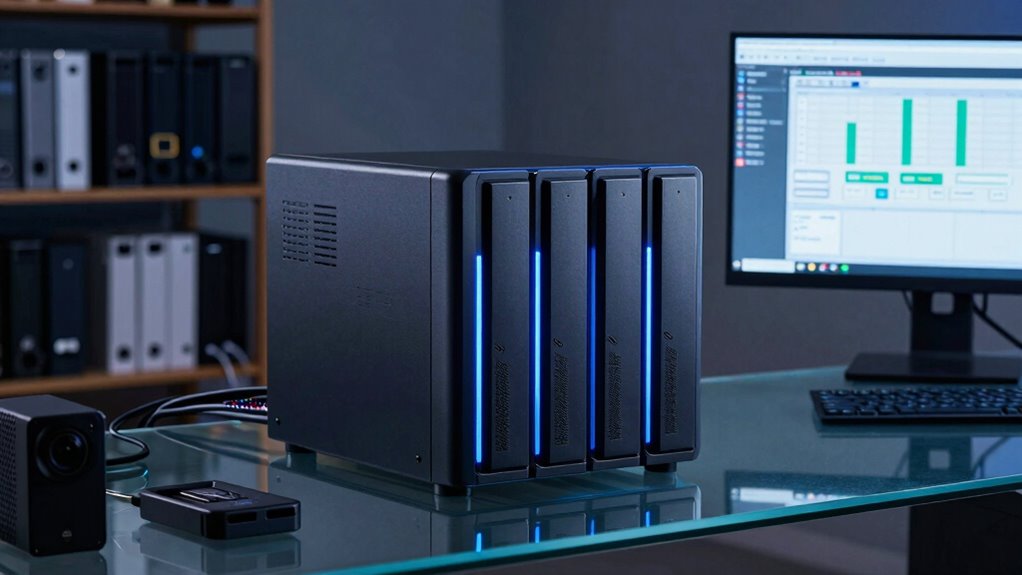

A 4-bay NAS stops being enough when your storage needs grow beyond its capacity, managing multiple users and large files becomes slow, and backups become frequent and cumbersome. Relying on cloud storage can become costly and inefficient. As your data expands, security concerns and performance issues intensify. Upgrading hardware or moving to enterprise solutions can help, ensuring your system keeps pace with your evolving data demands. Keep exploring to find out how to future-proof your setup.
Key Takeaways
- Storage demands surpass capacity, requiring more than four drives for large or growing data sets.
- Managing multiple users and large media files becomes inefficient with limited bays.
- Security needs increase, necessitating advanced encryption and protection beyond basic NAS features.
- Network performance issues emerge as data transfer speeds slow and remote access becomes critical.
- Scalability limitations hinder workflows, prompting upgrade to enterprise-grade or larger-scale storage solutions.
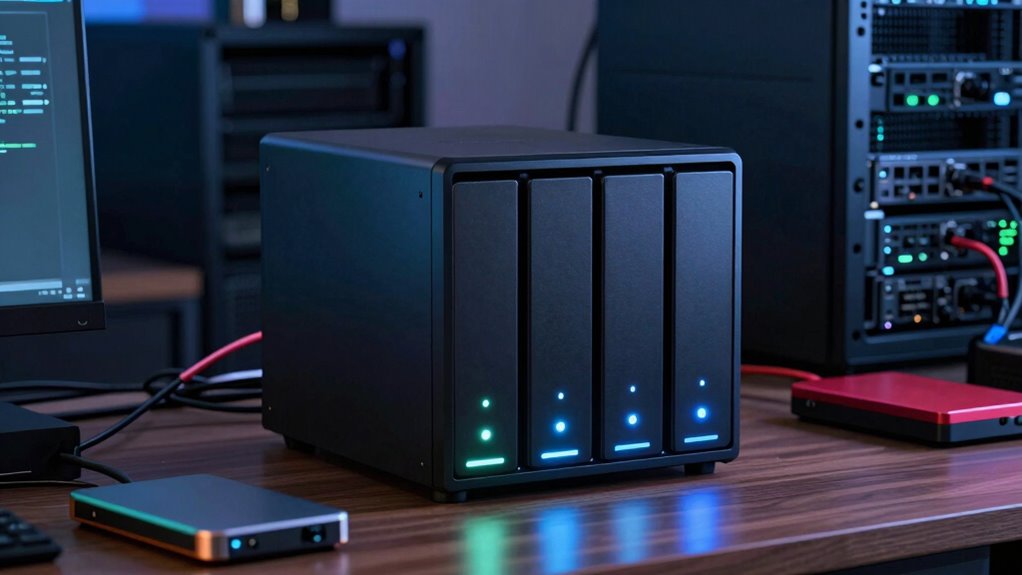
As your data storage needs grow, a 4-bay NAS might no longer keep up with your demands. You start to notice that managing your files becomes more complicated, especially when you’re juggling multiple users, large media files, or frequent backups. At this stage, your current setup might feel limiting, and you begin exploring options to expand your storage capacity. One clear sign is when you find yourself relying heavily on cloud storage services to supplement your NAS. While cloud solutions are convenient, they can become costly and less efficient for large data sets or frequent access. Plus, transferring massive files to and from the cloud can slow down your workflow, making it clear that a more robust local storage solution is necessary. Incorporating storage scalability options can help future-proof your setup and accommodate growth more seamlessly.
Growing storage needs highlight limitations of a 4-bay NAS and the rising reliance on costly, less efficient cloud solutions.
Security becomes another critical factor. If you’re handling sensitive data—personal information, business documents, or proprietary files—you need to ensure they’re protected. That’s where data encryption comes into play. As your storage grows, so does the risk of data breaches and unauthorized access. A 4-bay NAS with built-in or upgradable data encryption capabilities allows you to safeguard your files without sacrificing accessibility. You want a system that not only provides ample space but also encrypts data at rest and in transit, so your information remains private regardless of where it’s stored or accessed. Additionally, color accuracy in your storage setup can help in managing media files more effectively, especially if you work with visual content that requires precise color reproduction. As your digital environment becomes more complex, integrating security features becomes essential to maintain trust and compliance.
Beyond security, performance issues also signal that your current setup isn’t enough. If you notice slow transfer speeds, frequent crashes, or lag when accessing files, it’s time to consider expanding. Larger storage needs often come with more simultaneous users or remote access requirements, which a 4-bay NAS may struggle to handle efficiently. Upgrading to a larger or more advanced model helps maintain smooth performance, especially when integrated with cloud storage solutions that allow remote access and offloading of some data. Ensuring your network infrastructure can support higher data throughput is equally important to match your expanding storage needs.
Finally, your evolving workflow might demand more sophisticated features, like automated backups, scalable storage options, or integration with other digital tools. As your data ecosystem becomes more complex, sticking with a small, limited NAS can hinder growth. Transitioning to a higher-capacity, enterprise-grade system ensures your storage infrastructure keeps pace with your expanding needs, keeping your data secure through robust encryption and flexible enough to integrate seamlessly with cloud storage. When these issues start to pile up, that’s your cue—your 4-bay NAS has served well, but it’s time to upgrade for better security, performance, and scalability.
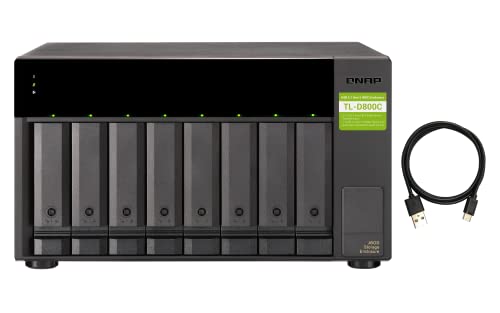
QNAP TL-D800C 8 Bay Desktop JBOD Storage Enclosure with USB 3.2 Gen 2 Type-C Connectivity
Storage Expansion for your QNAP NAS, computers (supports Windows), and servers
As an affiliate, we earn on qualifying purchases.
As an affiliate, we earn on qualifying purchases.
Frequently Asked Questions
How Do I Upgrade From a 4-Bay to a Larger NAS?
To upgrade from a 4-bay NAS, first choose a larger model with enough drive bays for your needs. Transfer your drives or migrate your data, then update the new NAS’s firmware to guarantee peak performance and security. During setup, configure user access permissions carefully. Once everything’s in place, verify that your data is accessible, and enjoy expanded storage capacity without losing control over your files.
What Are the Cost Differences Between 4-Bay and Larger NAS Devices?
Think of the cost gap between 4-bay and larger NAS devices as a mountain—more capacity, more expense. A 4-bay NAS might cost around $300–$600, great for media streaming and data encryption, while bigger options with 8 or more bays can range from $800 to over $2,000. Upgrading means investing more, but it guarantees your storage grows with your needs, especially for high-demand tasks like media streaming.
Can a 4-Bay NAS Support Virtual Machines or Containers?
A 4-bay NAS can support virtual machines and containers but with virtualization limitations and container compatibility constraints. You might find it challenging to run multiple VMs smoothly due to limited CPU and RAM resources. Container support is often available, but complex setups or high resource demands could slow performance. If you plan to scale or run intensive applications, consider a larger NAS with more bays and stronger specs for better virtualization and container compatibility.
What Are the Best Backup Strategies for Expanding Storage Needs?
Don’t put all your eggs in one basket. For expanding storage needs, prioritize data redundancy through regular backups and mirror drives to prevent data loss. Incorporate cloud integration for off-site backups, ensuring your data stays safe from local failures. Automate backups to save time, and regularly test recovery processes. This way, you build a resilient backup strategy that adapts as your storage requirements grow.
How Does Network Speed Impact NAS Performance at Larger Capacities?
Network speed directly impacts your NAS performance, especially at larger capacities. Network bottlenecks can slow down data transfer limits, making backups and file access sluggish. As your storage grows, slower network connections struggle to handle increased data flow, causing delays and reducing efficiency. To maintain peak performance, ensure your network infrastructure supports higher speeds—like gigabit or 10-gigabit Ethernet—and consider upgrading your switches and cables for smoother data transfers.

Seagate IronWolf Pro, 12 TB, Enterprise NAS Internal HDD –CMR 3.5 Inch, SATA 6 Gb/s, 7,200 RPM, 256 MB Cache for RAID Network Attached Storage (ST12000NT001)
High Performance: All-CMR (conventional magnetic recording) portfolio enables consistent, industry-leading 24×7 performance allowing users to access data anytime,…
As an affiliate, we earn on qualifying purchases.
As an affiliate, we earn on qualifying purchases.
Conclusion
So, when your 4-bay NAS suddenly feels like a tiny drop in the ocean of your data needs, it’s time to upgrade. Don’t let storage limitations turn your digital empire into a cramped, chaotic mess—expand, innovate, dominate! Embrace the power of bigger, faster, more capable systems before your storage crisis becomes a catastrophe. Because, honestly, waiting until it’s too late is like trying to fit an elephant into a shoebox—just not gonna happen smoothly!
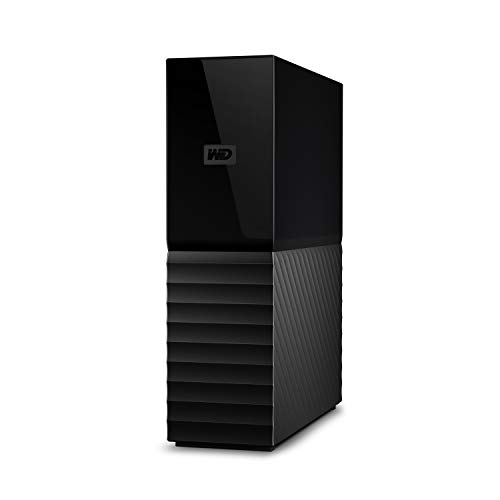
WD 16TB My Book Desktop External Hard Drive, USB 3.0, External HDD with Password Protection and Backup Software – WDBBGB0160HBK-NESN
Massive capacity, up to 22TB capacity. (1TB = one trillion bytes. Actual user capacity may be less depending…
As an affiliate, we earn on qualifying purchases.
As an affiliate, we earn on qualifying purchases.

UGREEN NAS DXP2800 2-Bay Desktop Network Attached Storage, Intel N100 Quad-Core CPU, 8GB DDR5 RAM, 2.5GbE, 2X M.2 NVMe Slots, 4K HDMI, Ideal for Content Creators and Enthusiasts (Diskless)
All-Round NAS: DXP2800 is suitable for enthusiasts, content creators, and more. You will get pro specs and advanced…
As an affiliate, we earn on qualifying purchases.
As an affiliate, we earn on qualifying purchases.