
📊 Full opportunity report: Managing Parental Consent In Kid-Facing Services on IdeaNavigator AI — validation score, market gap, and execution plan.

Get hardware and tech essentials delivered free — and shop member deals
- Fast, free delivery on millions of items
- Access to Prime Big Deal Days deals on October 6–7
- Prime Video, Amazon Music and more included
TL;DR
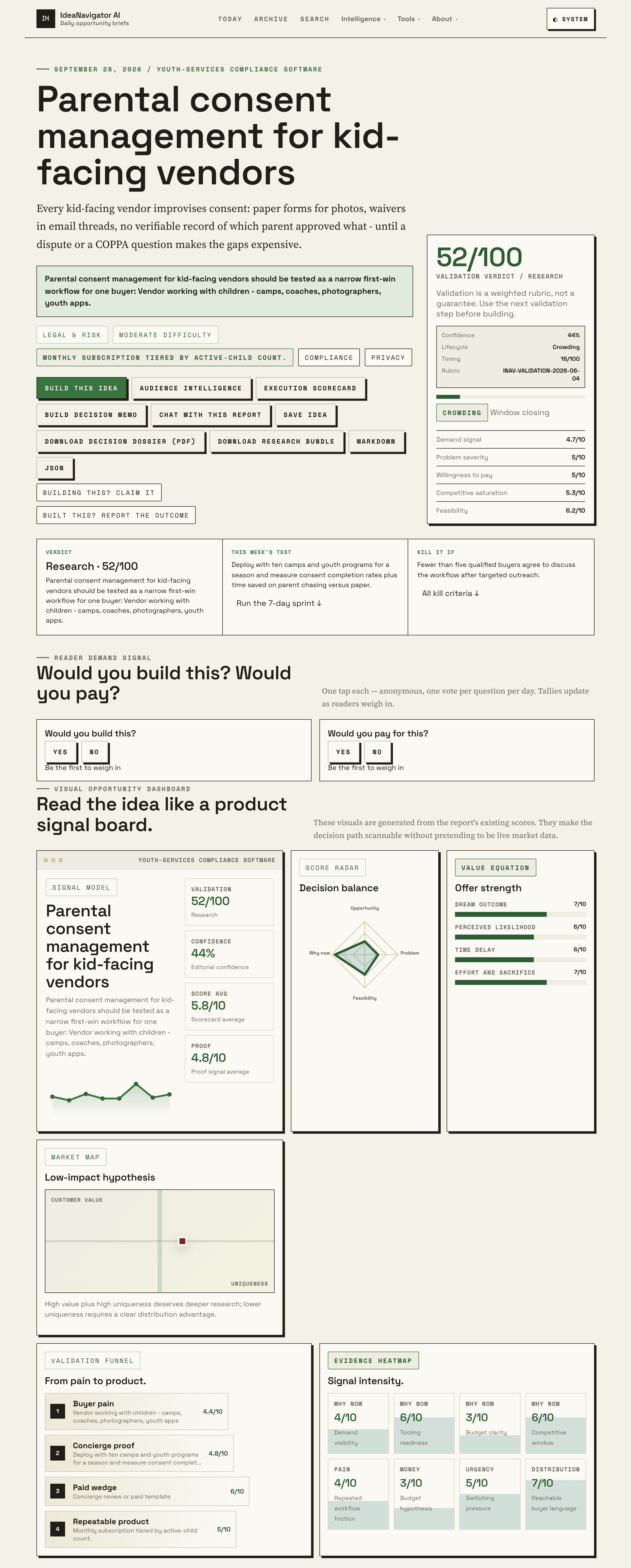
IdeaNavigator AI has proposed testing a parental-consent management service for camps and other vendors that work with children. The proposal describes phone-based forms, per-child records and audit exports, but reports no pilot results or confirmed customer demand.
IdeaNavigator AI has proposed a parental-consent management service for camps and other organizations working with children, with a seasonal trial across ten programs suggested as the first test. The concept aims to replace scattered forms and email approvals with phone-based consent flows and searchable records, though no deployment or results are reported.
According to the IdeaNavigator AI proposal, the product targets camps, coaches, photographers and youth apps, which may need permission for different activities, including photo use, data collection, medical information and liability waivers. The proposal describes vendor-branded forms that parents could complete on a phone, with identity checks matched to the perceived risk of each request.
Other proposed features include a per-child consent ledger, expiration tracking and an audit export that a vendor could use to review or document approvals, per the document. The suggested business model is a monthly subscription priced by the number of active children. These are product specifications in a proposal; the material does not identify a built product, pricing, customers or technical safeguards.
To test demand and usability, the proposal suggests a pilot with ten camps and youth programs for one season. The measures it proposes are consent completion rates and time spent following up with parents compared with paper-based processes. The proposal itself names no pilot participants, start date, results or independent evaluation.
Records Could Change Consent Work
For organizations serving children, the proposal addresses a practical records problem: permission can be spread across paper forms, email threads and other channels, making it difficult to establish which parent approved which use and whether that permission is still current. A shared ledger and export could make routine checks easier if the system is reliable and staff use it consistently.
The issue also touches privacy and legal compliance. The proposal points to COPPA updates and state laws as reasons for increased attention, but it does not explain which provisions apply to particular vendors or establish that any specific legal change requires this product. Requirements depend on the organization, the information collected and how it is used. A digital record may support administration; it does not by itself show that consent was legally sufficient.
Parents could also benefit from clearer requests that separate permissions for photographs, data and health information, as the proposal envisions. Whether a single service can make those choices understandable, accessible and easy to change remains a question for a real-world trial.
Top picks for "manag parental consent"
As an affiliate, we earn on qualifying purchases.
A Proposed Pilot, Not a Launch
The idea is framed in the proposal as a narrow first-win workflow for vendors working with children, rather than a general-purpose compliance platform. Its stated problem is that different organizations improvise their own methods, with gaps becoming more consequential when a parent disputes a use or an organization faces a privacy question.
The proposed path, as described by IdeaNavigator AI, is to test the workflow through one season with ten youth programs, then assess completion rates and the effort spent chasing missing approvals against paper processes. That setup would provide an initial operational comparison, but the proposal gives no methodology, baseline figures or definition of success. It also does not report that any organizations have agreed to participate.
The concept falls within youth-services compliance software, but the proposal provides no market-size estimates, competing products or customer research. The available details describe an opportunity and a validation plan from a single source, not evidence that vendors will pay for the service or that it will reduce disputes.
Demand and Safeguards Unproven
No product launch or pilot outcome is documented. It is not clear whether ten camps or programs have been recruited, when a trial might begin, what completion rate would count as success, or how much time vendors currently spend following up with parents. None of these points are addressed in the proposal.
The proposal also leaves technical and operational questions unanswered. It does not specify how parent identities would be checked, how sensitive medical or child data would be protected, who could access records, how long records would be retained, or how parents could withdraw or amend consent. The phrase “appropriate to the risk tier” in the document does not define the tiers or verification methods.
Legal coverage, subscription prices and adoption by small organizations are also unknown. No evidence is presented about whether existing tools already meet these needs or whether a vendor-branded service would be easier for families to use.
Seasonal Trial Would Test Use
The next step proposed by IdeaNavigator AI is a season-long trial with ten camps and youth programs. If carried out, it could track how often parents complete requests and compare staff time spent pursuing approvals with the time required under paper processes.
Further reporting would be needed to establish whether the trial takes place, which organizations take part and what safeguards govern their records. Any later assessment would also need to distinguish smoother form collection from legal compliance: the proposal supplies no findings on either point yet.
Source: IdeaNavigator AI
Key Questions
Has the service launched?
According to the IdeaNavigator AI proposal, the service is a concept only; no launch or available product is reported.
Who is the proposed service for?
It targets organizations working with children, including camps, coaches, photographers and youth apps, as described in the proposal.
What features are proposed?
Phone-based consent forms, identity checks suited to the request, per-child records, expiration tracking and audit exports are outlined in the proposal. Their implementation has not been documented.
What would the pilot measure?
The trial suggested in the proposal, with ten programs for a season, would compare consent completion rates and time spent following up with parents against paper processes. No results are available.
Would using the service guarantee compliance?
No such guarantee is established. Legal duties depend on the organization and its data practices, and a consent record alone does not demonstrate that every applicable requirement has been met.
Source: IdeaNavigator AI
Fall Picks
fall essentials
As an affiliate, we earn on qualifying purchases.