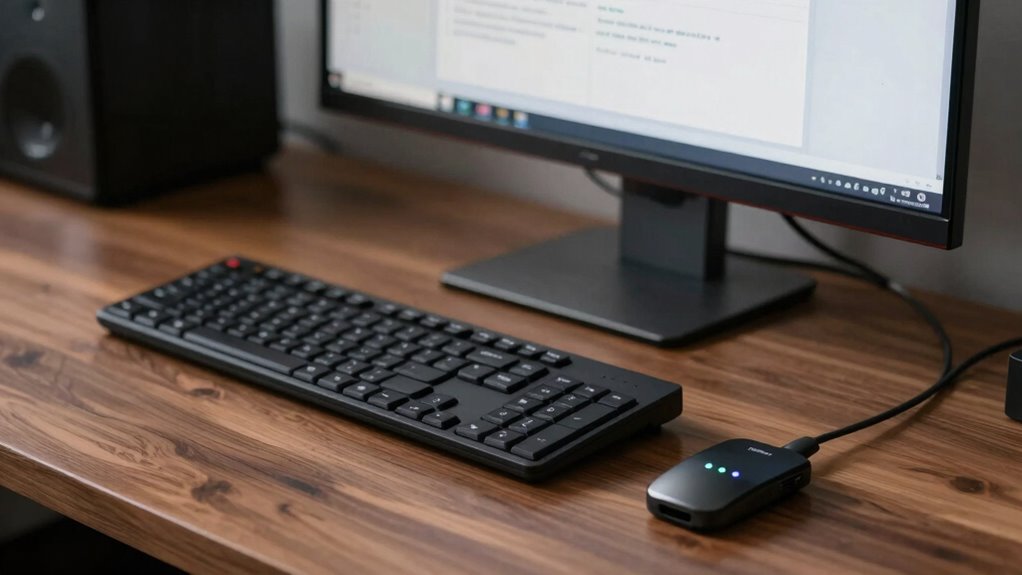

Air-gapped signing is still the gold standard because it physically isolates your private keys from networks, preventing remote hacking and cyber threats. By disconnecting from the internet, you control data transfer through manual, encrypted methods like USB drives, reducing attack surfaces. This approach guarantees your keys stay secure in tamper-resistant hardware, making it ideal for sensitive transactions. If you want to learn how this method remains the most trusted security measure, keep exploring its advantages.

Get hardware and tech essentials delivered free with Prime
- Fast, free delivery on millions of items
- Prime Video, Amazon Music and more included
- Member-only deals all year
Key Takeaways
- It physically isolates signing devices, preventing remote cyberattacks and unauthorized access.
- Secure hardware and tamper-resistant devices ensure private keys remain protected.
- Manual data transfer via encrypted USB drives reduces reliance on vulnerable digital channels.
- Eliminating network connectivity removes vectors for hacking and malware infiltration.
- It offers unparalleled control and assurance for highly sensitive transactions and data security.
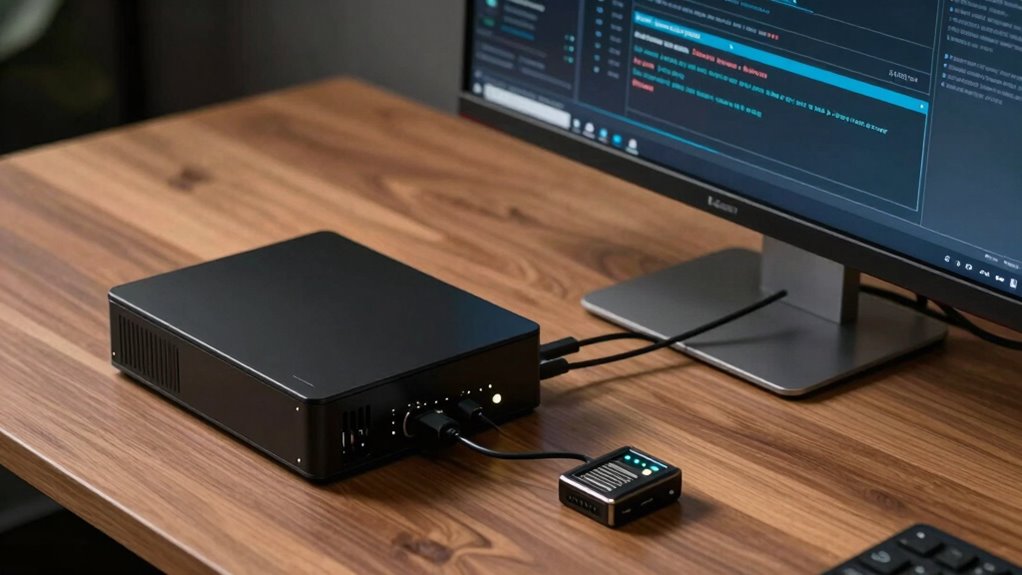
In an era of increasing cyber threats, air-gapped signing remains the gold standard for securing sensitive transactions. You understand that safeguarding critical data requires more than just strong passwords or encryption; it demands a physical barrier that prevents unauthorized access. This is where secure hardware plays an essential role. By utilizing dedicated, tamper-resistant devices, you guarantee that private keys and signing processes stay protected from malware, hacking attempts, or any network-based intrusion. These devices are designed specifically for security, making them a dependable foundation for high-stakes operations.
Data isolation is the core advantage of air-gapped signing. You physically disconnect the signing device from any network, creating a stark separation between your sensitive data and potential external threats. This disconnection means cybercriminals can’t remotely access or manipulate your signing environment. Instead, you rely on a controlled, offline process where data transfer occurs through secure, manual methods—such as using encrypted USB drives or other physical media. This approach greatly reduces the attack surface, making it nearly impossible for malicious actors to compromise your signing process remotely. Additionally, secure hardware often includes features like hardware security modules (HSMs) that further strengthen key protection.
Data isolation through physical disconnection ensures secure, offline signing, drastically reducing remote hacking risks.
You recognize that, in many cases, digital vulnerabilities are exploited through network-based attack vectors. By removing the network connection altogether, you eliminate the risk of remote hacking. The process of transferring data into or out of an air-gapped environment demands deliberate, physical action. You carefully control this process, verifying the integrity of each transfer, to maintain the sanctity of your secure hardware environment. This manual handling might seem cumbersome, but it’s a small trade-off for the peace of mind it provides. Moreover, you may find that physical security measures are just as critical as the hardware itself in preventing unauthorized access.
Furthermore, you understand that the security of private keys is paramount, and key management within secure hardware ensures that keys are never exposed or compromised during operations. You know that even the most advanced encryption can’t always protect against sophisticated cyber threats if the device itself becomes compromised. Secure hardware ensures that your private keys are stored securely, often within hardware security modules (HSMs), and are never exposed to the outside world. This hardware-enforced isolation guarantees that your signing keys remain safe, even if other parts of your system are attacked. It’s a critical safeguard that makes air-gapped signing a preferred choice for governments, financial institutions, and organizations dealing with highly sensitive information.
Ultimately, you’re choosing an approach that prioritizes control and certainty. While digital solutions are evolving rapidly, the physical separation and secure hardware foundation of air-gapped signing offer unmatched resilience. It’s a proven method that minimizes risk, guarantees data isolation, and upholds the integrity of your most critical transactions. In a landscape of relentless cyber threats, this time-tested security measure remains the gold standard for protecting your sensitive data.
As an affiliate, we earn on qualifying purchases.
Frequently Asked Questions
How Does Air-Gapped Signing Compare to Hardware Security Modules?
Air-gapped signing offers superior security compared to hardware security modules (HSMs) because it isolates signing keys from internet-connected systems, reducing risks from insider threats and cyberattacks. While HSMs are secure, they still connect to networks, potentially exposing keys. With air-gapped systems, you minimize digital forensics challenges and insider threats, ensuring your signing process remains entirely offline, making it the gold standard for high-security environments.
Can Air-Gapped Signing Be Automated Effectively?
Did you know that only 34% of organizations fully automate their signing process? Air-gapped signing can be automated, but it’s challenging. You need specialized air gapped automation tools that securely manage the signing process without exposing sensitive keys. While some automation is possible, it often requires careful setup to maintain security. So, automation exists but isn’t as seamless or widespread as with less secure methods.
What Are Common Challenges in Maintaining Air-Gapped Systems?
Maintaining air-gapped systems poses challenges like ensuring physical isolation, which requires strict controls to prevent accidental or intentional breaches. You also need to guard against insider threats, as trusted personnel could compromise the system. Regularly updating security protocols and limiting physical access are essential. However, balancing accessibility with security remains tricky, and any lapses can undermine the system’s integrity. Staying vigilant and disciplined is vital for effective maintenance.
How Often Should Air-Gapped Signing Keys Be Rotated?
You should rotate air-gapped signing keys regularly, typically every 6 to 12 months, to enhance key management and reduce risks. This process involves updating access controls and securely transferring new keys while safely retiring old ones. Regular rotation minimizes the chance of key compromise, ensuring your signing process remains secure. Consistent key management and strict access controls are essential to maintaining the integrity of your air-gapped signing environment.
Are There Any Recent Advancements Improving Air-Gapped Signing Security?
Recent advancements in air-gapped signing security focus on quantum resistance and insider threat mitigation. You can now implement hardware security modules designed to withstand quantum attacks, ensuring your keys remain secure even as quantum computing advances. Additionally, enhanced access controls and monitoring help detect insider threats, reducing risks of malicious activities. These improvements keep air-gapped signing a reliable, robust method for maintaining high security standards in sensitive operations.
As an affiliate, we earn on qualifying purchases.
Conclusion
While some might think modern digital solutions are enough, air-gapped signing remains the gold standard because it isolates your private keys from online threats. Yes, it might seem old-fashioned, but it’s a proven method to prevent hacks and unauthorized access. If security is your top priority, don’t overlook the peace of mind that comes with physically separating your signing process. After all, in the world of crypto, nothing beats a secure, offline safeguard.
As an affiliate, we earn on qualifying purchases.
offline private key storage device
As an affiliate, we earn on qualifying purchases.
As an affiliate, we earn on qualifying purchases.
Fall Picks
fall essentials
As an affiliate, we earn on qualifying purchases.