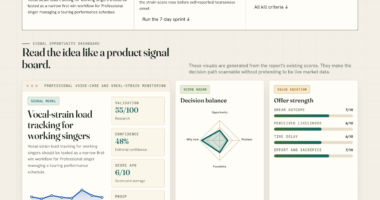

📊 Full opportunity report: ALIA. The Spanish answer. on ThorstenMeyerAI.com — validation score, market gap, and execution plan.

Get hardware and tech essentials delivered free with Prime
- Fast, free delivery on millions of items
- Prime Video, Amazon Music and more included
- Member-only deals all year
TL;DR
Spain has launched ALIA-40B, a large-scale multilingual language model trained with €240M in public funds. While it underperforms compared to Llama 2 benchmarks, it emphasizes Spanish-language adoption, aligning with its strategic goal to serve the Spanish-speaking world.
Spain’s ALIA-40B, a large-scale multilingual language model developed through a €240 million public investment, has been officially released under an open-source license, marking Spain’s significant entry into sovereign AI development with a focus on Spanish-language adoption.
The ALIA project, coordinated by the Barcelona Supercomputing Center and led by the Secretary of State for Digitalisation and Artificial Intelligence, trained the model on 9.37 trillion tokens across 35 European languages and 92 programming languages. This article on hyperscaler Capex discusses related infrastructure investments. It was trained on MareNostrum 5’s GPU-accelerated infrastructure, utilizing 4,480 NVIDIA H100 GPUs. The model’s benchmarks against Llama 2 indicate lower performance in standard NLP tasks, with 51.77% accuracy on XNLI and 81.53% on SQuAD, compared to Llama 2’s 66% and 93-94%, respectively. The project emphasizes Spanish-language coverage and co-official languages, aligning with its strategic aim to serve the Spanish-speaking world, rather than competing for top benchmark performance.Funding for ALIA includes €90 million for infrastructure upgrades and €150 million dedicated to integrating the model into industry applications, making it the largest publicly funded European national AI project by scope. Learn more about hyperscaler investments. The initiative operates under the institutional architecture of the Spanish government, with political leadership from SEDIA and technical coordination by BSC-CNS. The project also builds on prior efforts such as ILENIA and the Language Technologies Plan, emphasizing multilingual and regional language support with a focus on transparency and open-source licensing under Apache 2.0.
ALIA.
The Spanish
answer.
€240M+ Spanish public funding · ALIA-40B + Salamandra family · 9.37T tokens · 35 European languages + 92 programming languages · MareNostrum 5 · Apache 2.0 release. The largest publicly funded European national-AI project by cumulative scope — and the empirical test case for the Position 1 vs Position 3 strategic-positioning argument.
This is the tenth standalone essay in the European sovereign-LLM track and the third Tier 2 expansion piece. ALIA is Spain’s institutional answer — the largest EU member state by GDP not yet documented in the track. The project markets itself as Position 1 + Position 2 simultaneously — “Europe’s first public multilingual foundational model.” The benchmark evidence (ALIA-40B 51.77% XNLI_en vs Llama 2 66%) confirms the structural capability gap from Finding 1 of the synthesis essay. The Position 3 framing — Martorell’s “most widely adopted in the Spanish-speaking world” — is operationally honest. €90M MareNostrum 5 upgrade + €150M company integration = €240M+ cumulative scope. Apache 2.0 open-source release + AESIA validation + co-official languages oversampling. Both can be true at once. The Spanish public discourse would benefit from explicit Position 3 strategic positioning.
Six models. Apache 2.0.
The ALIA family operates as a tiered model portfolio. ALIA-40B is the flagship at 40 billion parameters; the Salamandra family scales down to 7B, 2B and instruct-tuned variants; mRoBERTa provides the foundational multilingual baseline. All released under Apache License 2.0 on April 22, 2025 at the HispanIA 2040 event — “Public Code, Public Money” approach.
multilingual
MN5 LLM
edge
target
instruct
encoder
Four official. Oversampled by factor of 2.
ALIA’s distinctive multilingual coverage strategy. The four co-official Spanish languages are oversampled by factor of 2 in the training corpus — structurally distinct from Apertus’s broad 1,811-language coverage approach. The strategy targets deep coverage of Spanish co-official languages rather than maximum language breadth.
ALIA-40B vs Llama 2. 14-point gap.
The empirical evidence Finding 1 of the synthesis essay needed. ALIA-40B at 40 billion parameters with €240M+ public funding and 8+ months MareNostrum 5 training achieves performance below Llama 2 — a 2023 frontier model released approximately 18 months before ALIA-40B. The capability gap is real and consistent with six of seven prior national-project answers documented in the track.
Two pilots. Public administration deployment.
The operational deployment targets that validate the Position 3 + Position 4 framing. Public administration deployment is the structurally credible Position 3 + Position 4 strategic positioning — captive demand from Spanish public institutions where Spanish-language specialization is operationally distinctive.
The work is real across the Spanish ALIA case. €240M+ public funding committed. 40B parameter from-scratch model trained on 9.37 trillion tokens. Salamandra family released under Apache 2.0. AESIA validation aligned with EU AI Act transparency standards. Two pilot applications shipped — Tax Agency chatbot and primary care medicine heart failure diagnosis. The Position 1 framing is operationally misleading. ALIA-40B performance below Llama 2 confirms the structural capability gap. The Position 3 framing is operationally honest — Spanish-speaking world adoption, co-official languages oversampling, public administration deployment. Both can be true at once. The Spanish public discourse would benefit from explicit Position 3 strategic positioning.
Implications of ALIA’s Strategic Focus on Spanish Adoption
The ALIA project exemplifies how sovereign AI initiatives can prioritize regional and linguistic relevance over benchmark performance, aiming for widespread adoption within the Spanish-speaking world. This strategic positioning may influence future European AI development, emphasizing operational relevance and language coverage, and sets a precedent for publicly funded national AI projects to align with regional language and cultural priorities. Although its benchmark results lag behind top models like Llama 2, ALIA’s emphasis on transparency, open-source licensing, and regional language support could foster broader local adoption and impact AI policy in Europe.As an affiliate, we earn on qualifying purchases.
Spain’s Position in European Sovereign AI Development
Spain’s ALIA project is part of a broader European effort to develop sovereign AI capabilities, with previous initiatives in Portugal, Italy, France, and Germany establishing a landscape of national and pan-European models. Unlike some projects that aim for top benchmark performance, ALIA’s emphasis on multilingual support and regional language coverage reflects a strategic choice to prioritize operational relevance within Spain and the broader Spanish-speaking world. The €240 million investment makes it the largest publicly funded European national AI effort, and it follows a series of national projects aimed at establishing sovereign AI infrastructure across Europe. The project aligns with Spain’s national digital strategy and the EU’s push for technological independence and regional language inclusion. For a broader perspective on industry trends, see this analysis of hyperscaler Capex.“The goal is not to be the best-performing LLM in the world, but the most widely adopted in the Spanish-speaking world.”
— Josep M. Martorell
As an affiliate, we earn on qualifying purchases.
Operational Performance and Adoption Impact Unclear
While ALIA-40B has been released and benchmark results are available, it remains unclear how widely the model will be adopted within Spain and the Spanish-speaking world. The long-term operational impact, industry integration success, and comparative performance against top models in real-world tasks are still developing. Additionally, the strategic implications of its lower benchmark scores versus its regional focus are yet to be fully understood.
As an affiliate, we earn on qualifying purchases.
Future Deployment, Benchmarking, and Adoption Strategies
Next steps include monitoring the model’s adoption across Spanish-speaking institutions and industries, evaluating its performance in real-world applications, and assessing its influence on regional AI policy. Further technical updates and potential improvements are expected, along with efforts to promote open-source collaboration and transparency. The project team may also explore scaling or refining the model to improve benchmark scores while maintaining regional language priorities.
As an affiliate, we earn on qualifying purchases.
Key Questions
What is the main goal of Spain’s ALIA project?
The primary goal is to develop a multilingual language model that is widely adopted within the Spanish-speaking world, emphasizing regional language coverage and operational relevance over benchmark performance.
How does ALIA compare to models like Llama 2?
Benchmark results show ALIA-40B underperforms Llama 2 in standard NLP tasks, with lower accuracy scores. However, ALIA’s focus on Spanish and regional languages aligns with its strategic objectives.
Why is Spain investing heavily in this AI project?
The investment aims to establish Spain’s sovereign AI infrastructure, promote regional language support, and foster national technological independence, aligning with broader European digital sovereignty goals.
Will ALIA be open-source and accessible?
Yes, ALIA-40B has been released under the Apache License 2.0 on HuggingFace, promoting transparency and collaborative development.
What are the long-term expectations for ALIA?
Future developments include increased industry integration, potential model refinement, and broader regional adoption, although its impact remains to be fully seen.
Source: ThorstenMeyerAI.com
Halloween Picks
halloween
As an affiliate, we earn on qualifying purchases.