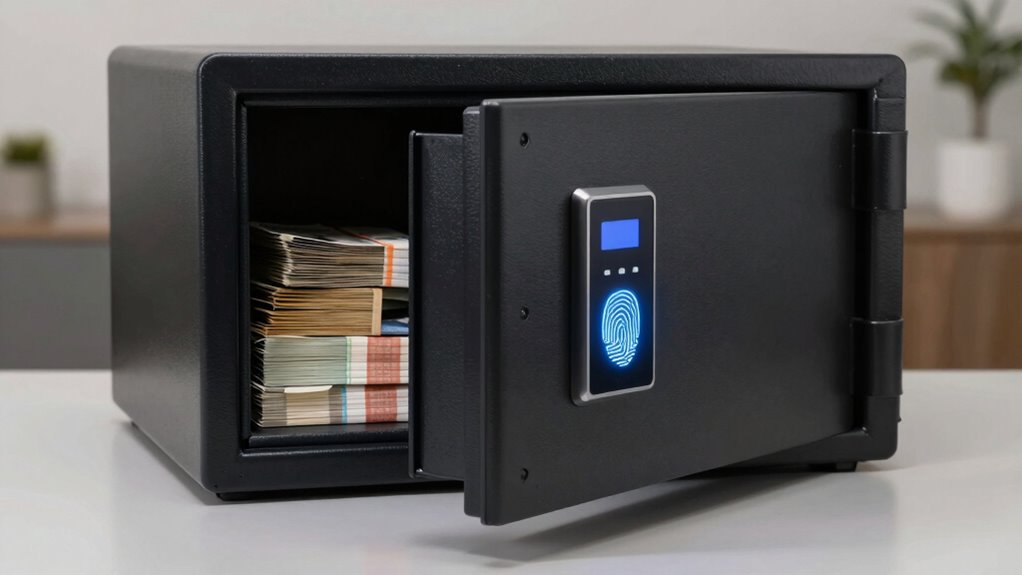

Biometric safes might seem like the perfect security solution, but they aren’t foolproof. Hackers can find ways to bypass them using sophisticated techniques like high-resolution images or videos. They can also fail due to dirt, injuries, or poor lighting, locking you out when you need access most. Plus, biometric data theft is a real concern that’s tough to reverse. If you want to understand the full risks and limitations, there’s more to explore below.
Key Takeaways
- Biometric safes can be hacked or fooled with sophisticated techniques, compromising their security.
- Environmental factors and injuries can prevent biometric systems from functioning properly.
- Data breaches may lead to theft or misuse of sensitive biometric information.
- Lack of reliable backup access methods can lock users out during system failures.
- Over-reliance on technology can cause delays and frustration in critical access situations.
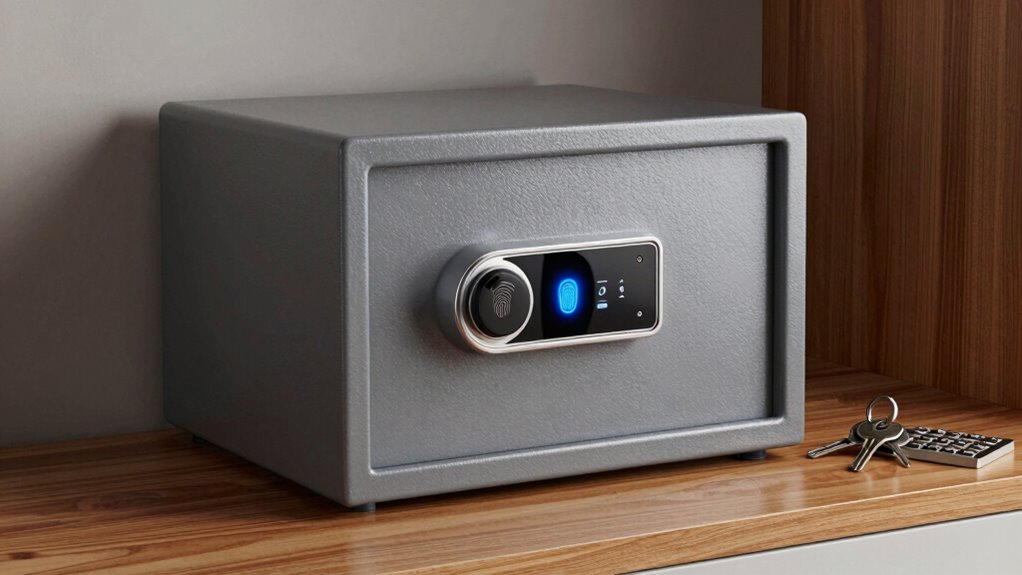
Biometric safes have gained popularity as a high-tech solution for securing valuables, promising quick access and enhanced security through fingerprint or facial recognition. While they seem to offer the perfect mix of convenience and security, they’re not foolproof. One of the main issues is security vulnerabilities. No system is completely invulnerable, and biometric safes are no exception. Hackers and intruders are continually finding new ways to bypass biometric security, whether through sophisticated hacking techniques or exploiting flaws in the biometric data storage. For instance, fingerprint scanners can sometimes be fooled with high-resolution images or molds, and facial recognition systems might be tricked with photos or videos. These vulnerabilities mean that, despite the high-tech appeal, biometric safes aren’t immune to break-ins.
Biometric safes are vulnerable to hacking, high-resolution image tricks, and flaws in data storage, making break-ins possible.
Meanwhile, user convenience can sometimes turn into a drawback. You might think that biometric safes make access faster and easier, but in reality, they can be frustrating when they don’t work properly. Environmental factors such as dirt, moisture, or injuries to your fingerprint can cause the scanner to fail, delaying access at critical moments. Facial recognition systems may struggle in poor lighting or if your appearance changes markedly. These issues can leave you frustrated and vulnerable, especially if you’re in a rush or under stress. Plus, the reliance on technology means that if the system malfunctions or the electronics fail, you could be locked out entirely. Unlike traditional safes with keys or combination locks, you might not have an immediate backup plan, which defeats the purpose of quick access during emergencies. Additionally, the increasing use of biometric technology in various security systems highlights the importance of understanding security limitations and maintaining alternative access methods. It’s also important to consider how biometric data storage practices impact overall security and privacy. Moreover, concerns about long-term security and the potential misuse of biometric data underscore the need for robust safeguards and transparency in data handling.
Furthermore, biometric data isn’t foolproof from theft or misuse. If someone manages to steal your biometric data—say, through a data breach—they could potentially clone your fingerprint or facial features. While biometric data isn’t stored in plain text, many systems store templates or encrypted versions that could still be compromised. Once compromised, replacing or updating biometric data isn’t as straightforward as changing a password. This raises concerns about long-term security and privacy.
Ultimately, biometric safes aren’t a magic bullet. They do improve security and convenience in many situations, but they come with their own set of vulnerabilities. You need to weigh the risks of security breaches, system failures, and privacy concerns against the benefits. No matter how advanced the technology, it’s essential to have backup methods for access and to remain aware of its limitations. Biometric safes are a useful tool, but you shouldn’t see them as a perfect or invulnerable security solution.
As an affiliate, we earn on qualifying purchases.
Frequently Asked Questions
Are Biometric Safes More Expensive Than Traditional Safes?
Yes, biometric safes tend to be more expensive than traditional safes due to advanced technology. The cost comparison reflects their user convenience, as they allow quick, fingerprint-based access without keys or combinations. While they offer added security and ease of use, you’re paying a premium for these features. If budget is a concern, a traditional safe might be more economical, but biometric safes deliver superior convenience and modern security.
How Do Biometric Safes Handle Power Outages?
Biometric safes typically have backup power options like batteries, so they can operate during power outages. When the main power source fails, the backup power guarantees the biometric system remains functional, allowing you to access your valuables. Many safes also include emergency access methods, such as override keys or manual locks, enabling you to retrieve your items if the biometric system is temporarily unavailable. This combination offers added security and peace of mind.
Can Biometric Safes Be Hacked or Bypassed?
Biometric safes can be hacked or bypassed through biometric vulnerabilities like fake fingerprints or hacking attempts. While they’re designed with hacking prevention features, no system is entirely foolproof. Skilled intruders might exploit software flaws or use advanced tools to bypass security measures. You should remember that biometric safes are a strong layer of security but should always be combined with other safeguards to guarantee maximum protection.
What Is the Typical Lifespan of Biometric Safe Components?
Imagine your biometric safe’s components as a marathon runner—built for endurance but not forever. Typically, sensor durability lasts around 3 to 5 years, depending on usage, while battery longevity varies from 6 months to 2 years. Heavy daily use can wear sensors faster, and batteries may drain unexpectedly. Regular maintenance and timely replacements guarantee your safe stays reliable, but don’t expect these parts to last a lifetime without care.
Are Biometric Safes Suitable for High-Security Commercial Use?
Biometric safes aren’t ideal for high-security commercial use because they rely heavily on access control and user authentication. While they provide quick, convenient access, they can be vulnerable to technical failures or hacking. In high-security environments, you need more robust systems with layered security measures. Biometric safes should complement, not replace, traditional security protocols to guarantee thorough protection for sensitive assets.
As an affiliate, we earn on qualifying purchases.
Conclusion
While biometric safes seem like the perfect solution, they’re not a silver bullet. You might think they’re foolproof, but don’t put all your eggs in one basket. Technology can fail, and even the best lock isn’t invincible. Always have a backup plan—because relying solely on biometrics is a gamble you don’t want to take. Remember, a smart person prepares for the worst, even when everything looks best.
As an affiliate, we earn on qualifying purchases.
As an affiliate, we earn on qualifying purchases.